
Microsoft has quietly wiped every trace of its own 32GB RAM recommendations from the Windows Learning Center, all the while adding new 8GB RAM Surface devices to battle the crazy memory prices.
RAM prices have gone up sharply this year, PC shipments just posted their first year-over-year decline in nine quarters, and Windows 10, a decade-old OS that needs far less memory than Windows 11, still won’t stay dead thanks to extended security support. It hasn’t been good news for Microsoft on any front.
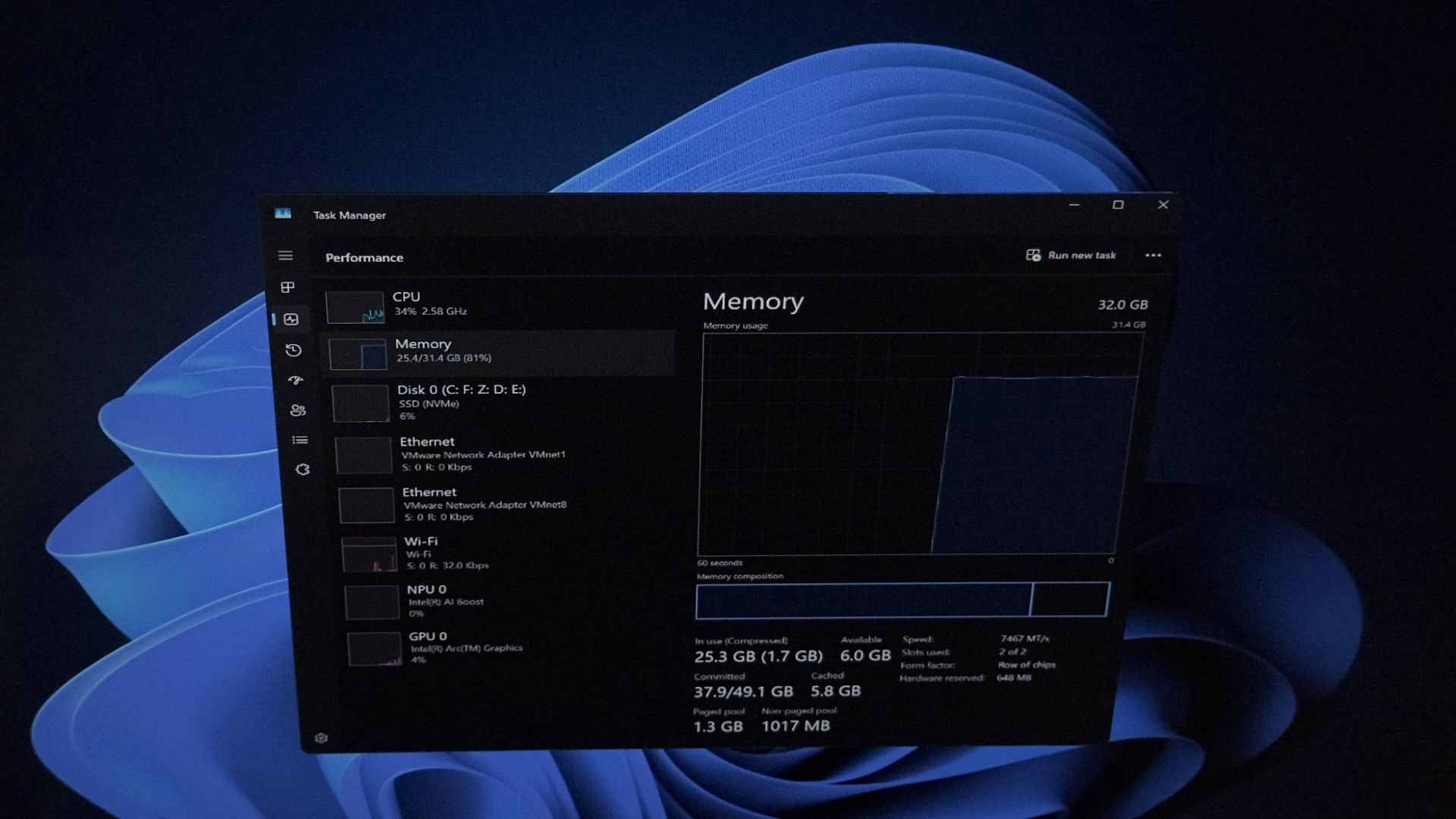
Fortunately, the company does have one plan left, and it’s not the one you’d expect from a company that spent the past year telling everyone to buy more RAM.
Microsoft deleted their 32GB RAM recommendations
Windows Latest first spotted the deletion. A Microsoft support document titled “How to optimize your gaming PC setup,” published on the Windows Learning Center on November 28, 2025, is now gone, with the URL redirecting straight to the Learning Center homepage.
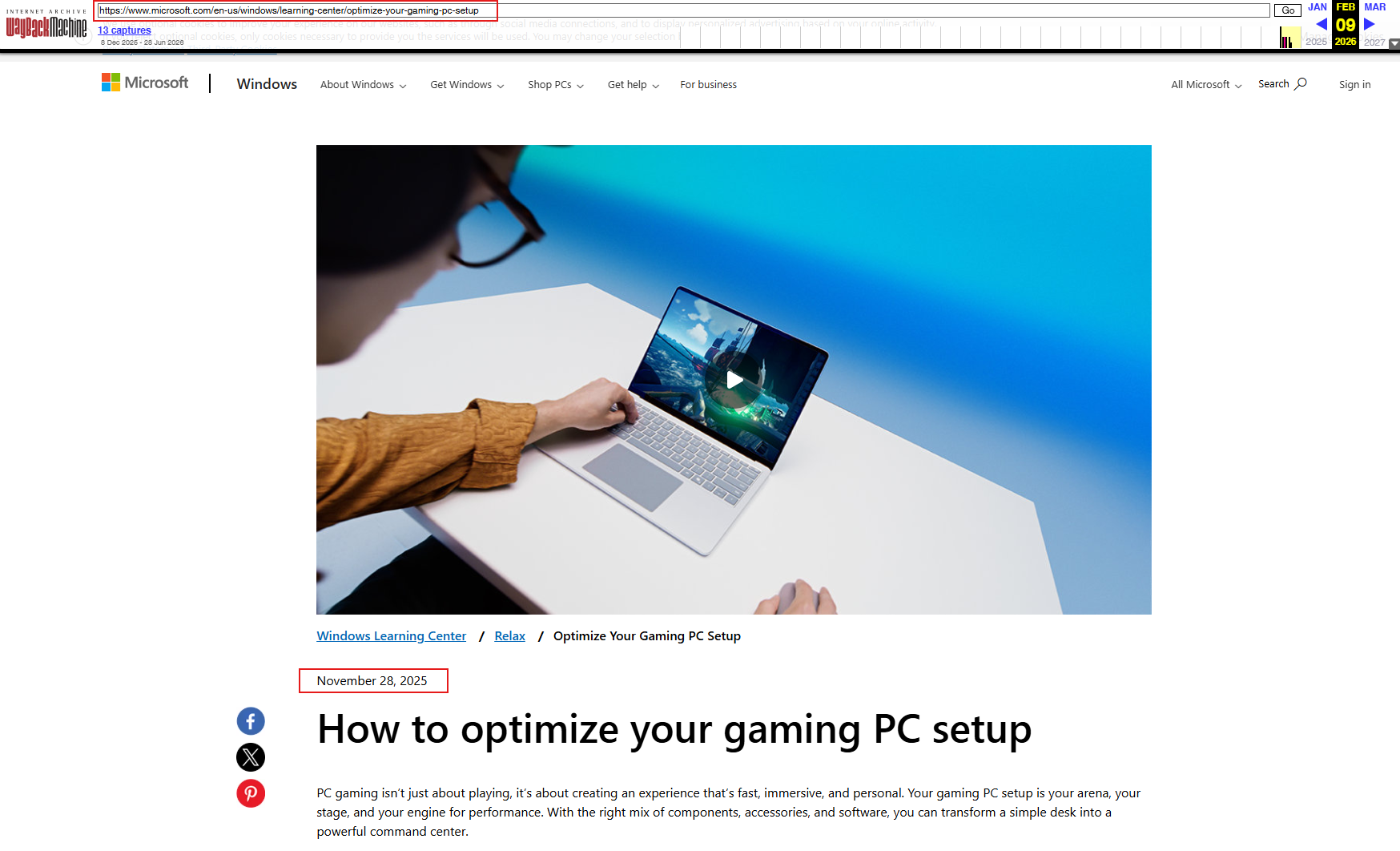
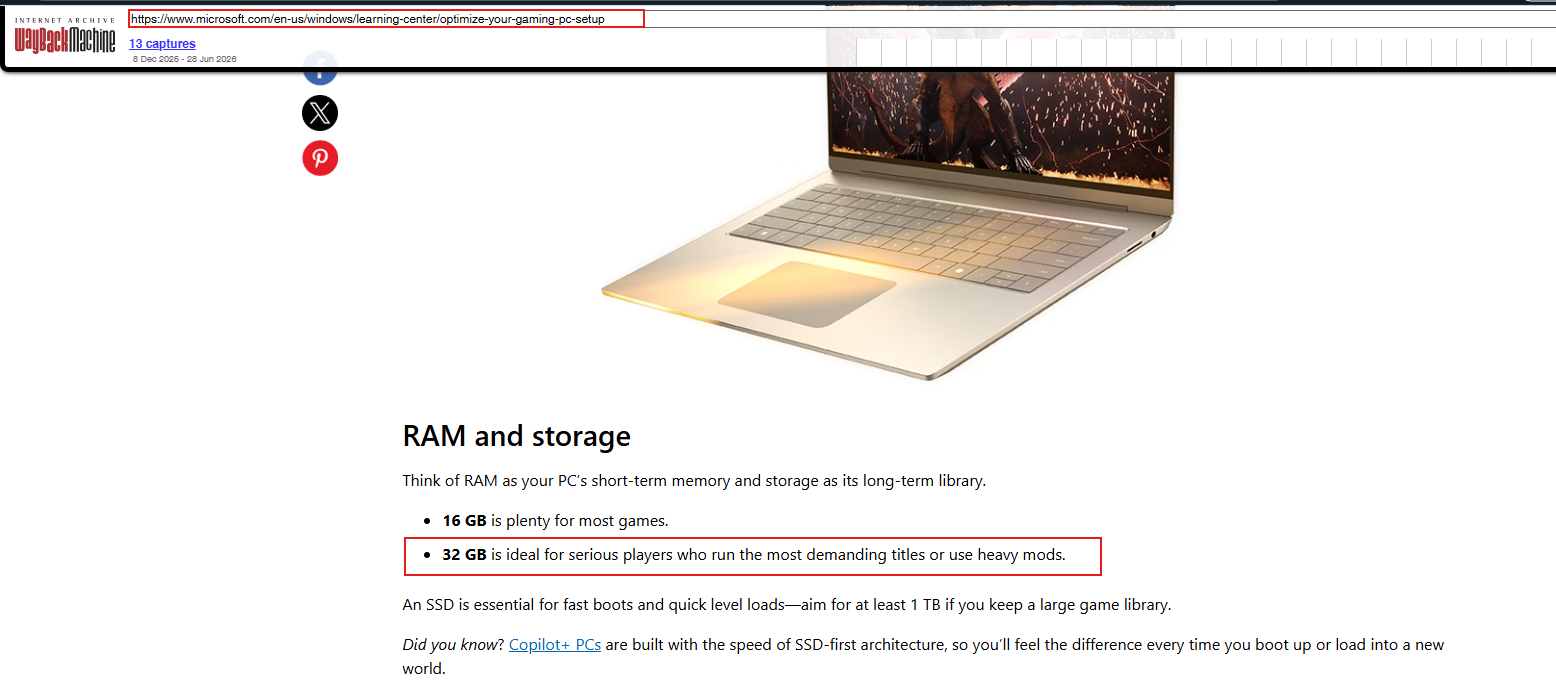
We reported on this document at the beginning of 2026, when Microsoft told users 16GB was plenty for most gamers, but “32GB is ideal for serious players who run the most demanding titles or use heavy mods,” and pitched Copilot+ PCs as the easiest way to get there.
Later in May, we reported that Microsoft calls 32GB RAM the “no-worries zone”. It was the time when RAM prices started to rise beyond logical levels, and naturally there was a huge backlash online from gamers all over the world.
Just days after our article went live, Windows Latest caught Microsoft quietly deleting their article that called 32GB the “no worries” upgrade for Windows 11 gaming.
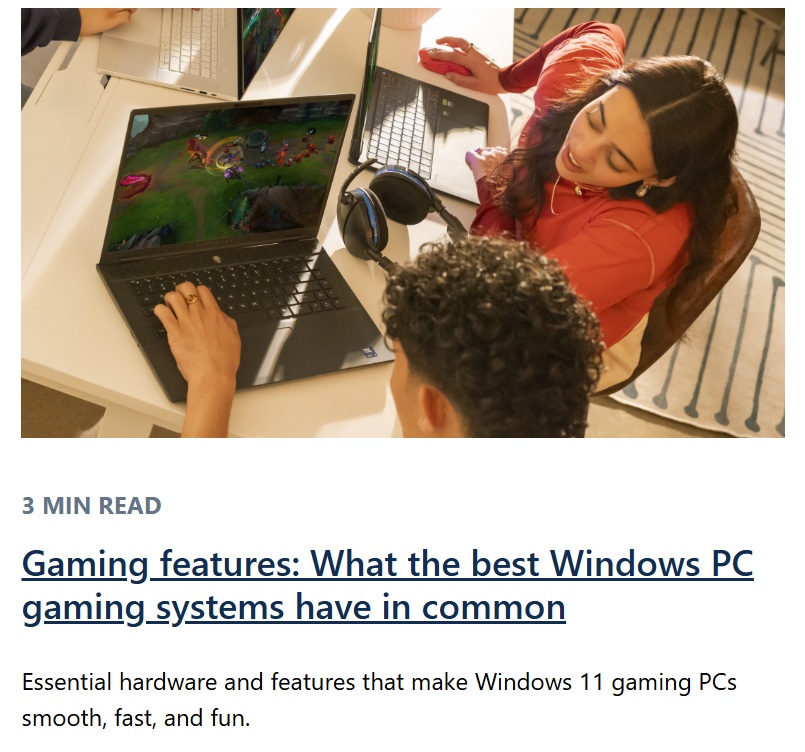
Both documents said the same message that serious PC gaming meant more RAM than most people had, and both are gone now, redirected to the Windows Learning Centre home page.
Microsoft backtracks on high RAM guidelines for Windows 11
For the past two years, Copilot+ PCs have been Microsoft’s flagship push, and 16GB of RAM has always been the non-negotiable minimum for that branding. Then AI happened to the memory market too, and DRAM stopped being cheap for everyone, including Microsoft.
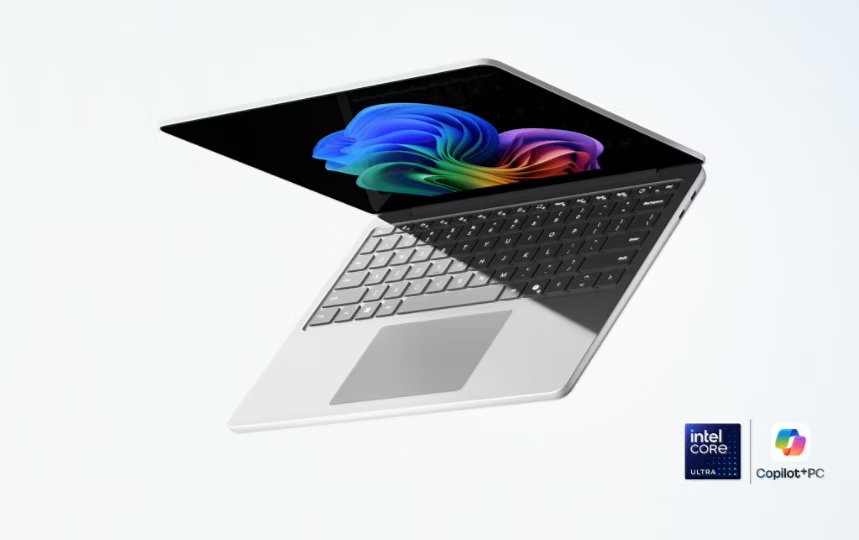
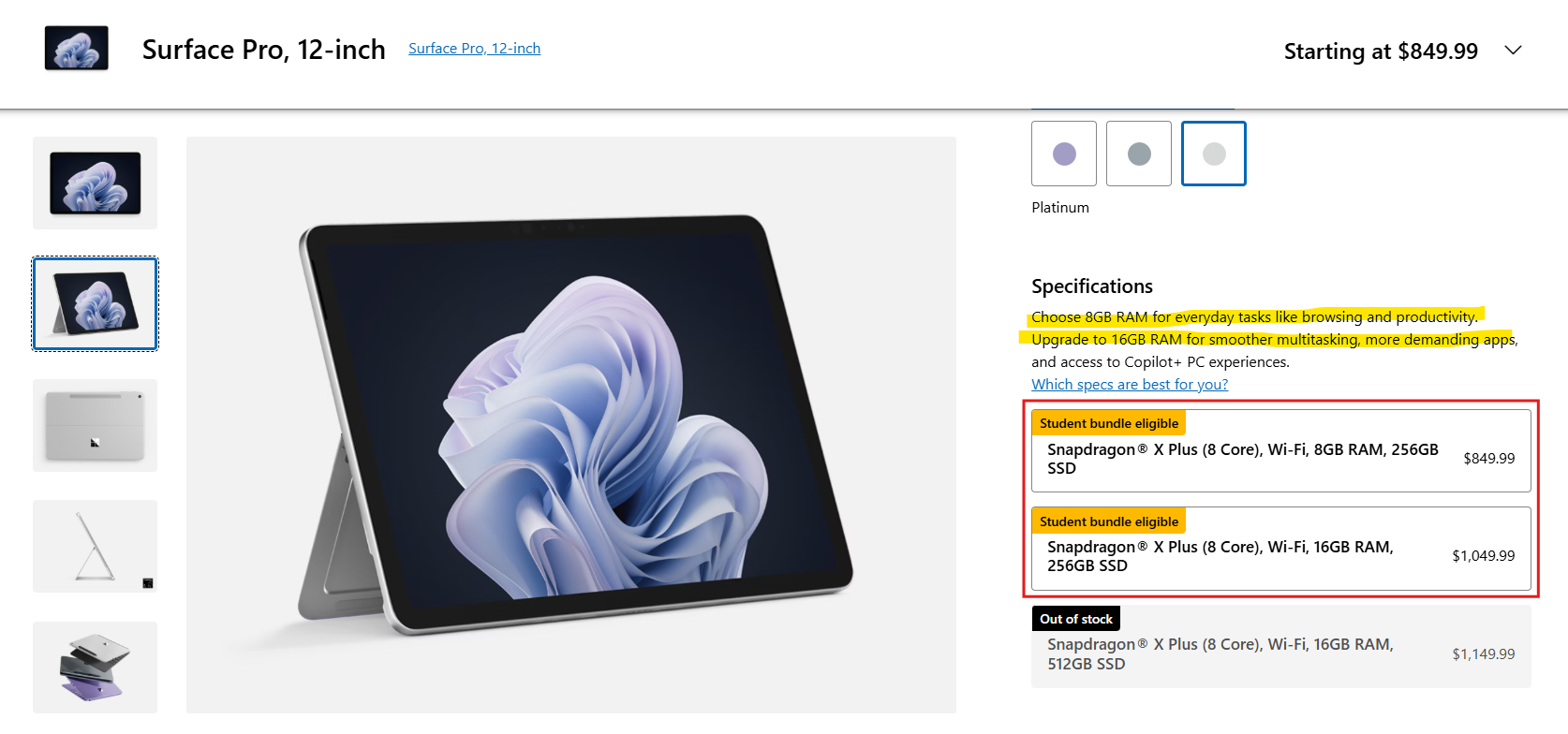
The clearest sign of the reversal came in June, when Microsoft’s new Surface Pro 12 and Surface Laptop 13 launched with 8GB RAM base configurations starting at $849 and $949. Those 8GB models don’t even qualify as Copilot+ PCs, since that branding still requires 16GB, so Microsoft is now selling Surface hardware that fails its own AI PC standard. A month earlier, Windows Latest had already flagged the same problem with the absurdly priced Surface Laptop for Business shipping 8GB configurations at $1,299.
Naturally, users would be concerned if 8GB RAM was enough, especially since it was Microsoft that made 16GB RAM an arbitrary baseline. So, by June 25, the Surface Laptop buying pages were describing 8GB RAM as “great for everyday use like browsing, streaming, schoolwork, and productivity apps,” a 180-degree turn from a company that spent the better part of a year insisting serious users needed 32GB.
8GB is never enough for Windows 11
Of course, the biggest reason 8GB has felt so insufficient was Windows 11, despite the OS’s minimum RAM requirement being half of it.
Windows 11 uses web based react and WebView2 for large parts of its interface, and a huge share of popular Windows apps are Electron-based web wrappers instead of native code, both of which eat through RAM.
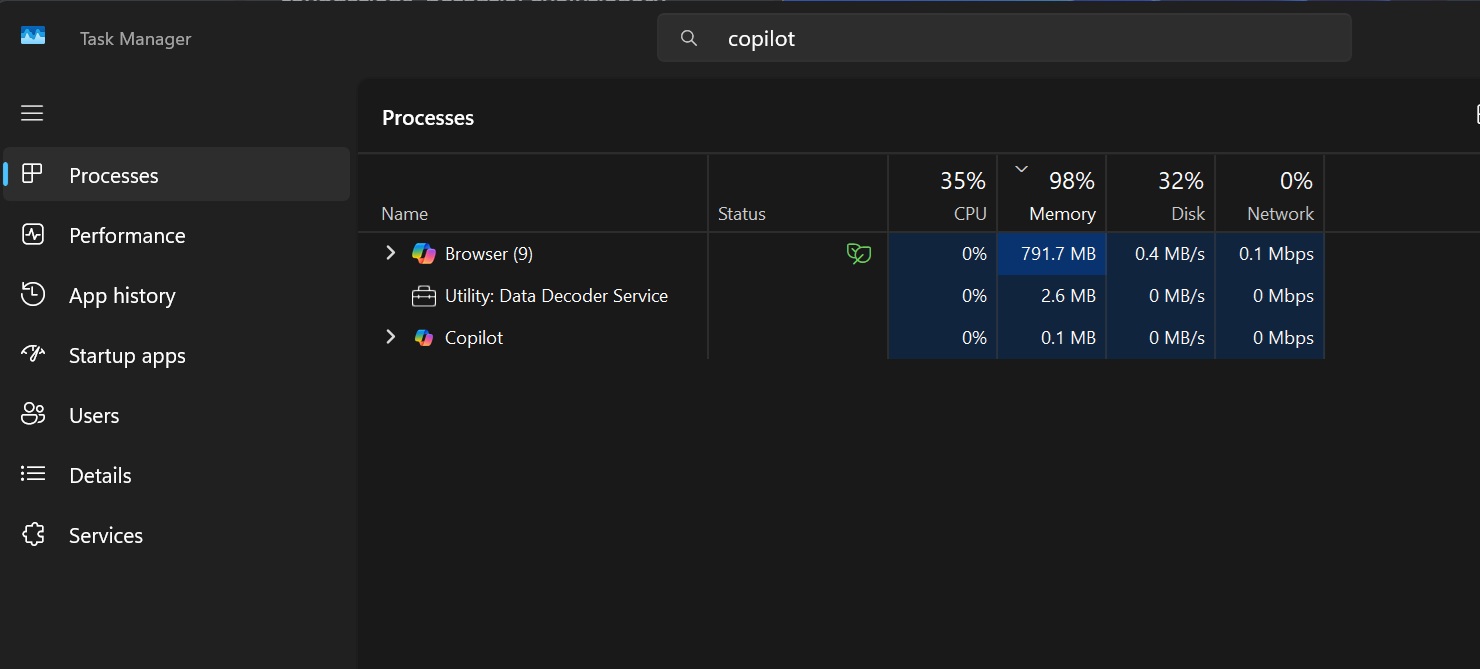
It seems that the company has realised that they don’t have a way around the memory shortage other than shrinking Windows 11’s own appetite.
Microsoft is making Windows 11 run faster on 8GB again
On July 31, Microsoft made the announcement that frustrated users have been waiting all along. The company agreed to bring memory optimization for Windows 11 that would make it run faster on PC with 8GB RAM and more:
“Memory optimization for 8GB and above. Reducing Windows memory footprint to deliver a fast and responsive Windows experience across the PCs customers use every day.”
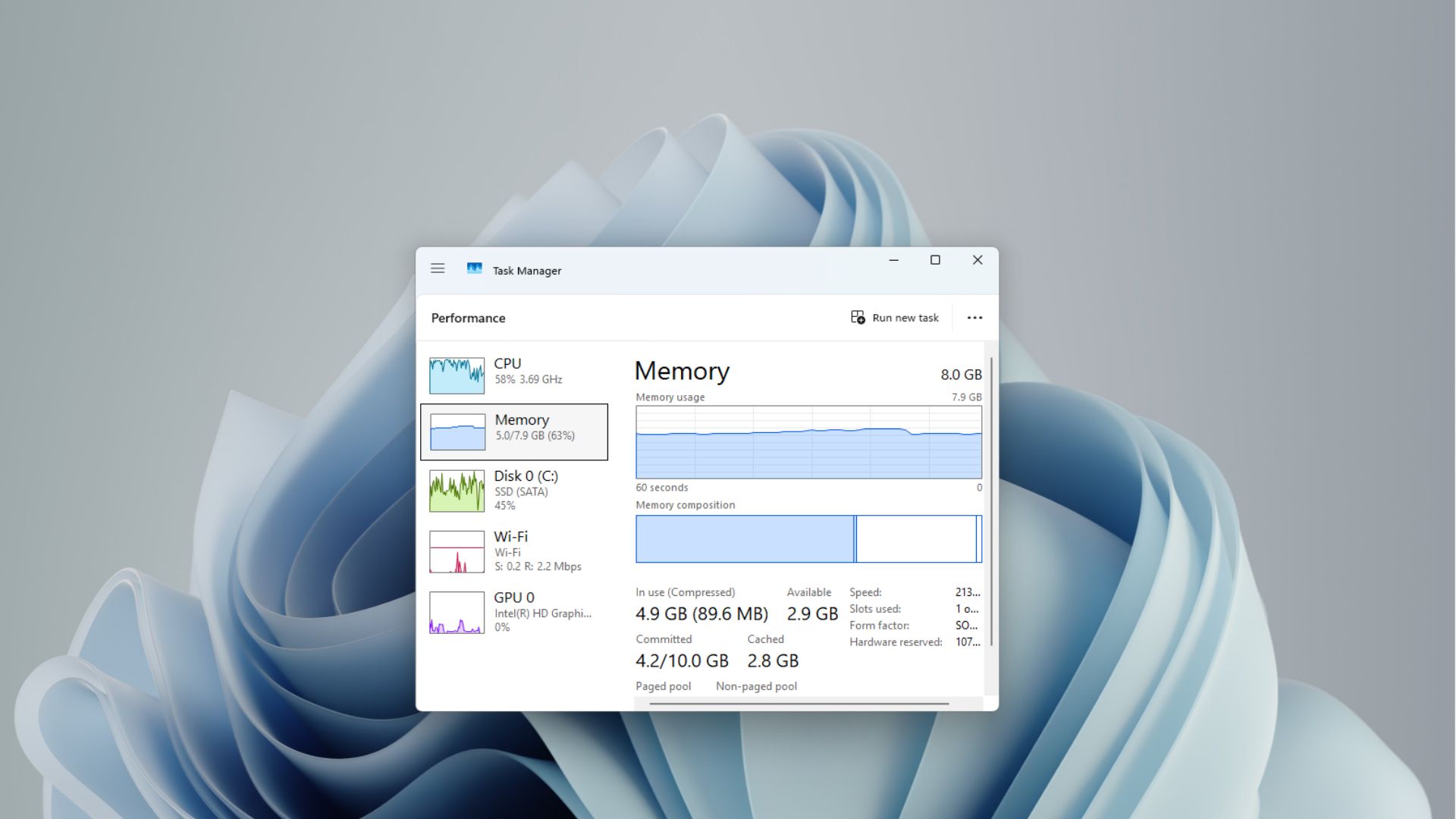
The target timeline is by the end of 2026. As the memory industry is showing no sign of pre-AI-boom RAM prices, Microsoft has no need to keep recommending the now out-of-reach 32GB RAM PC models, and has all the more reason to make 8GB RAM PCs viable.
IDC’s Jitesh Ubrani said vendors would likely respond to the memory shortage with “a combination of new silicon, [and] a more efficient OS from Microsoft,” in a June note explaining why global PC shipments fell 4.9% year-over-year in the second quarter, the first annual decline in nine straight quarters of growth. IDC now forecasts a full-year drop of 11.3%, with memory scarcity expected to persist into 2027.
Windows 11 still hasn’t lost real ground, and WinUI is where the fix shows up
Despite everything, Windows 11 hasn’t bled meaningful market share to alternatives. Reports claiming Linux ate 10% of the desktop market this year turned out to be skewed by AI crawler bots inflating the numbers.
WinUI, Windows 11’s native framework, is considerably lighter than WebView2 by design. Print Management, one of the oldest tools left in Windows, just got rebuilt in WinUI 3, following the same treatment already given to the Properties dialog and a growing list of other legacy dialogs.
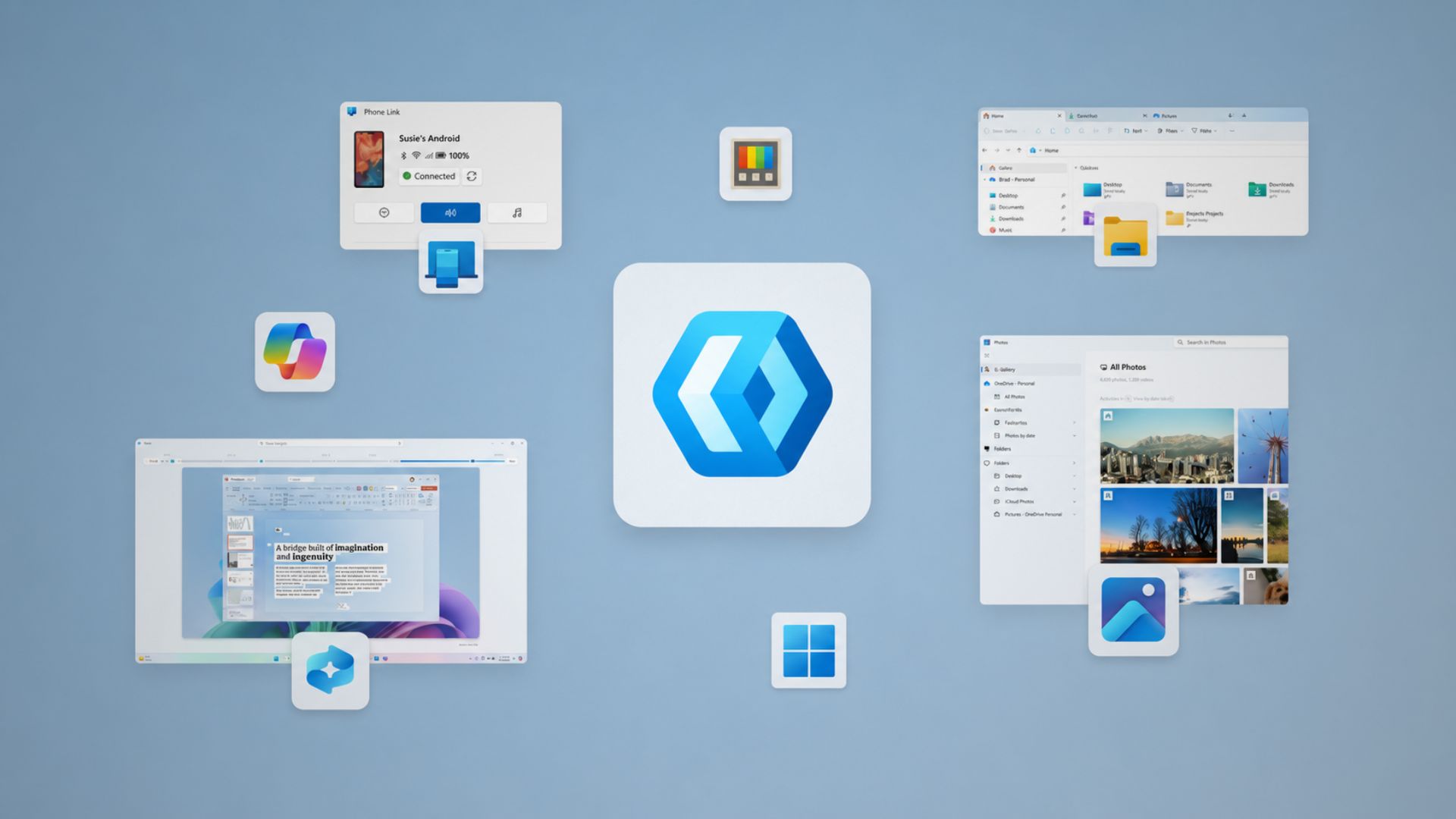
Microsoft has also confirmed native apps still use more RAM than they should and is pushing developers away from web-wrapper apps as part of the cleanup, and confirmed a broader UI redesign built around WinUI is coming.
Satya Nadella recently mentioned investing in quality and fundamentals of Windows 11. Redmond didn’t arrive here by accident. It can’t sell 32GB as the standard anymore, and it can’t keep selling 8GB Surface hardware that struggles under its own OS. Making Windows 11 lighter is the only move left that fixes both problems at once.
The post Microsoft just deleted Windows 11’s 32GB RAM recommendation docs, as prices soar and it rushes to sell 8GB RAM PCs appeared first on Windows Latest