
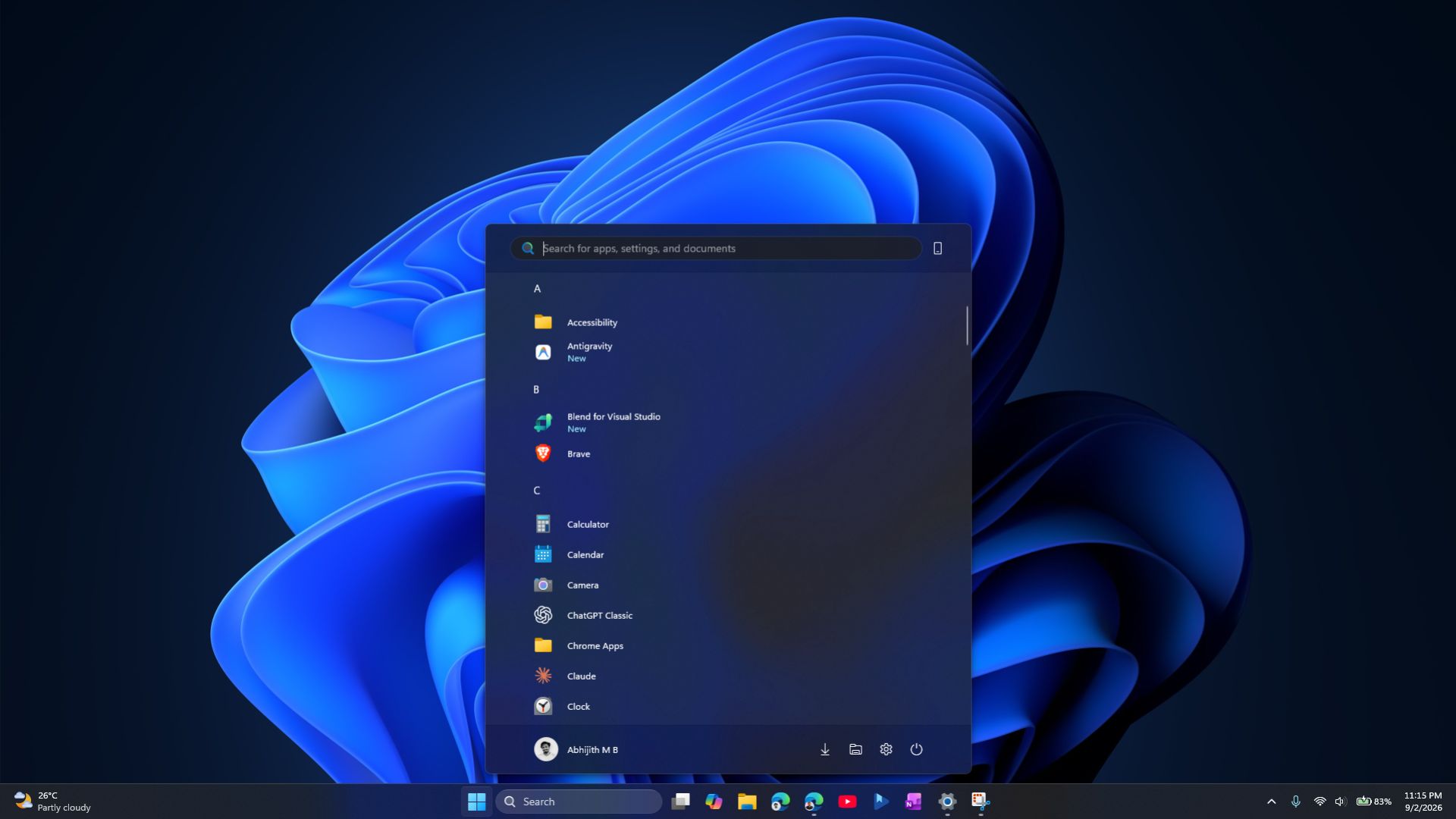
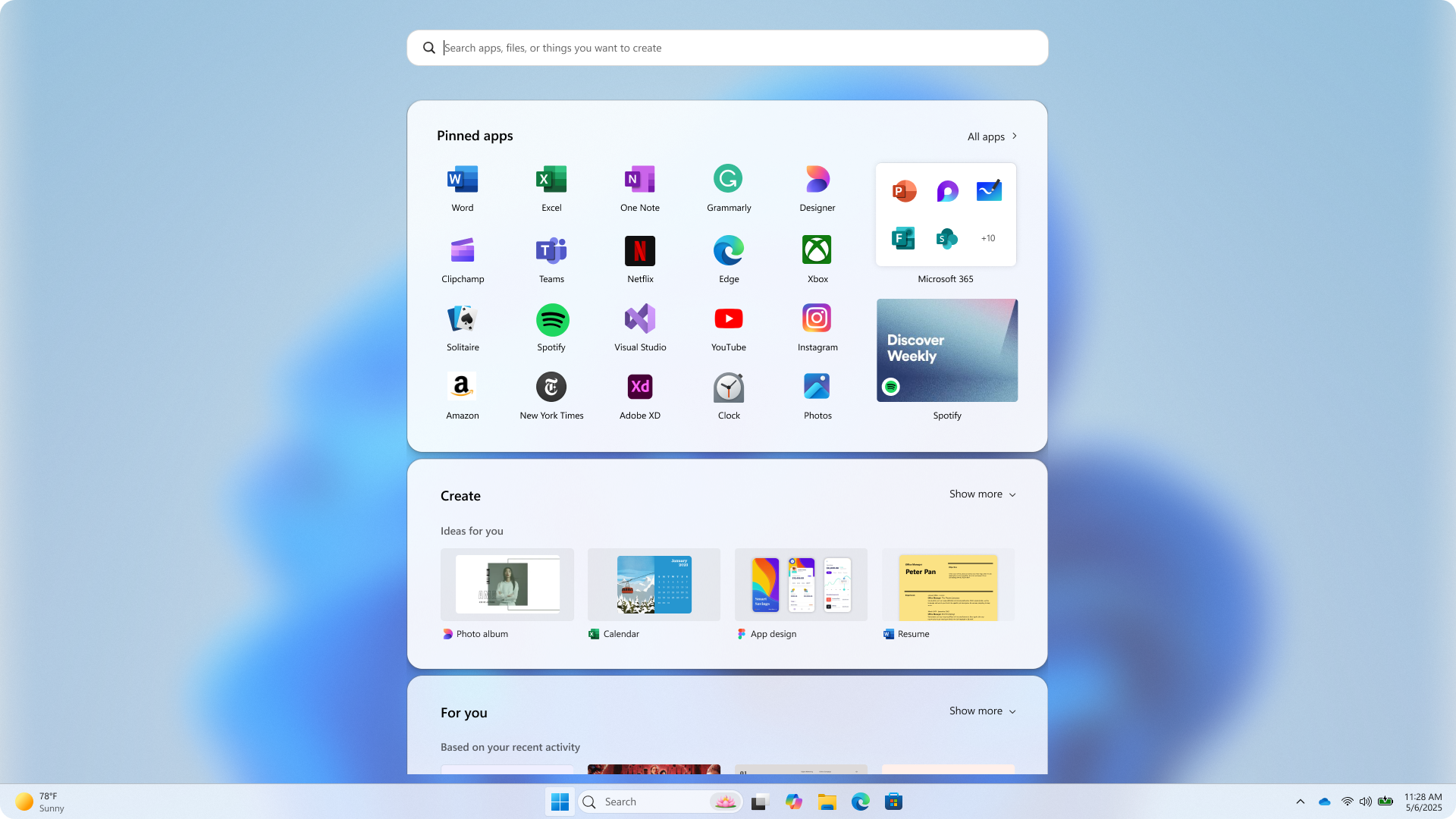
Windows 11’s Start menu has taken up close to 90% of the screen on plenty of PCs since last November, and I have been complaining about that since we first measured it.
The August optional update finally gives you a way to shrink it, hide sections you do not want, and stop it from eating your whole display. However, for most people, the new customizable Start menu will not show up right away because Microsoft rolls it out gradually. Fortunately, there is a well-tested and safe way to force it on now.
How to force-enable the resizable Start menu
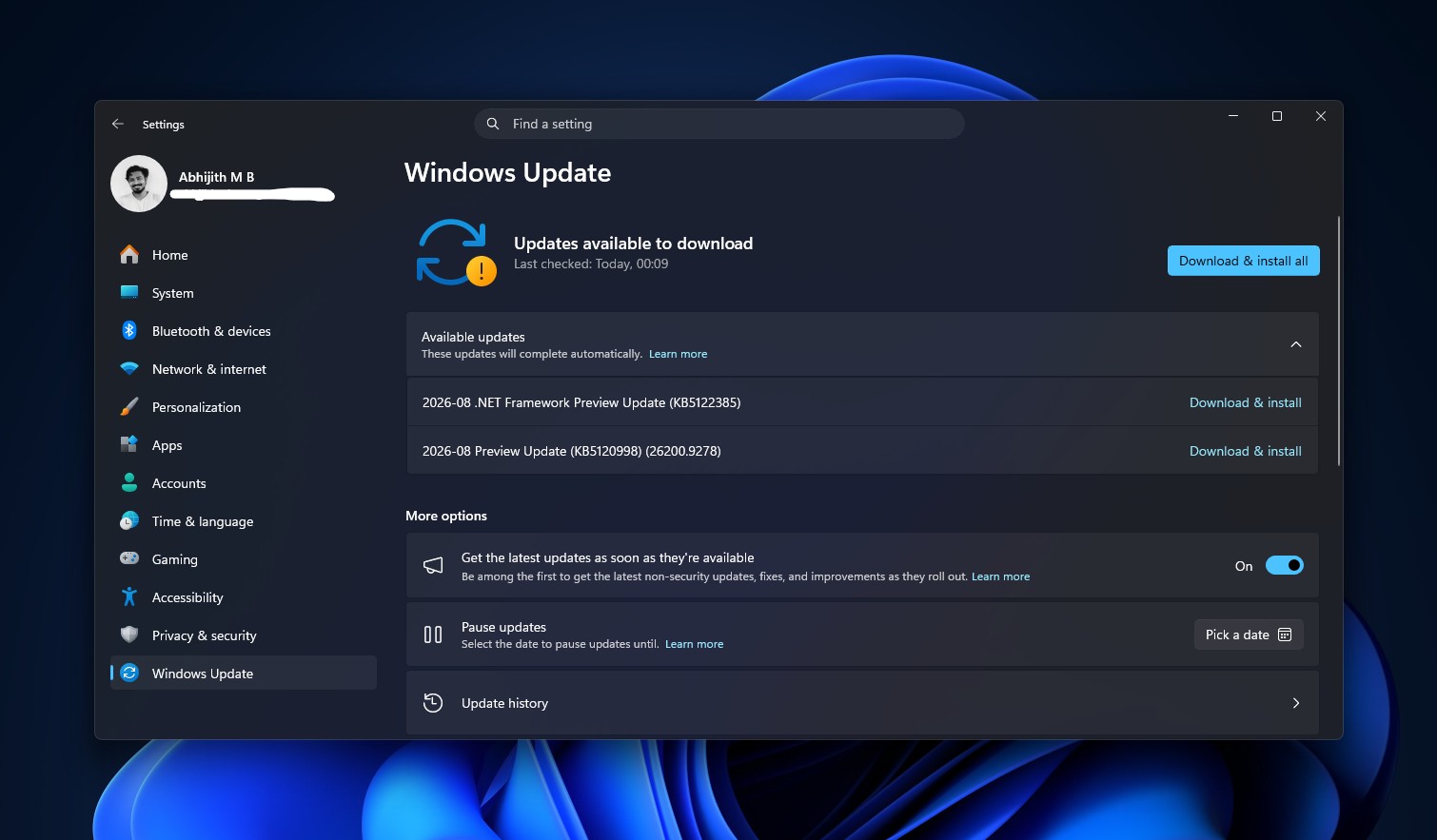
Go to Settings > Windows Update and install KB5120998, the August 2026 optional update. It bumps your PC to build 26200.9278 on version 25H2 or 26100.9278 on version 24H2. Restart once it finishes.
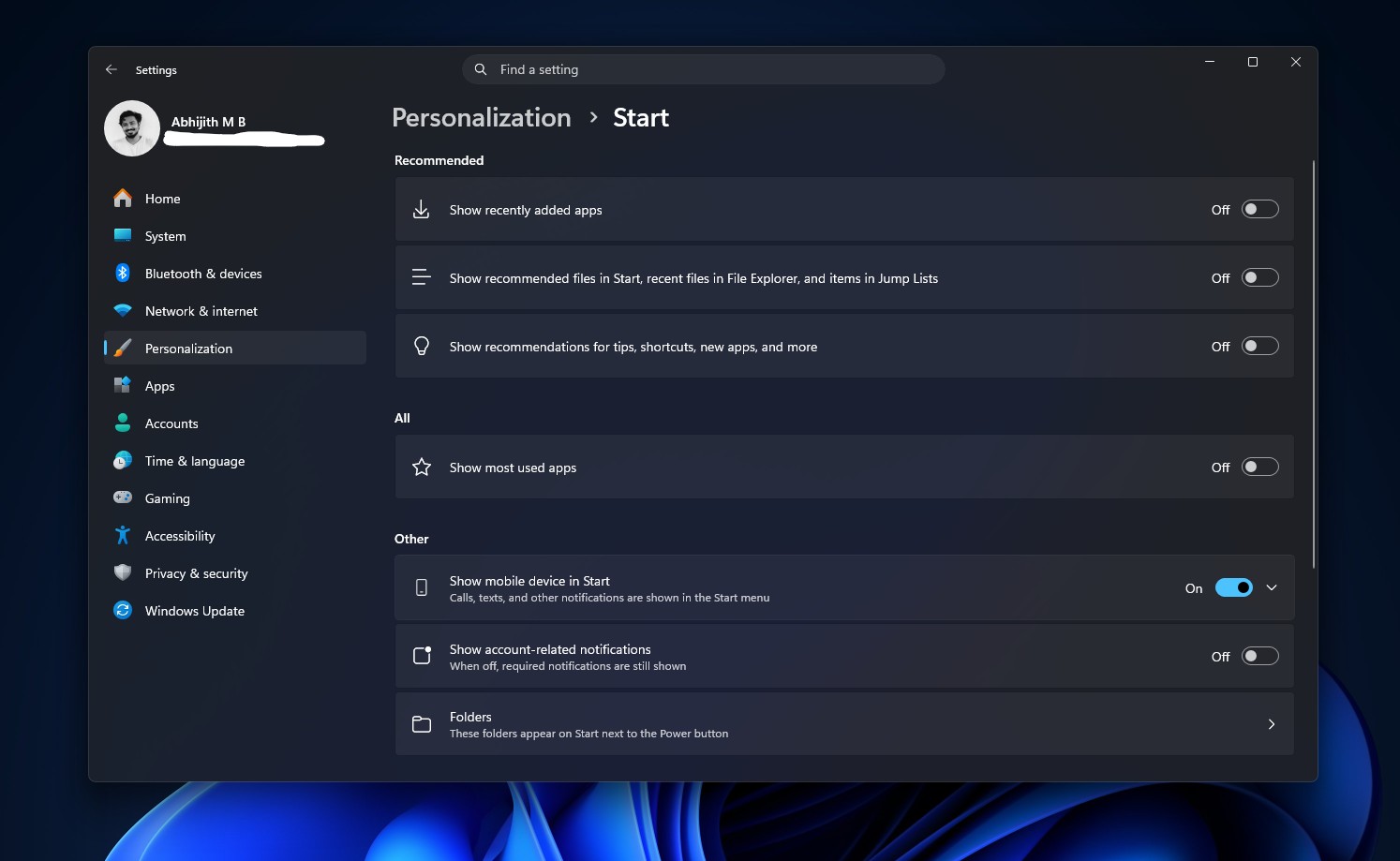
After rebooting, open Settings > Personalization > Start and check whether a Start menu size option has already shown up. Most PCs will not see it yet, since Microsoft ships this kind of change through Controlled Feature Rollout and switches it on for devices in stages.
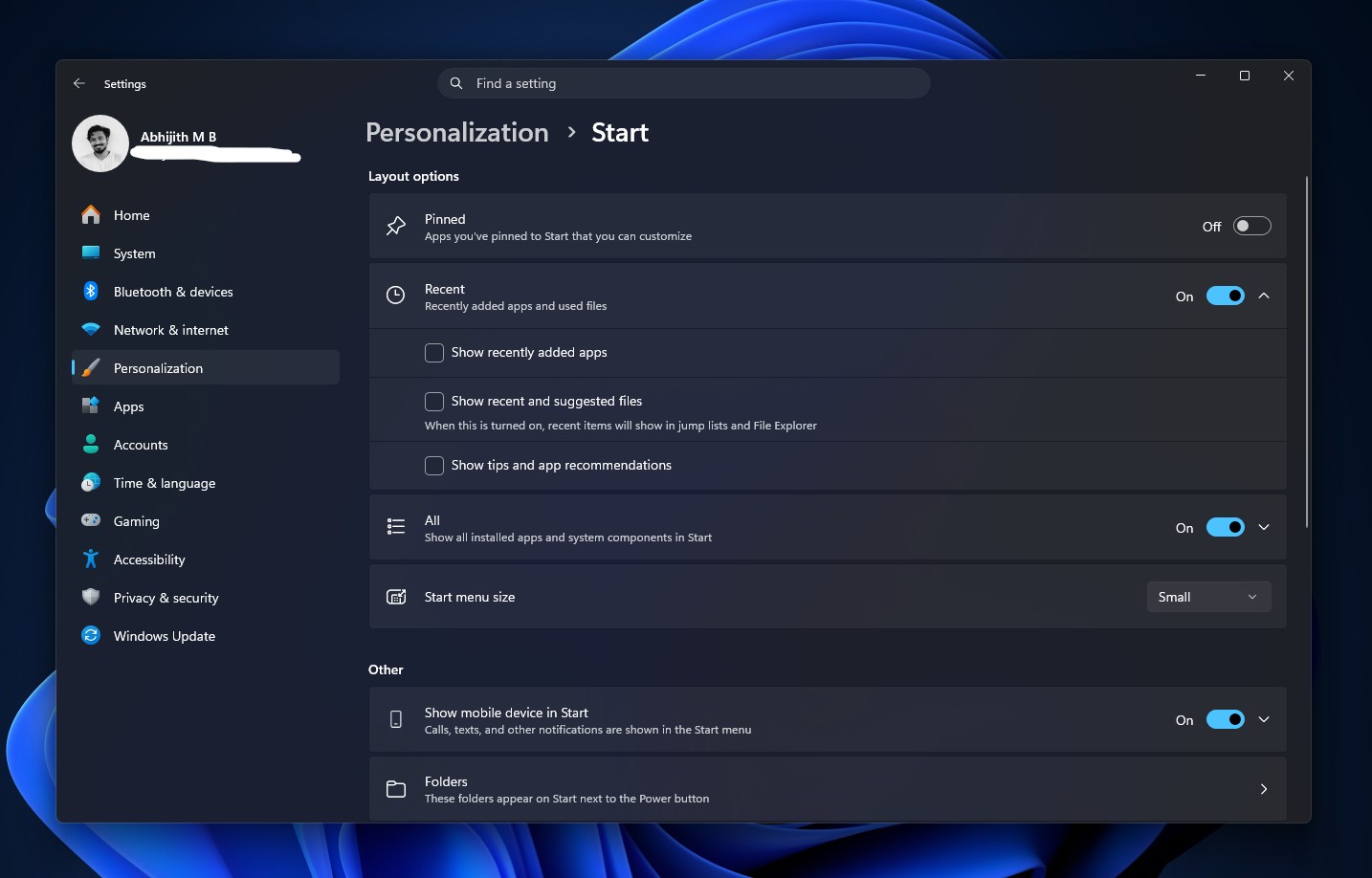
Before the update:
Note that your PC already received the code from the update. Microsoft just has not flipped the remote switch for you. So, we can use a third-party tool like ViVeTool that turns on this switch without adding any extra code to Windows.
- Download ViVeTool from its official GitHub page. Grab the ViVeTool-v0.3.4-IntelAmd.zip file for Intel or AMD PCs, or the Snapdragon build for Copilot+ PCs on Arm.
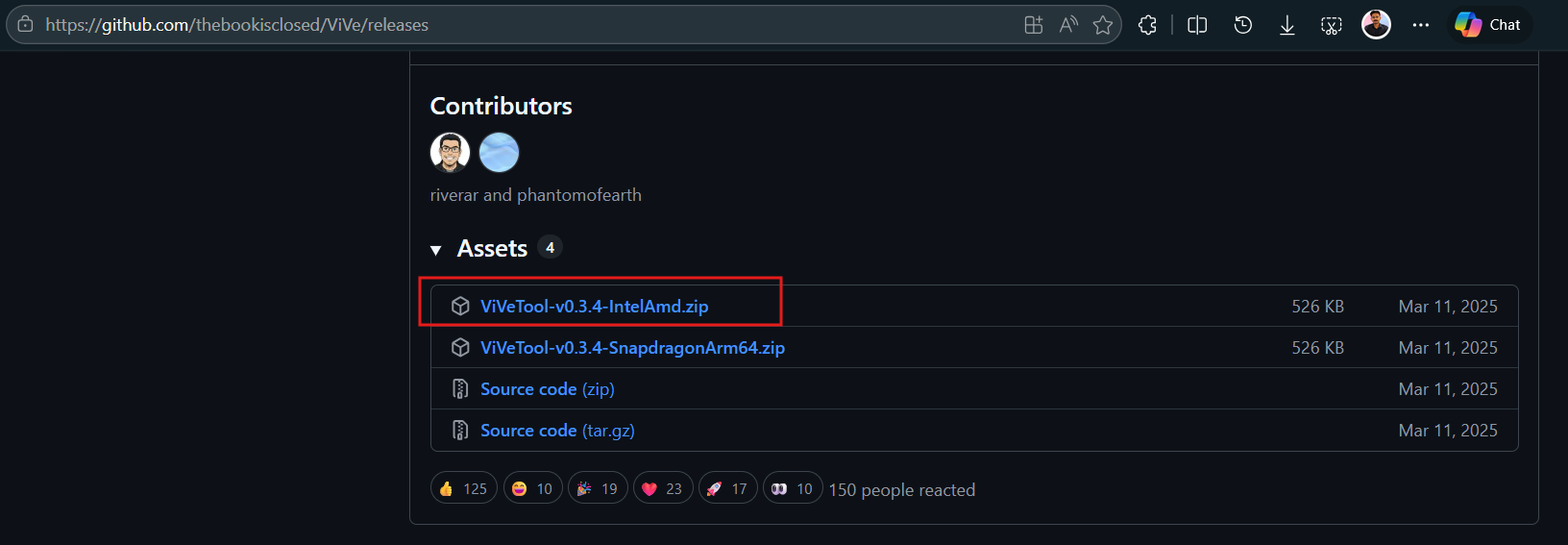
Download ViVeTool. Credit: Windows Latest - Extract the zip file to a simple folder, like C:ViVeTool.
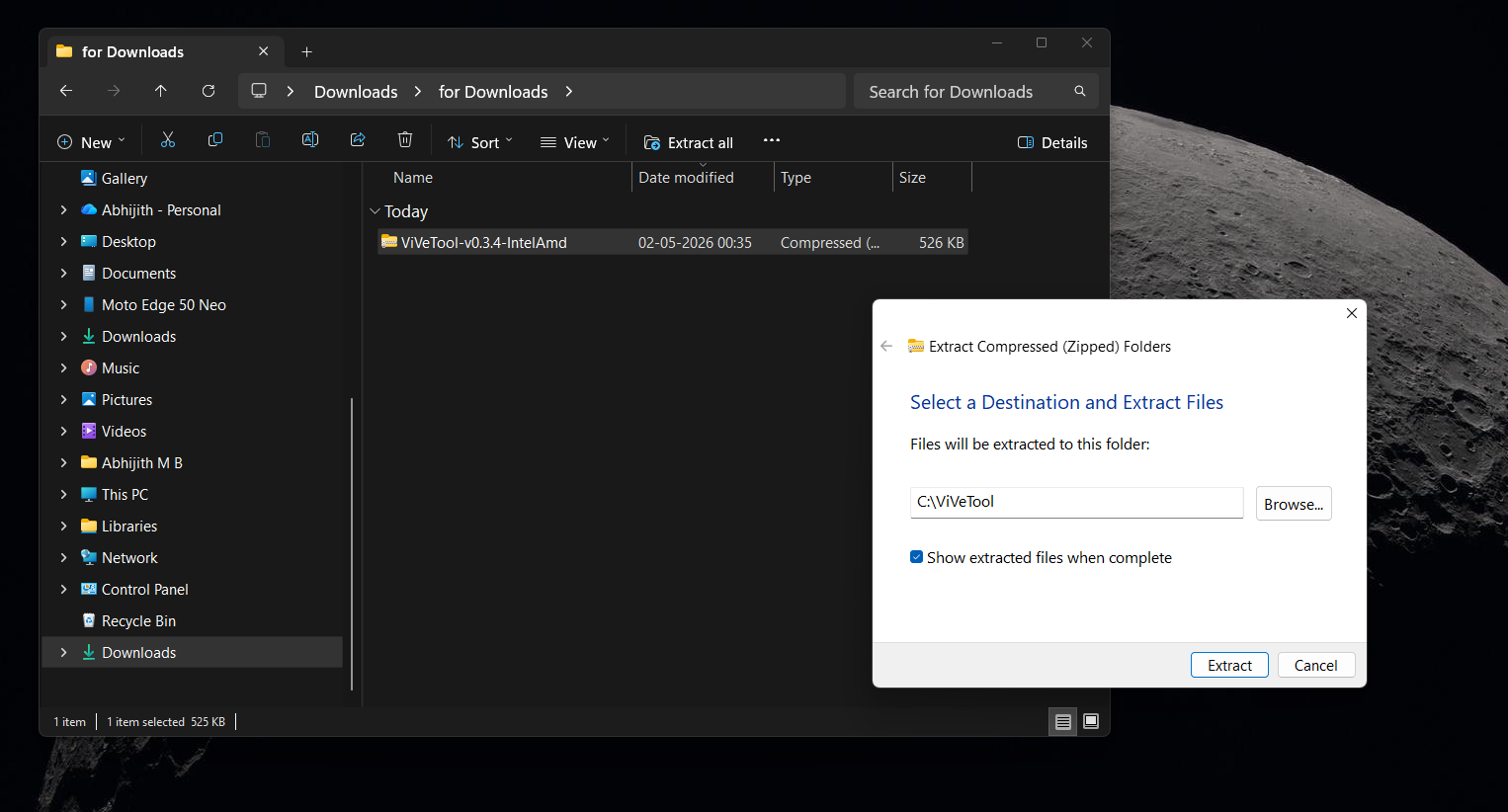
Extract ViVeTool .zip to C drive. Credit: Windows Latest - Open the Start menu, type cmd, right-click Command Prompt, and choose Run as administrator.
- Type cd C:ViVeTool and press Enter to move into that folder.
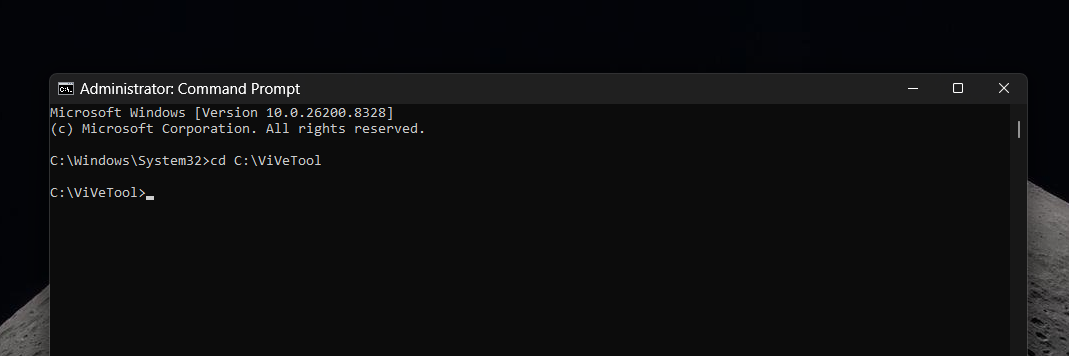
ViVeTool in Command Prompt. Credit: Windows Latest
With Command Prompt still open as administrator, type this and press Enter:
vivetool /enable /id:61161244,61754985
Restart your PC. Open Settings > Personalization > Start once it comes back, and you should see the new size options and section toggles. If nothing changed, run the full feature bundle instead to be sure you have everything from this update, including the movable taskbar and the Bing-free Search:
vivetool /enable /id:61161244,61754985,62353331,62762248
Restart again after running it.
Start menu in Windows 11 is now more customizable than ever before
Once enabled, open Settings > Personalization > Start and you’ll be greeted with a new redesigned Start settings page.
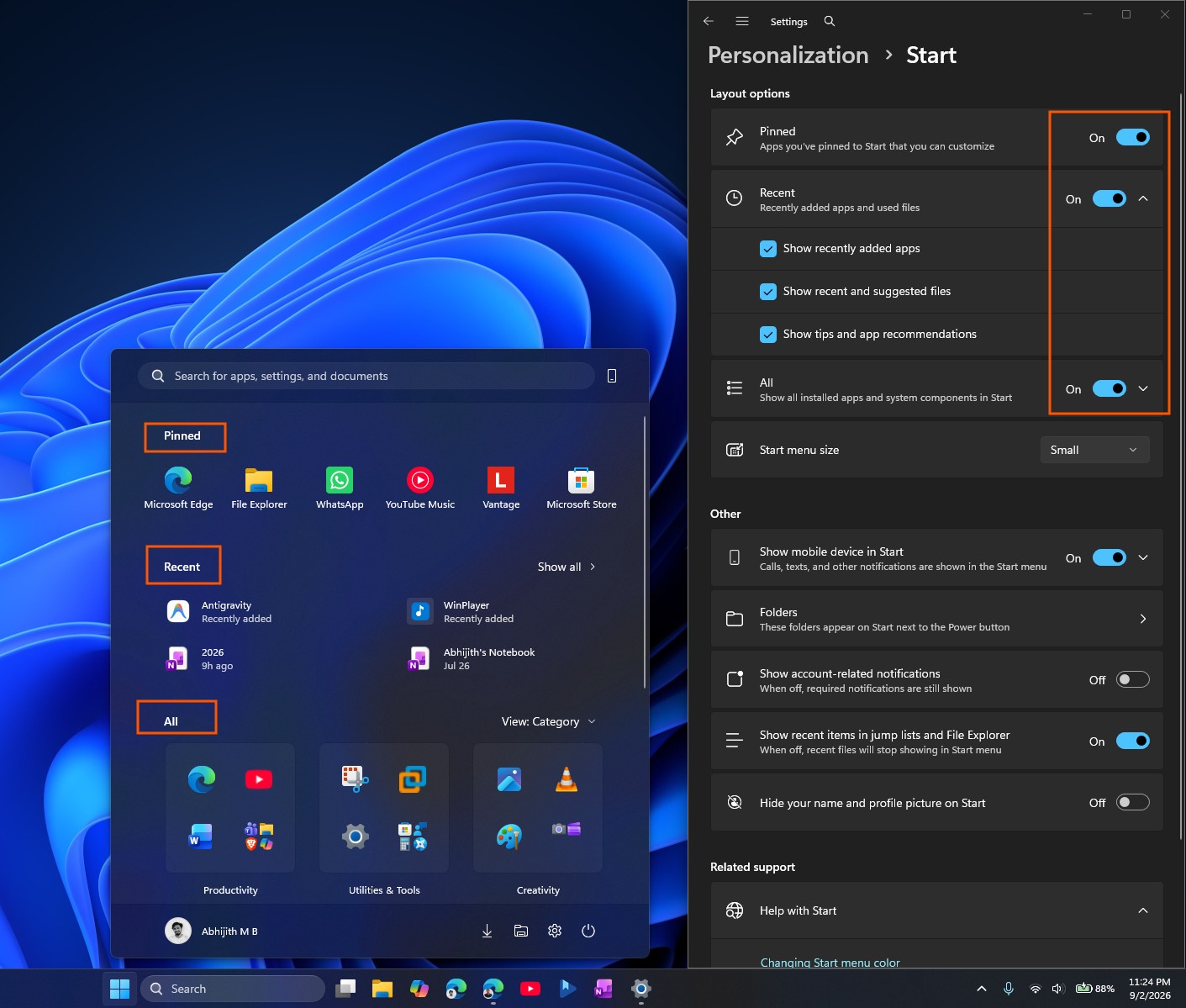
After the update:
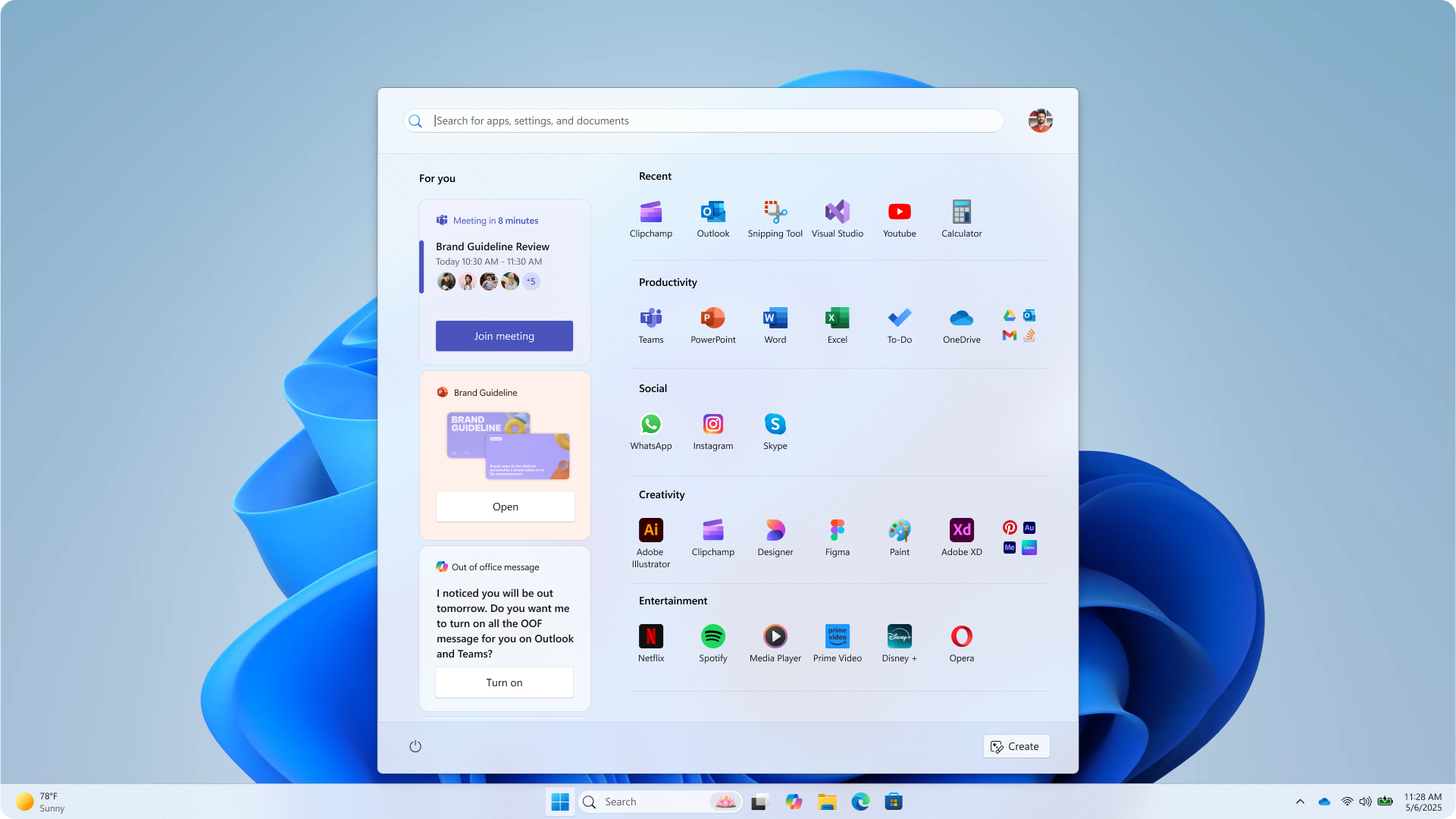
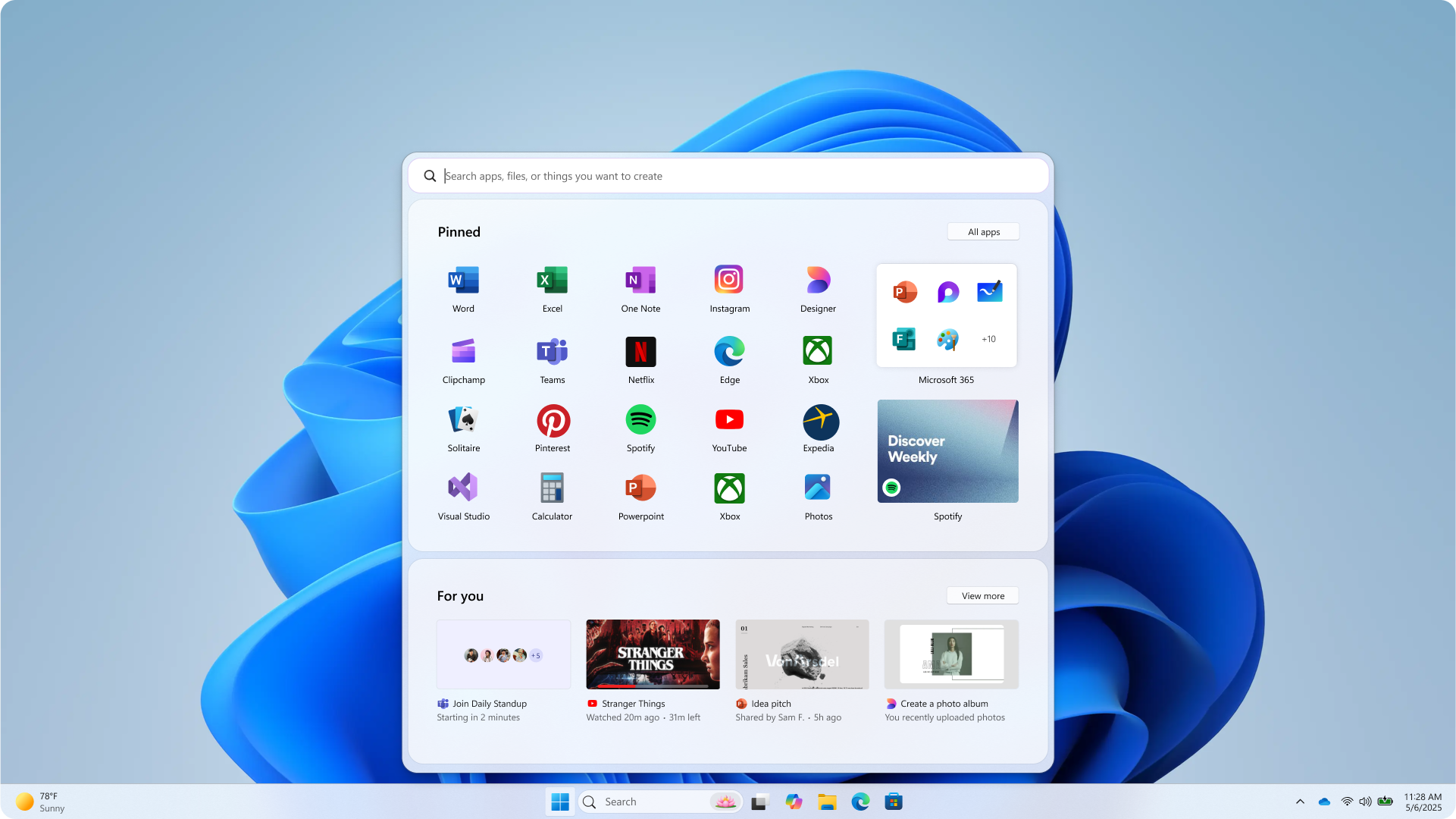
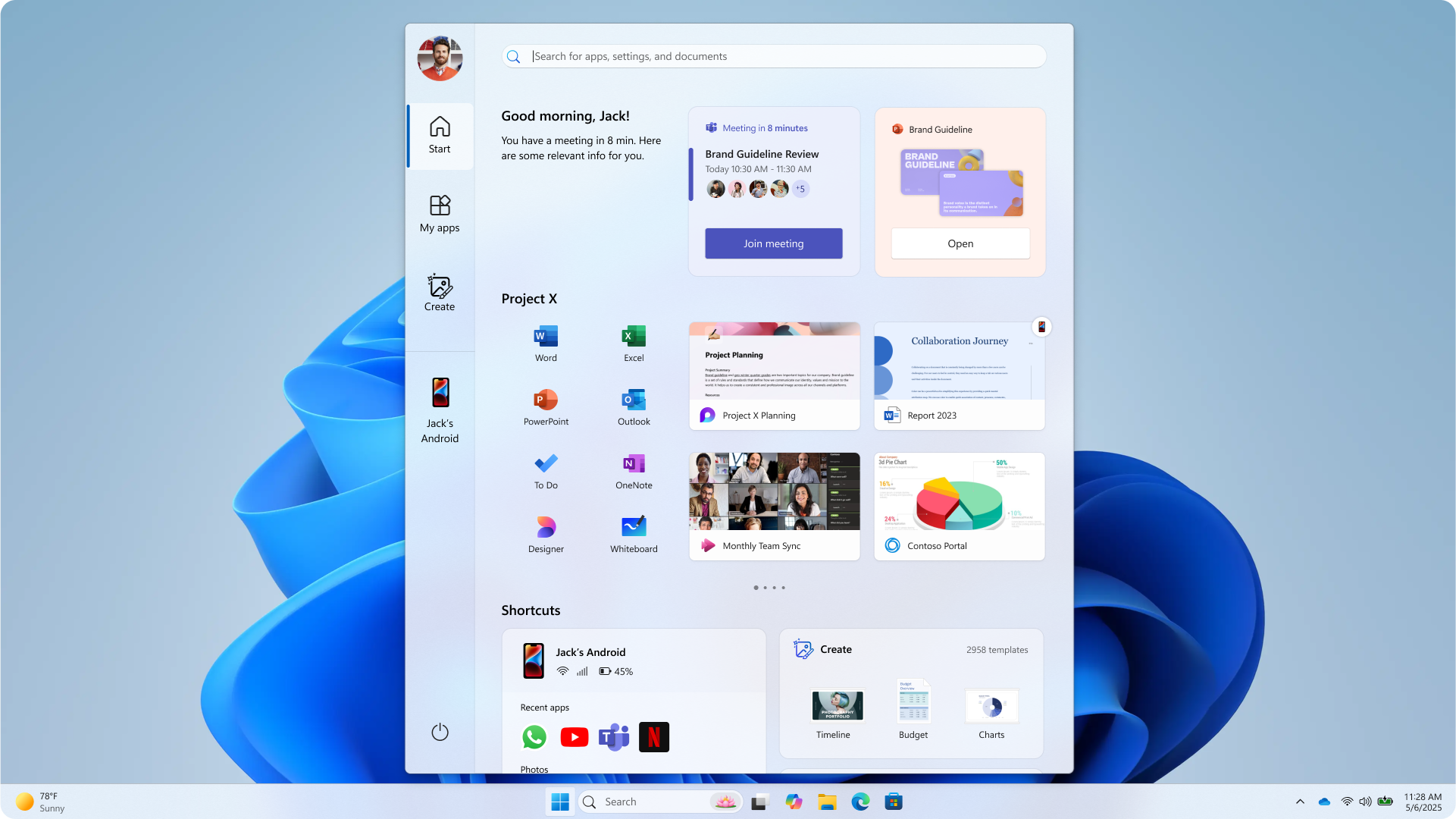
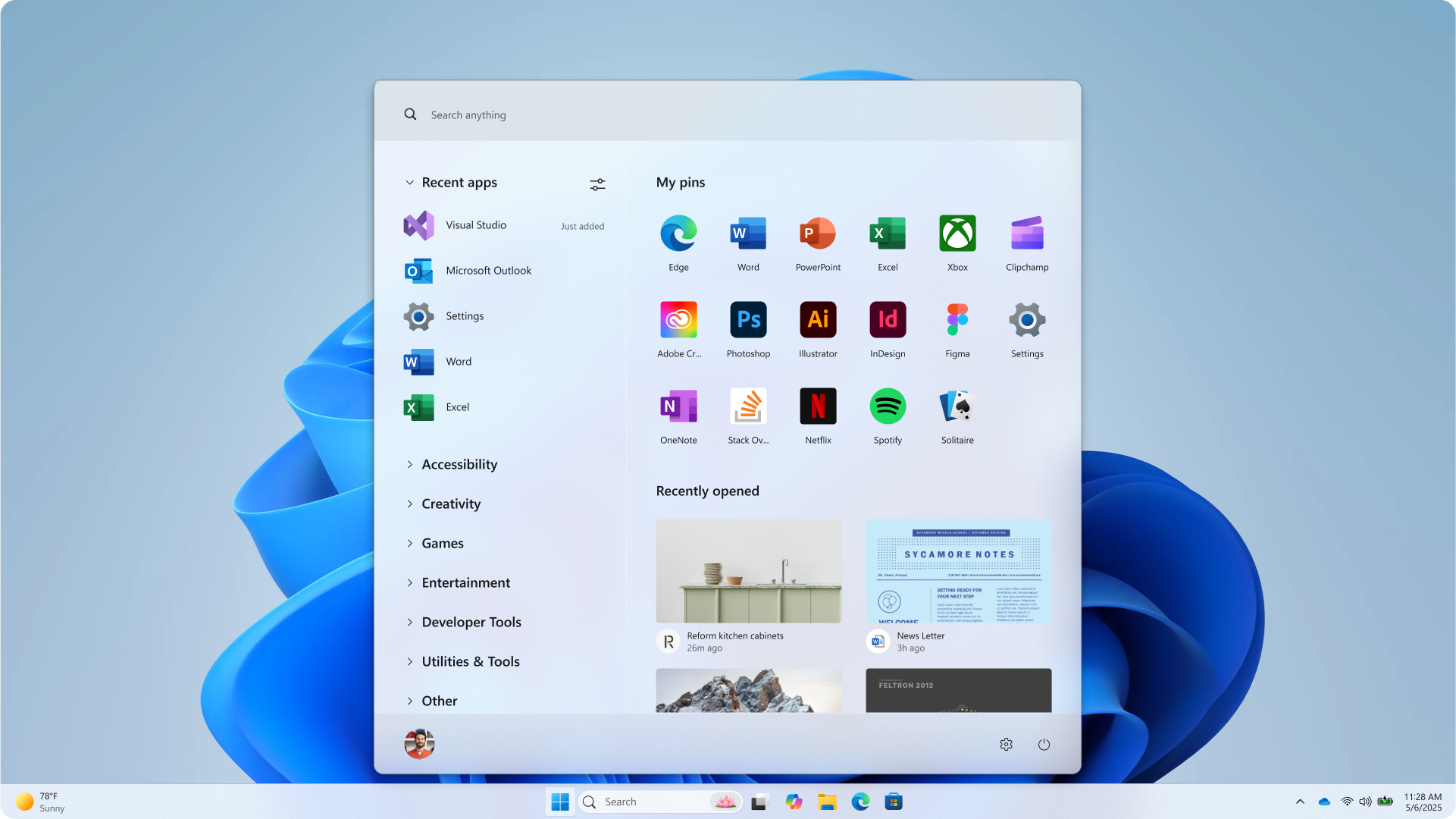
The Start menu now has three sections: Pinned apps, Recent, and All apps. We can also turn off all three of them. Microsoft changed Recommended to Recent, which is a genius move because Microsoft recommending anything isn’t always well received by most of its 1.6 billion monthly Windows users.
Each section has toggles that let you show/hide Pinned, Recent, and All independently, and a separate toggle lets you hide your name and profile picture if you record your screen or stream often.
I have played around with them and decided that I’ll just keep the All section while turning off Pinned and Recent.
Note that even if you turn on Pinned and Recent, the Start menu will be the same size. Speaking of which, Windows now gives you three size options: Automatic, which is the current adaptive behavior that caused the size complaints in the first place, Small, and Large.
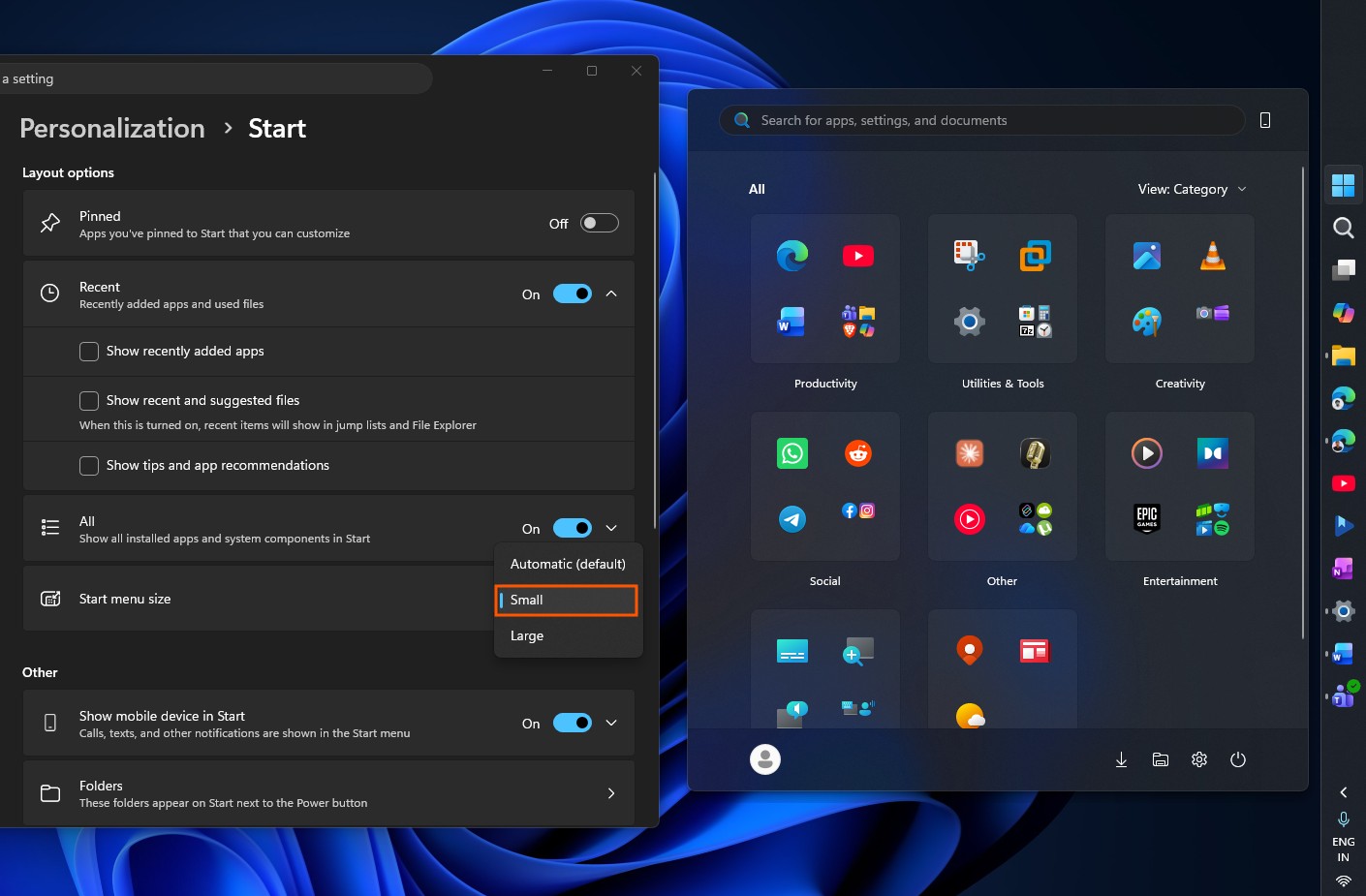
Small is the one that I would choose any day. There is also a new Hide your name and profile picture on Start option, which is handy if you stream, share screen, or record your desktop often and want to hide your identity.
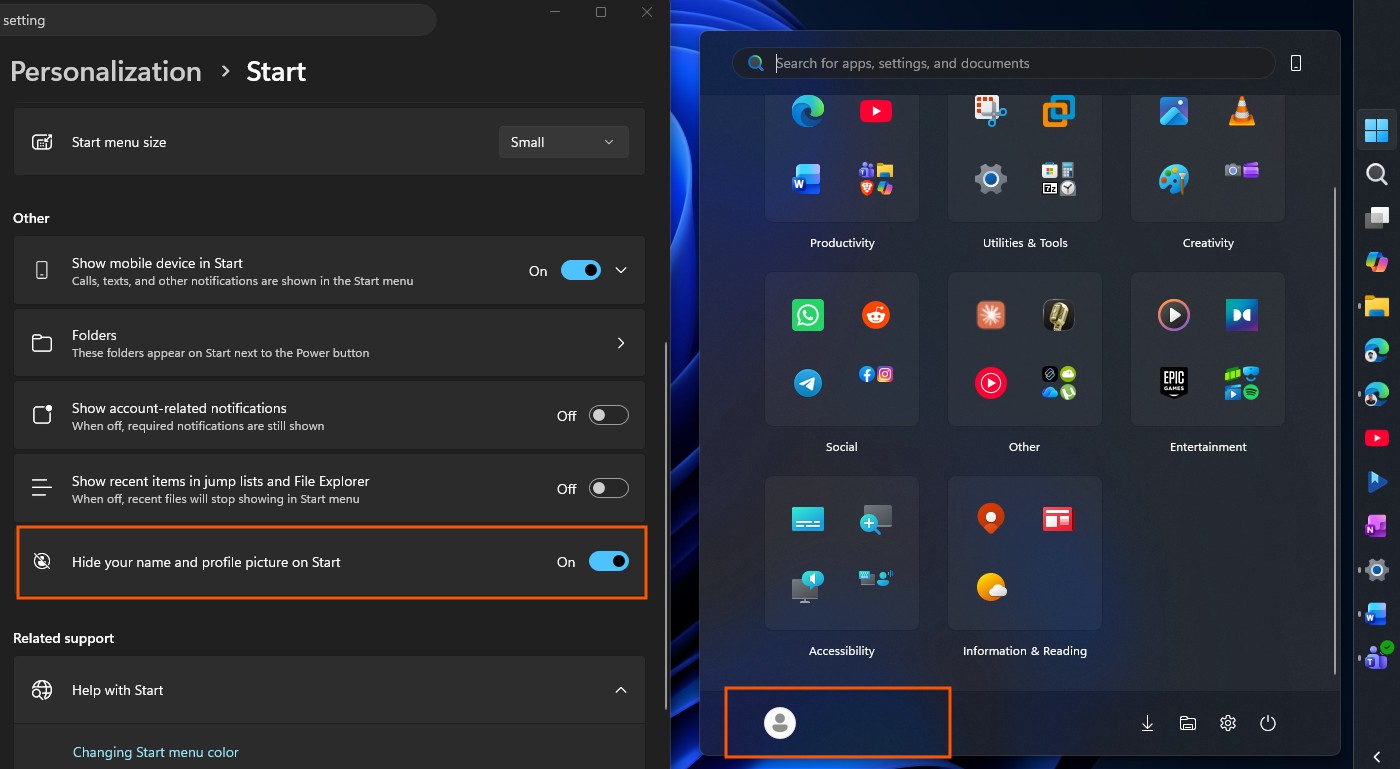
Interestingly, if you want the Start menu to look like the original one from when Windows 11 was launched, you can just turn off the Recent and All section, while adding your most used apps in the Pinned section.
But of course, you would have to search for all apps, which is alright now, because Search in Windows 11 is now cleaner and faster than ever before.
Finally, in case you’re wondering, this is what the Start menu looks like if you turn off everything:
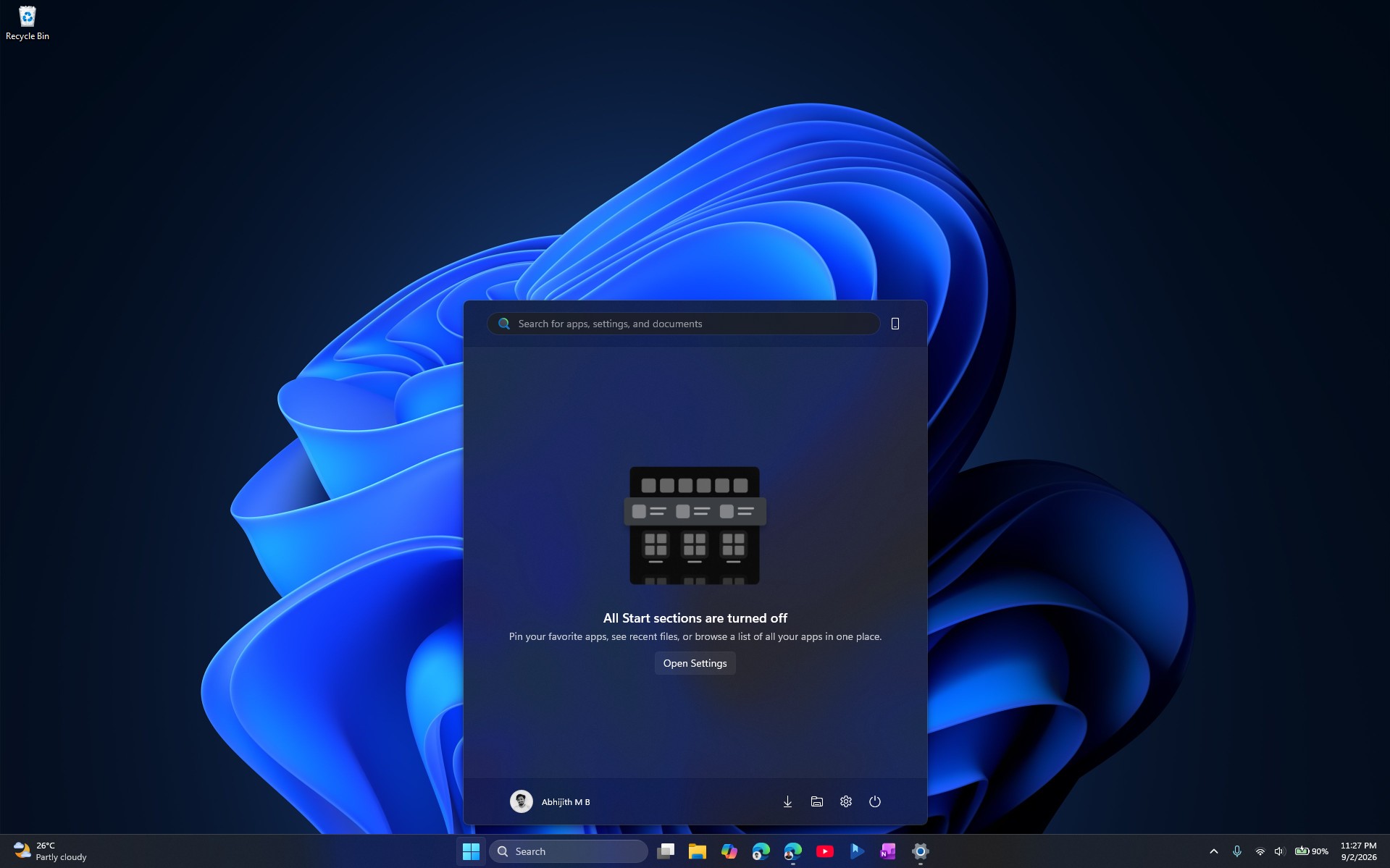
We saw this while testing the Start menu in May, and it’s still there, which is odd because this isn’t good design. I would prefer if the Start menu size was adaptable and it would adjust automatically based on the layout we chose. I’m not complaining, though, because what we had before was worse
Why the Start menu got this big in the first place
The complaints were not small (no pun intended). Windows Latest measured the new Start menu at nearly 90% of vertical screen space back in December, up from roughly 50 to 60% before the November 2025 redesign.
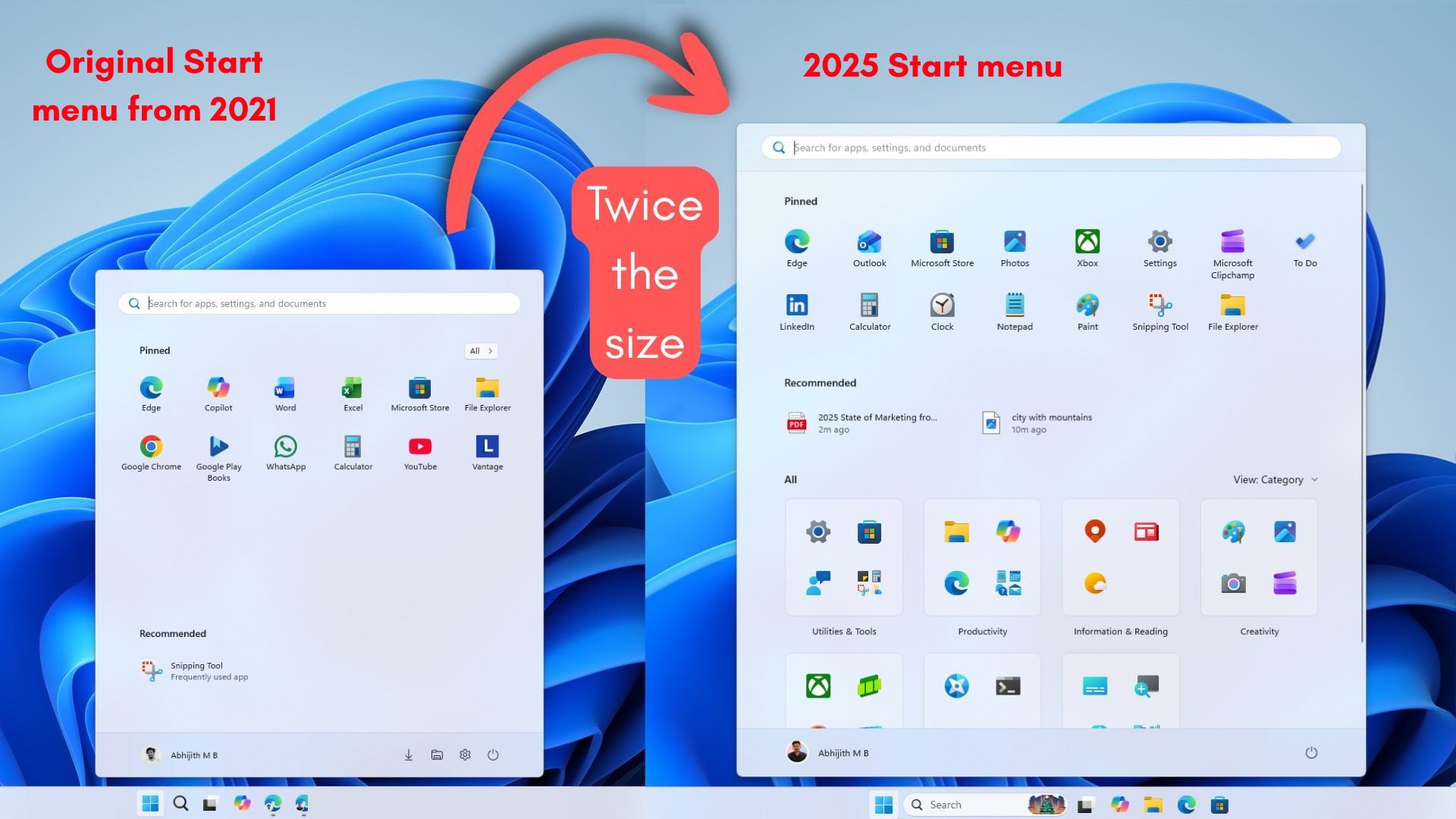
Turning off Recommended didn’t shrink it. Switching between Grid, List, and Category view did nothing either. Removing a row of pinned apps just left more white space at the bottom. On a 14” laptop display at 100% scale, the Start menu nearly touched the top of the screen.
Interestingly, as it turns out, the company posted five completely different Start menu prototypes during the redesign process, gathering feedback from more than 300 self-described Windows fans through interviews and what Microsoft called “coffee chats” at its headquarters. All five alternatives shared the same size problem, and Microsoft picked the current single-page design anyway.
Speaking of testing, the placement psychology behind the default centered Start button doesn’t follow what we saw from Windows 95 to Windows 10. As we reported, a behavioral psychologist named Danny Oran picked the bottom-left corner deliberately for the original Start menu.
What is still missing in the new Windows 11 Start menu
You still cannot drag the edges of the Start menu to resize it freely the way Windows 10 allowed.
The taskbar situation has followed a similar pattern this year. Microsoft brought back taskbar repositioning to every edge of the screen, five years after removing it at launch, though you still reposition it through Settings instead of dragging it with the mouse like Windows 10 let you.
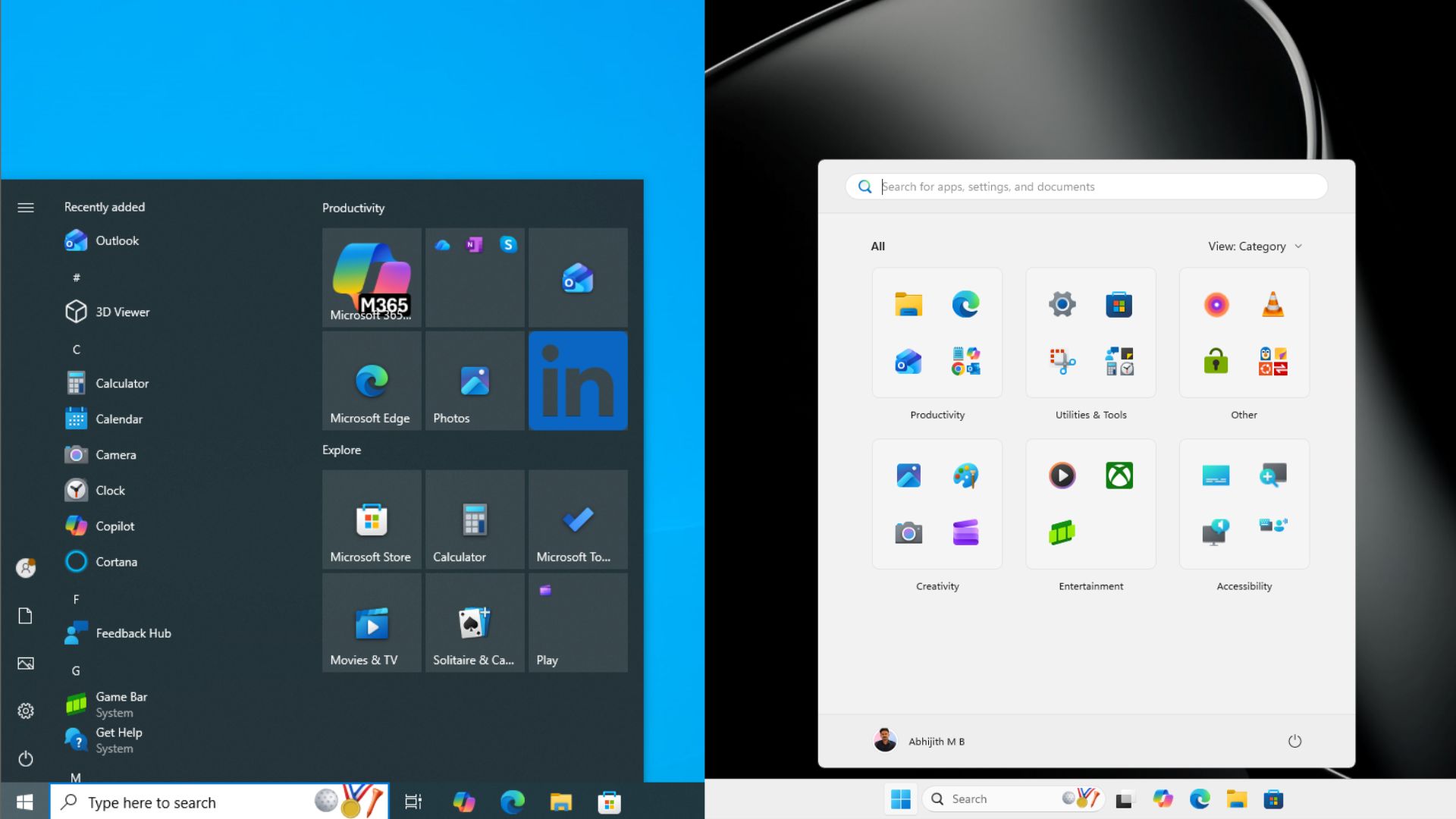
Microsoft hasn’t mentioned anything about performance improvements. The Start menu still runs on older, heavier UI components in places, and Microsoft has confirmed it is rebuilding pieces of it in native WinUI to fix the animation stutter that shows up on lower-end hardware.
However, thanks to Low Latency Profile, the Start menu feels faster.
Before you rush ahead and install the optional update, you need to be aware of a cursor resizing and wallpaper bug that we first reported in the August optional update. Microsoft has acknowledged the bug with the cursor, but hasn’t rolled out a fix.
So, if you’ve already installed the update, you can try ViVeTool and force-enable the new smaller Start menu, or if you prefer to wait, you will get the feature in the upcoming September Patch Tuesday update.
The post Windows 11 users were right about the giant Start menu, and Microsoft now lets you shrink it using these steps appeared first on Windows Latest