
Microsoft has released a new Windows 11 Insider build with the redesigned Start menu that they first announced earlier this month, and after spending time with it, I think the company has finally fixed one of the biggest reasons people disliked the Windows 11 Start experience.
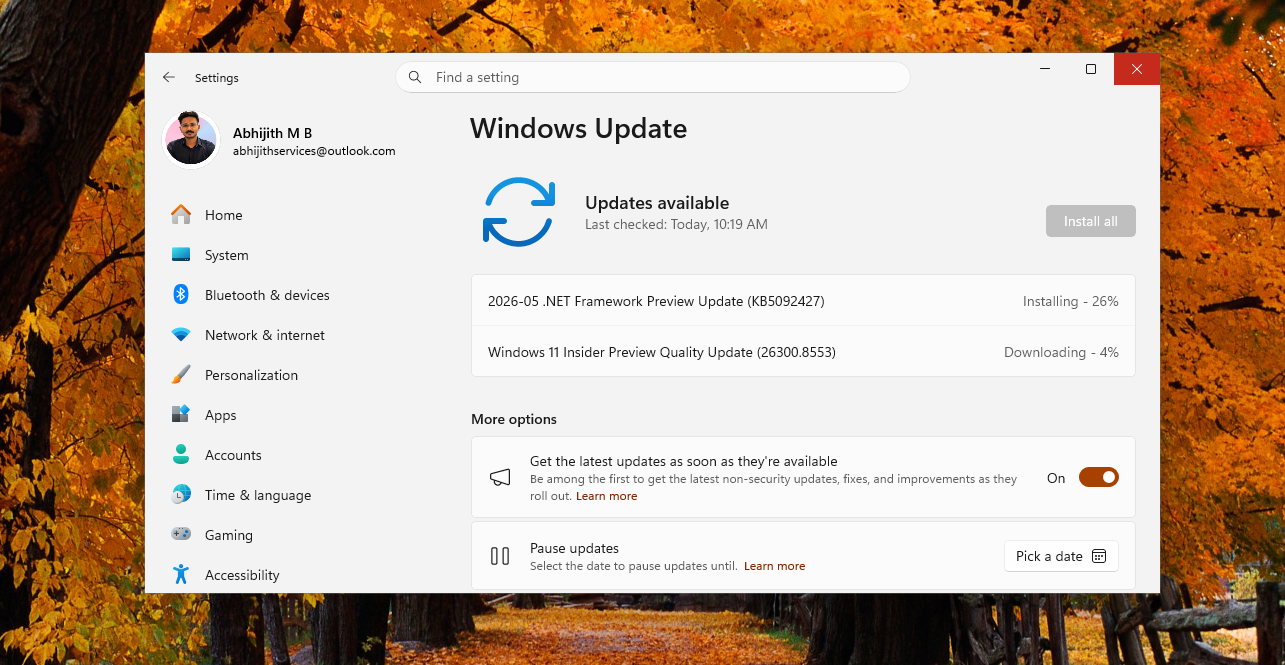
The changes are rolling out in Windows 11 Insider Preview Build 26300.8553 in the Experimental channel, alongside Build 26220.8544 for Beta users. However, only the former is getting these changes for now. The update brings the new Start menu customization controls that Microsoft originally outlined in its “Making Taskbar and Start more personal” announcement.
To be honest, the Windows 11 Start menu was probably the most disliked Start menu since Windows 8. The criticism was justified, and it came from two directions.
- First, customization was stripped away. We lost Live Tiles, flexible layouts, full-screen mode, deeper organization options, and even simple controls like resizing.
- Second, performance became a frequent complaint. The Start menu felt slower than it should, especially on lower-end hardware, where opening Start sometimes came with visible animation lag.
This update fixes the customization side almost completely. Performance is improving, too, but that battle is not over yet.
Hands-on with the new Windows 11 Start menu
The biggest change I feel here is immense control.
The company says, “It is your choice, and it should be easy to make.” After testing it, I see that philosophy takes shape, and maybe a little too well, as we’ll see later.
Microsoft has added section-level toggles that let you independently show or hide Pinned, Recent, and All sections. Everything is now managed through a single redesigned Start settings page.
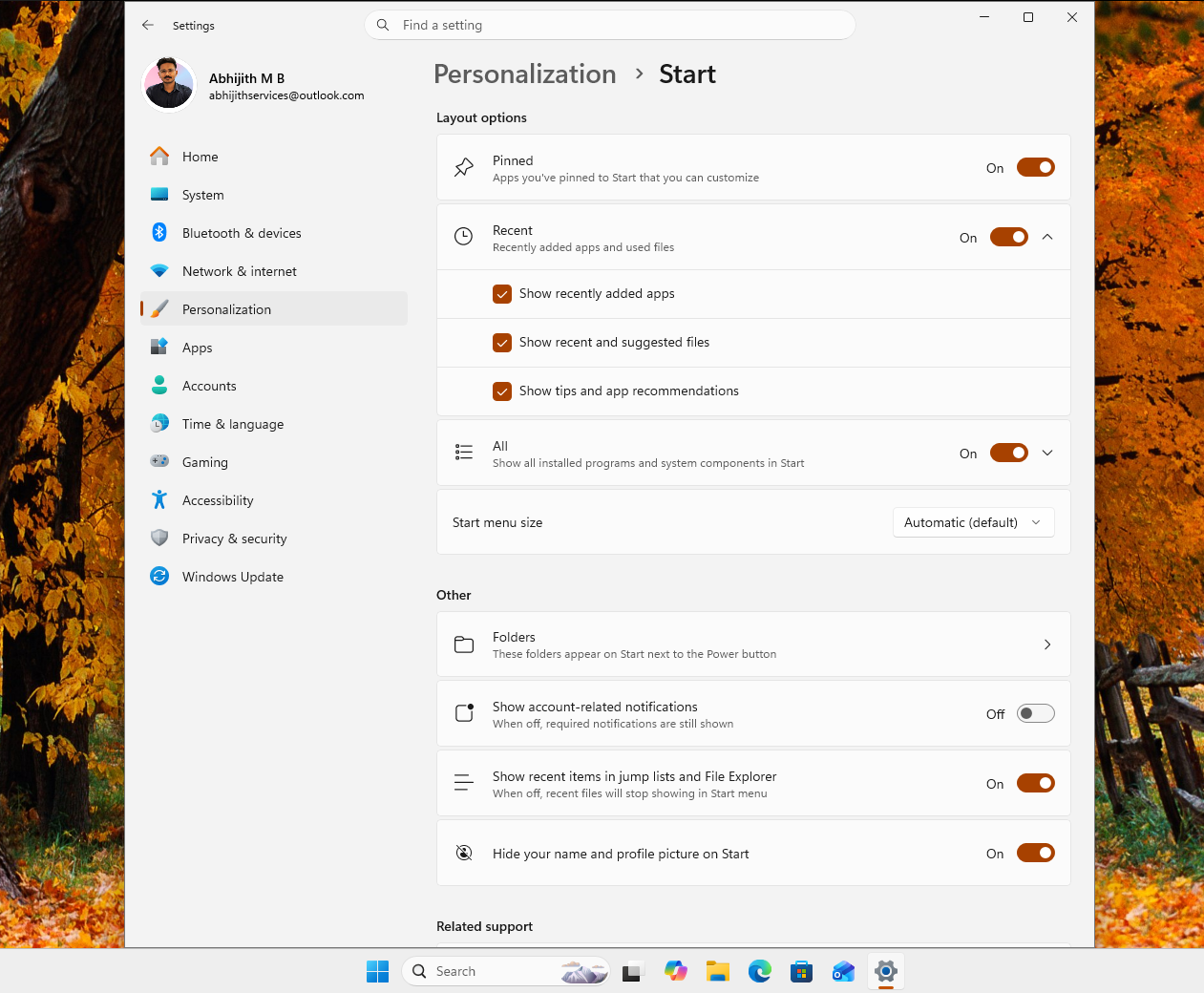
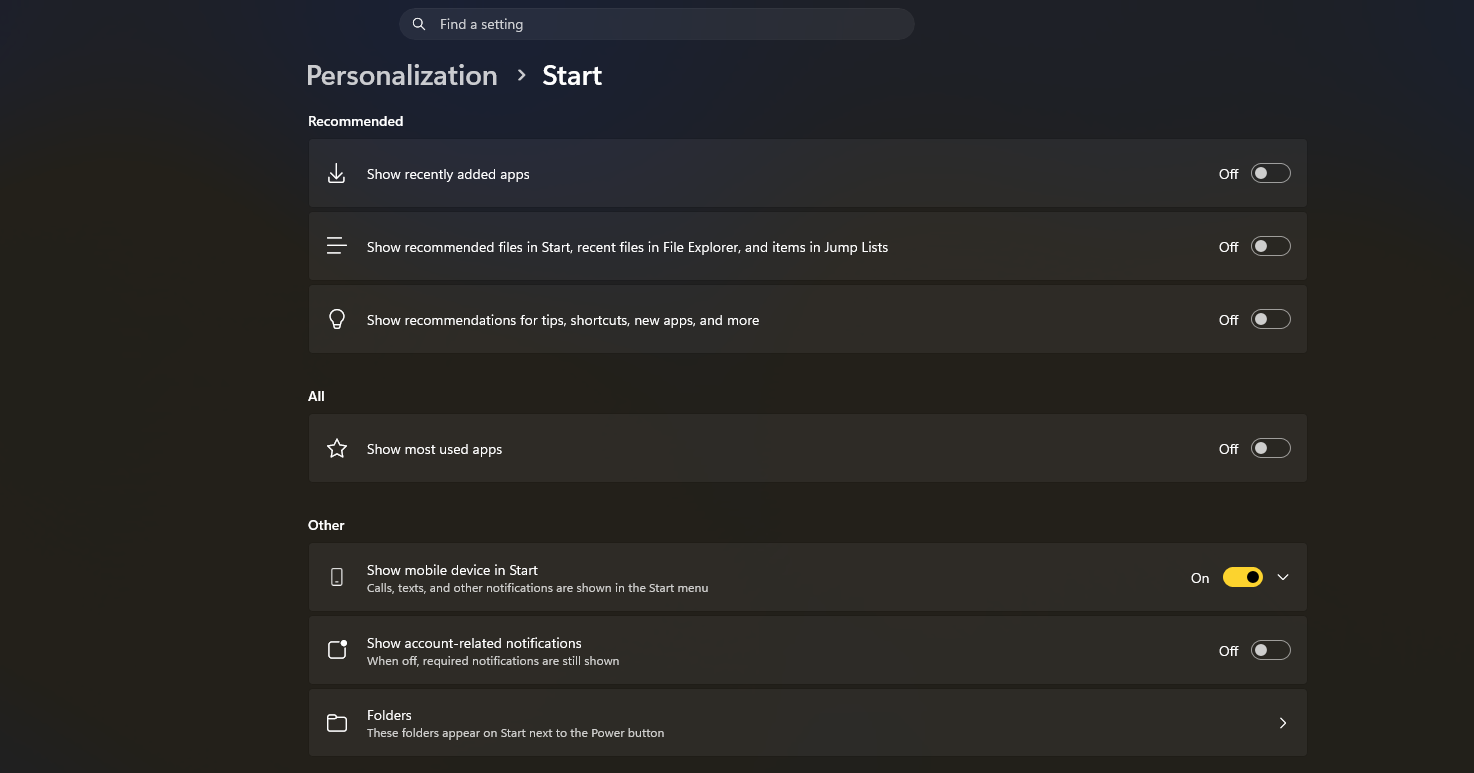
The Start menu has three sections: Pinned apps, Recommended, and All apps. While the old Start menu settings page gave us options to turn off Recommended completely, the new Start menu settings page gives us the option to turn off all three of them, while changing Recommended to Recent, which is a genius move considering the negativity around getting suggestions from Microsoft!
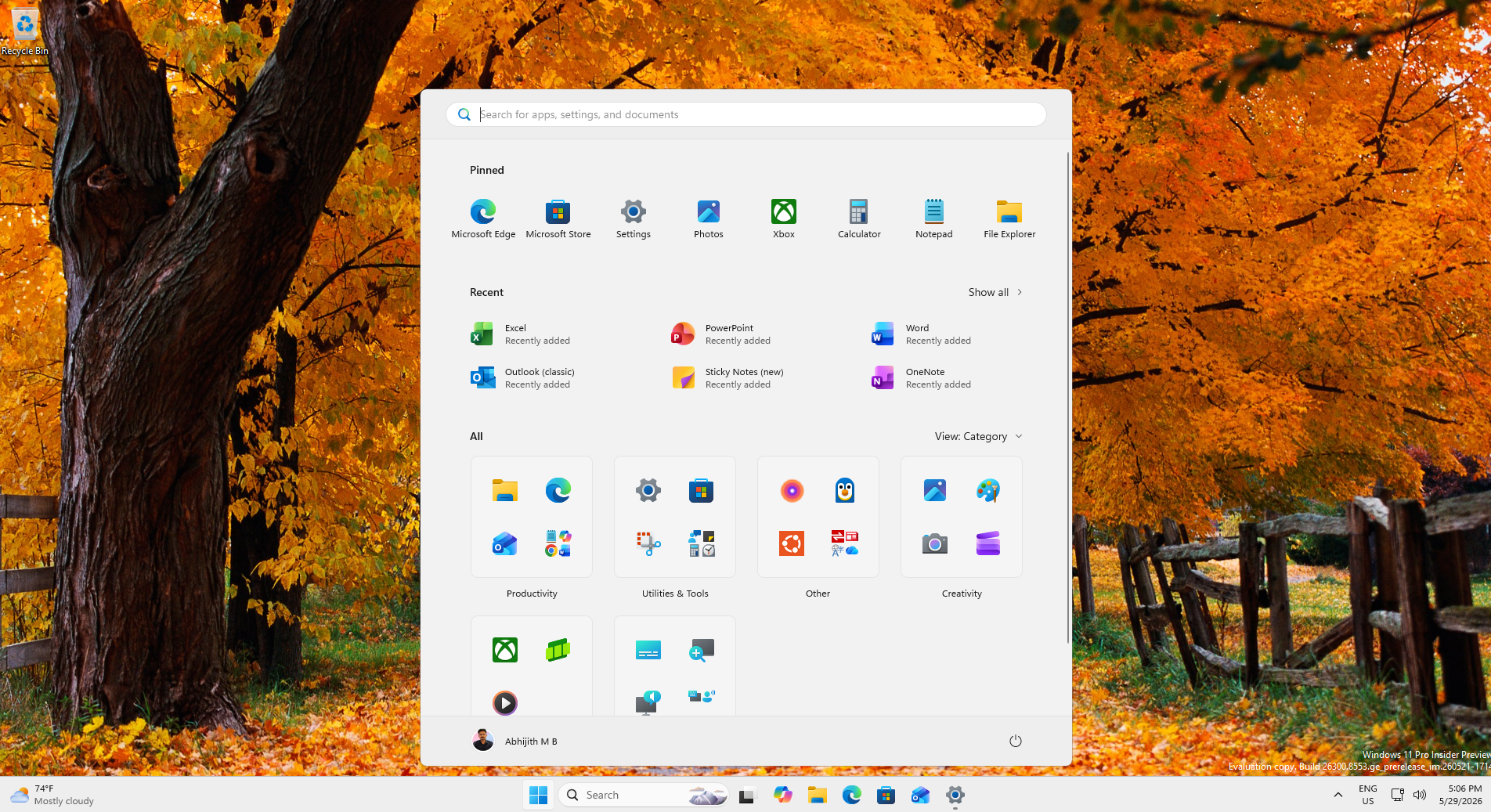
I have never been a fan of Recommended in the old Start menu and have always turned it off. But this new Recent section is starting to look interesting. To be clear, it has almost the same customizations as the earlier Recommended section, but I feel it’s more real-time and shows the files I recently opened.
You can, of course, customize Recent to show just the recently added apps, files, or both. Or you can turn it off completely.
Now, for the interesting bits. The Start menu settings page now allows you to turn off Pinned apps and All.
Here is what the Start menu looks like without Pinned apps:
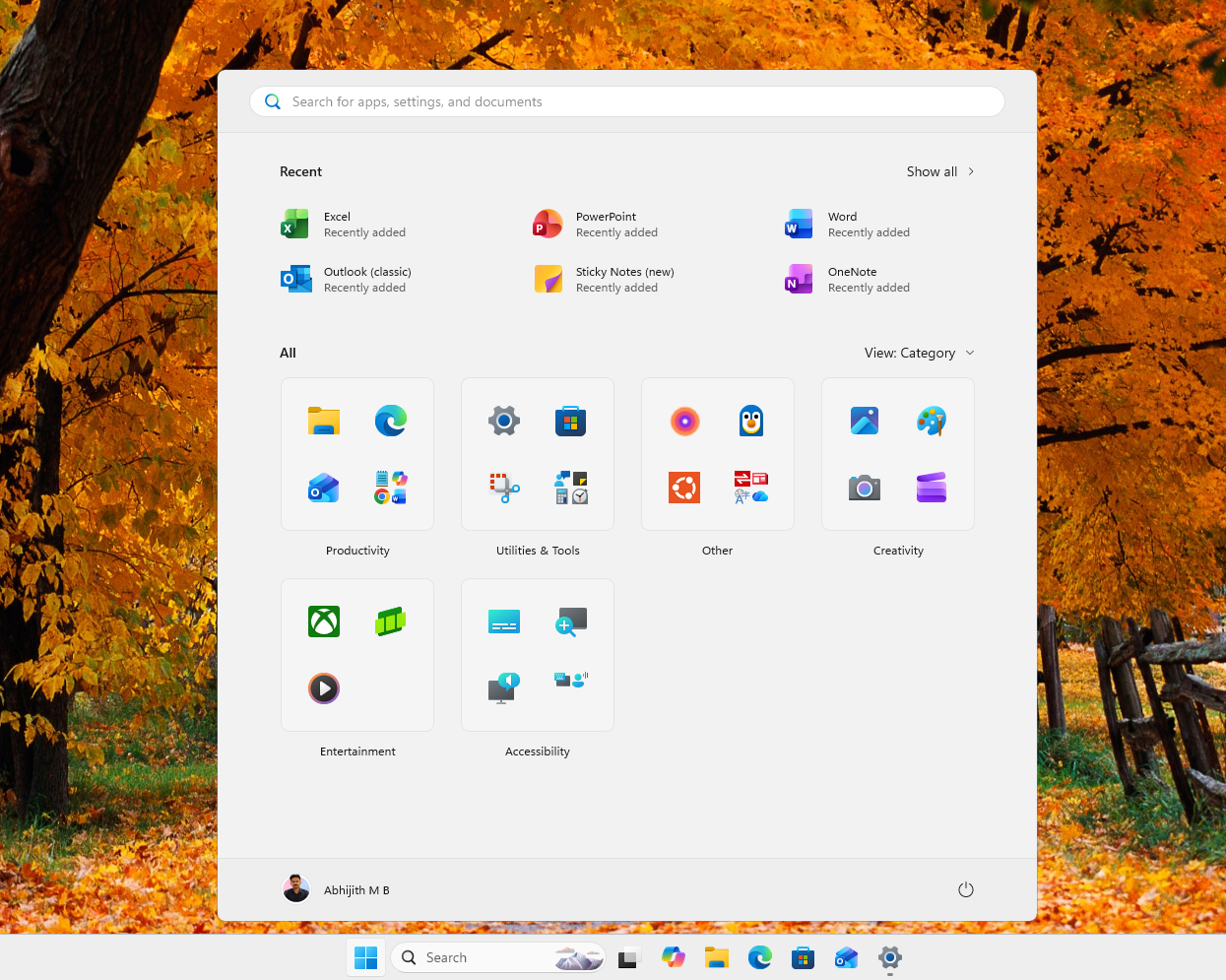
Turning off the toggle for Recent will make it even more interesting:
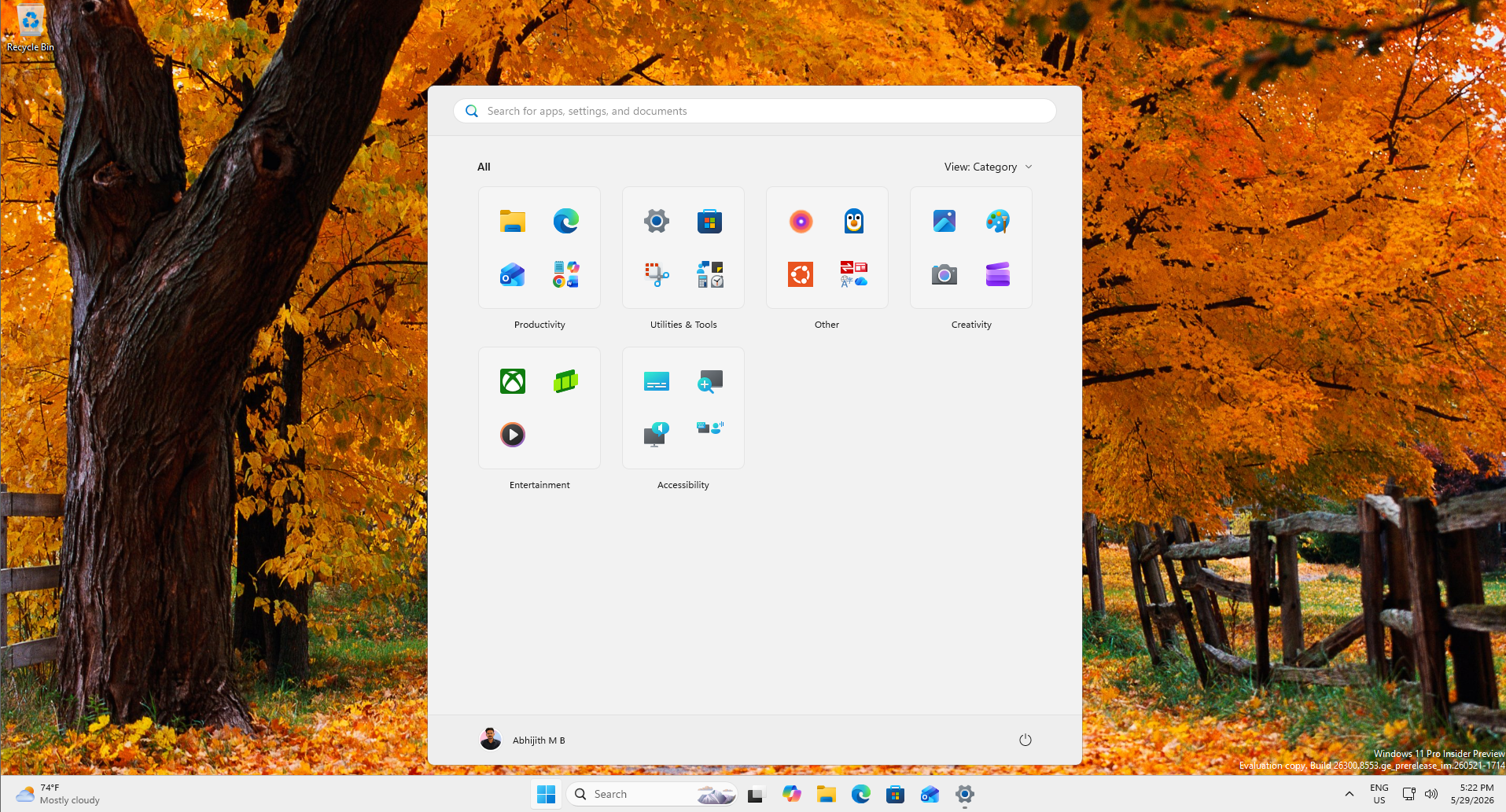
Yes, there is a lot of white space when we turn off Pinned and Recent, but Microsoft has given a fix that we’ve been asking for so long. The Start menu was getting too big and covering almost the entire screen.
So, now, Microsoft has given three choices for the size of the Start menu:
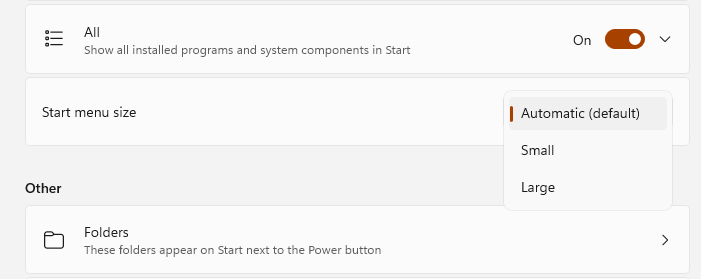
Automatic is the option we have on all regular PC’s where the Start menu adapts to match the screen size, but it was always too big for my liking. The option to make the Start menu smaller is maybe my most favourite change in this update.
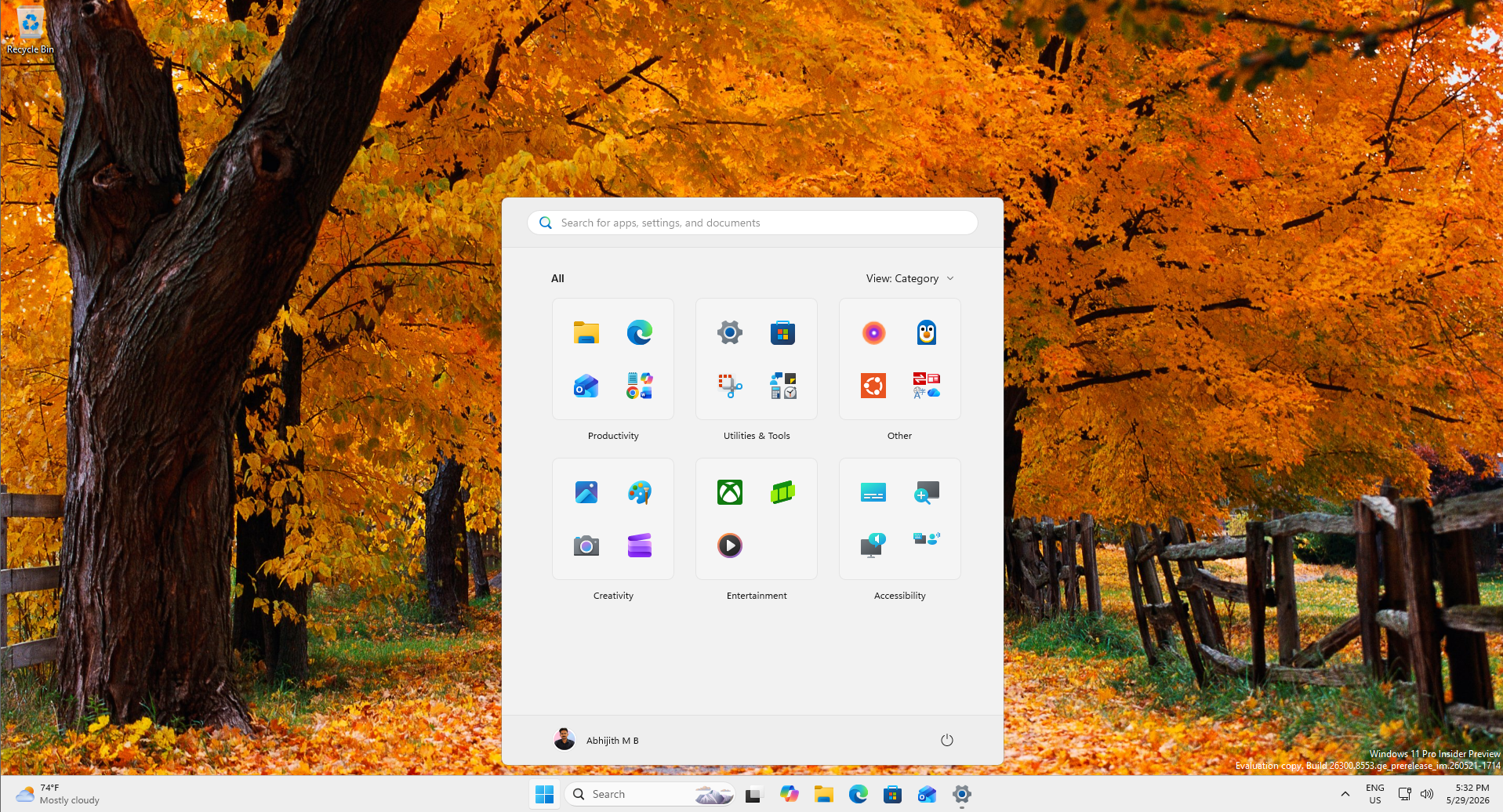
But, we mustn’t forget that All apps in the Start menu already has it’s own customizations. Here is what it looks like in Grid view and List view, with Pinned and Recent turned off:
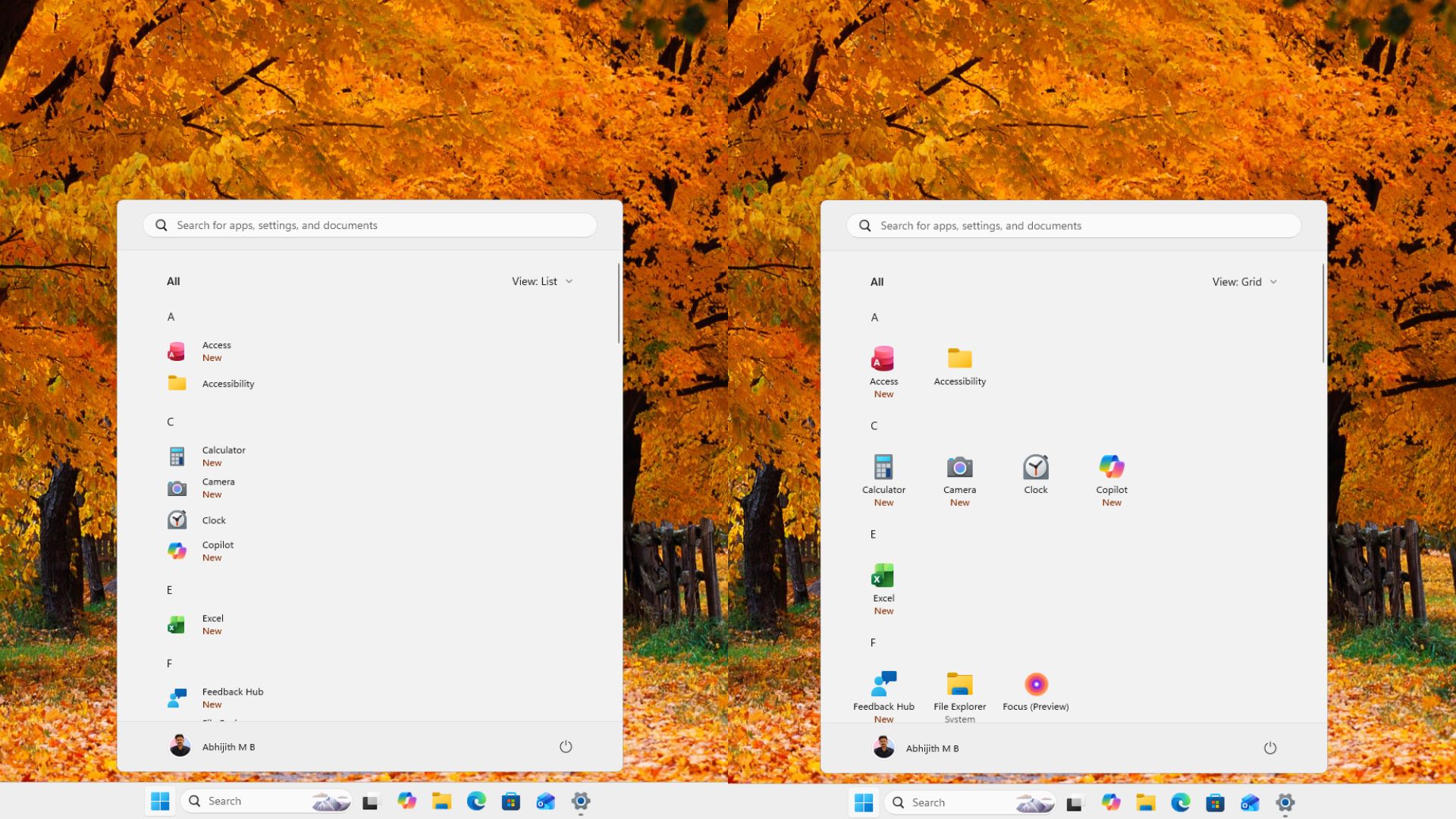 I see myself slanting towards the Category view with the small size enabled. But I also know people who use only a handful of apps and do not want to see the full list (or grid) on the Start menu, and for them, disabling All and Recent and just keeping the Pinned apps is a godsend.
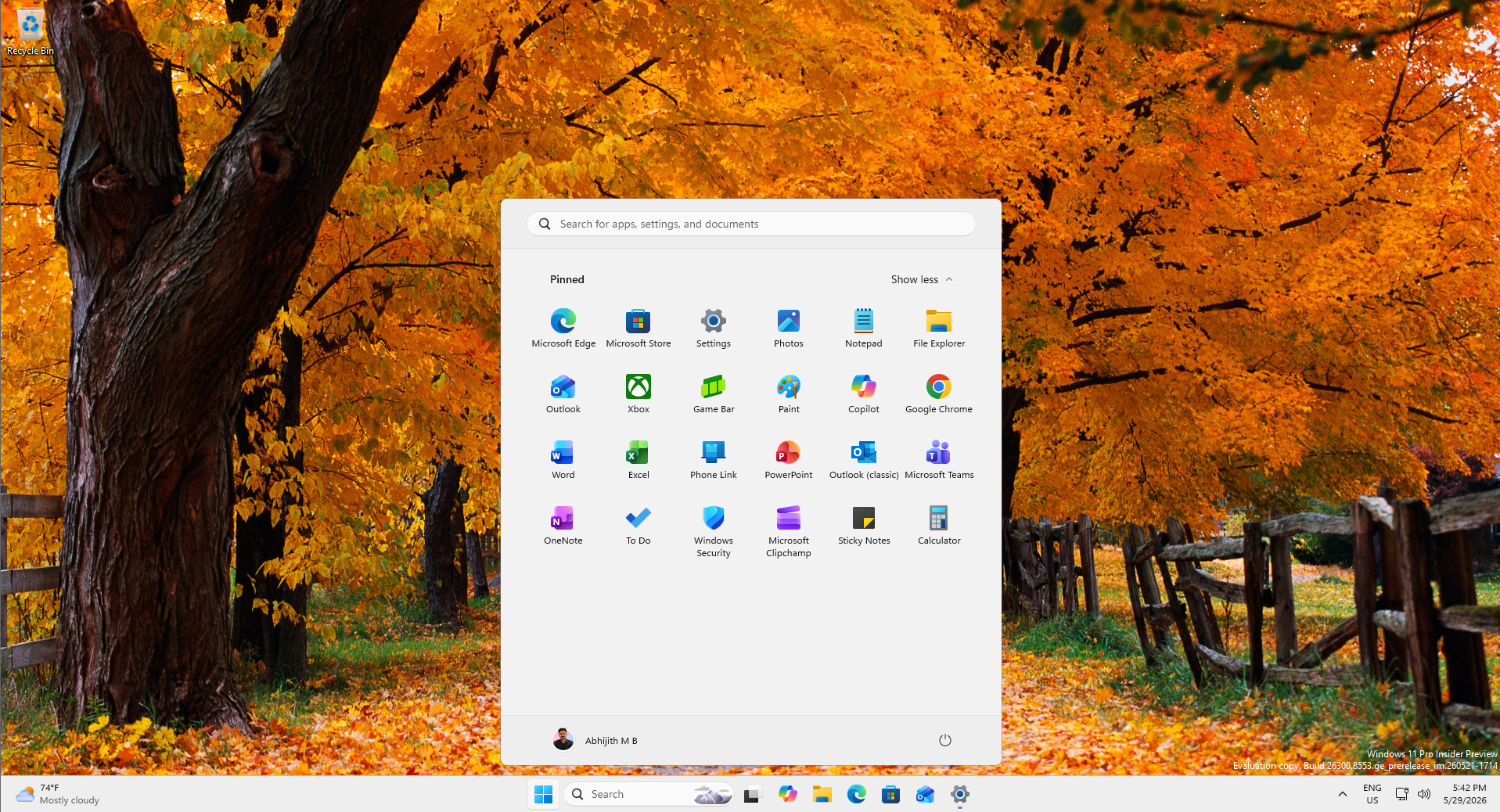
Of course, if you don’t like the small white space below, you can always turn on Recent, and the resemblance to the original Windows 11 Start menu is, dare I say, nostalgic:
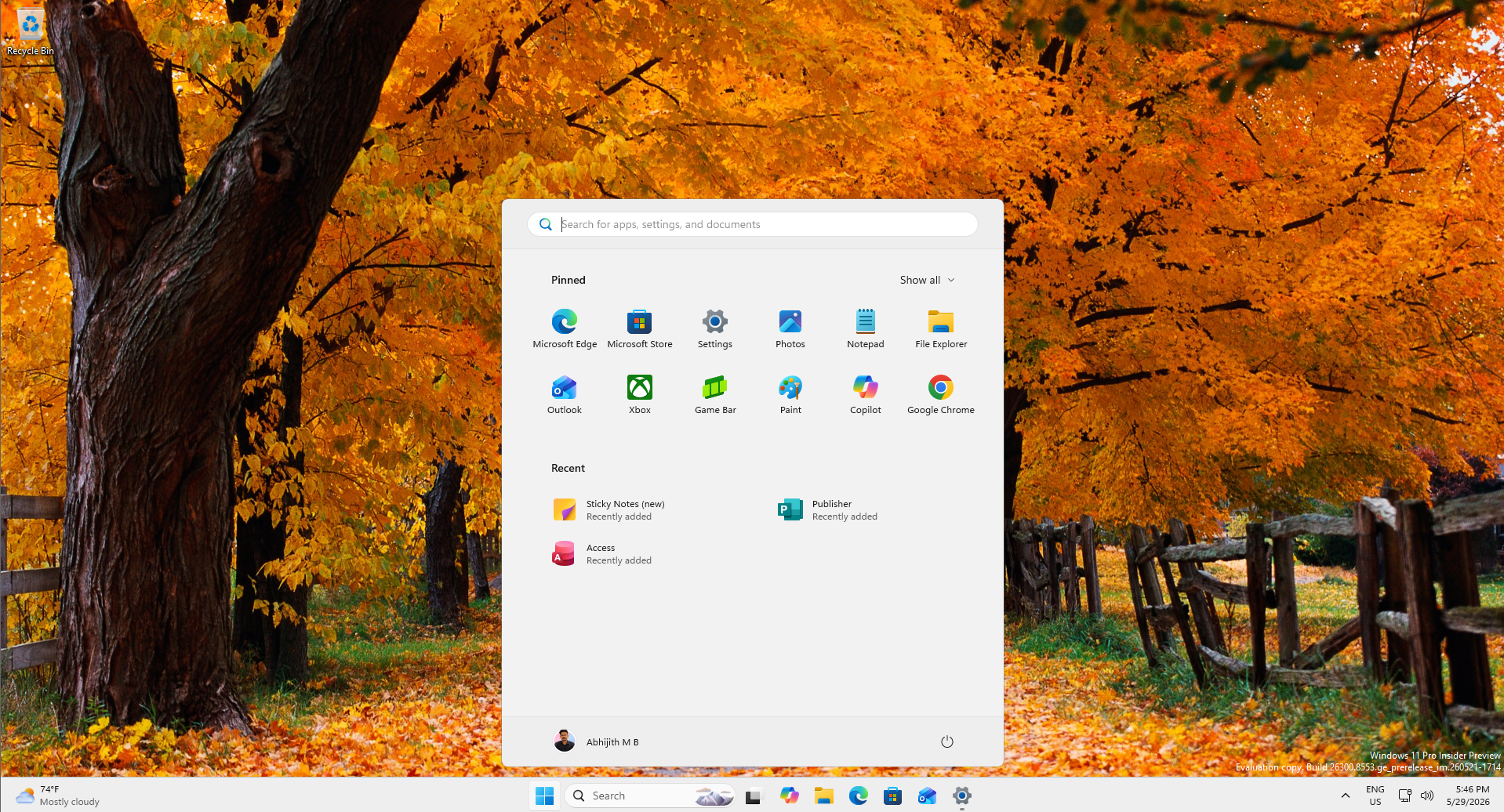
Funnilly enough, disabling All and Pinned apps and manually removing each Recent app, while not disabling it, would show an empty Start menu:
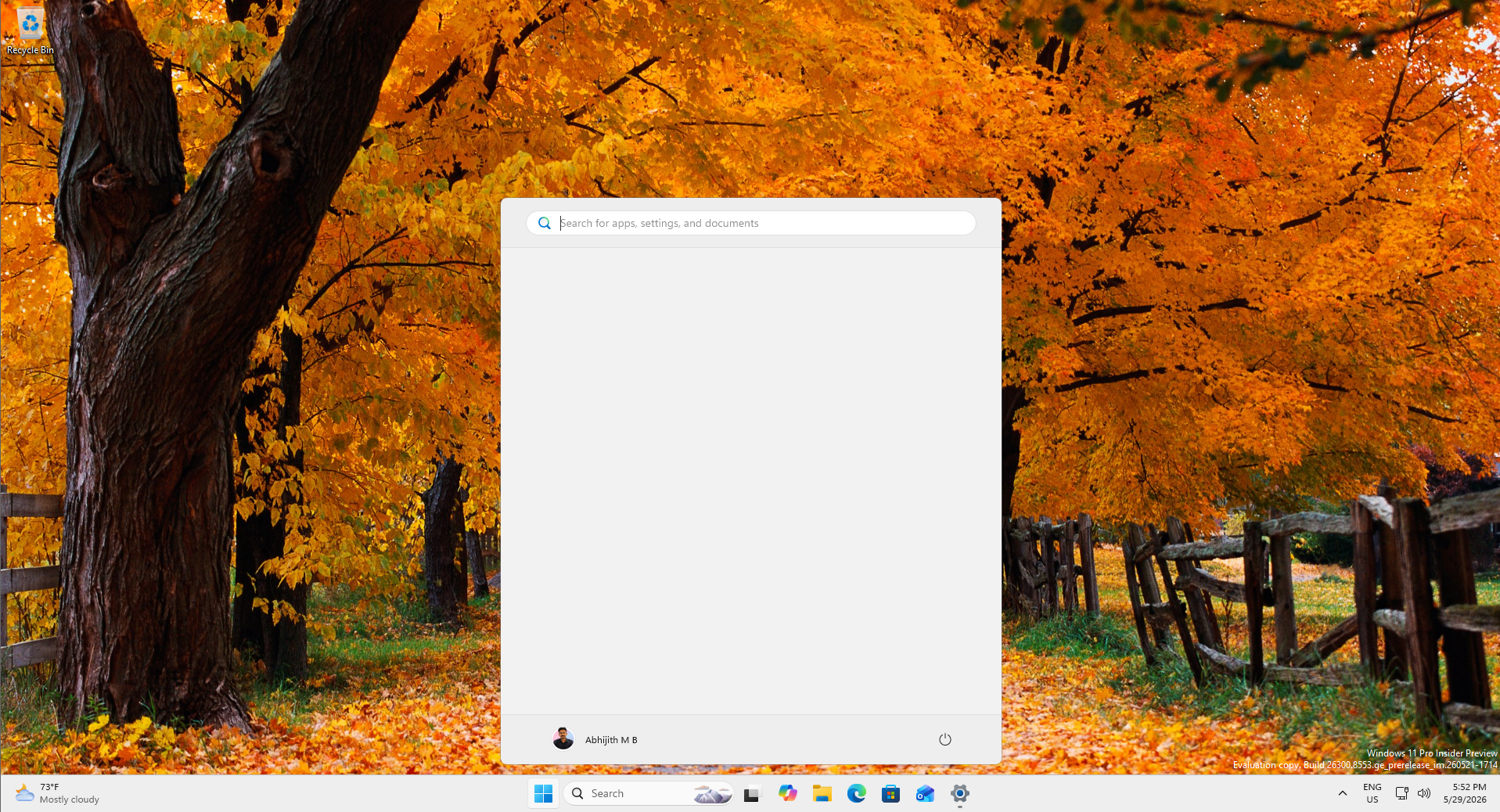
And in case you’re wondering, this is what the Start menu looks like when everything is turned off:
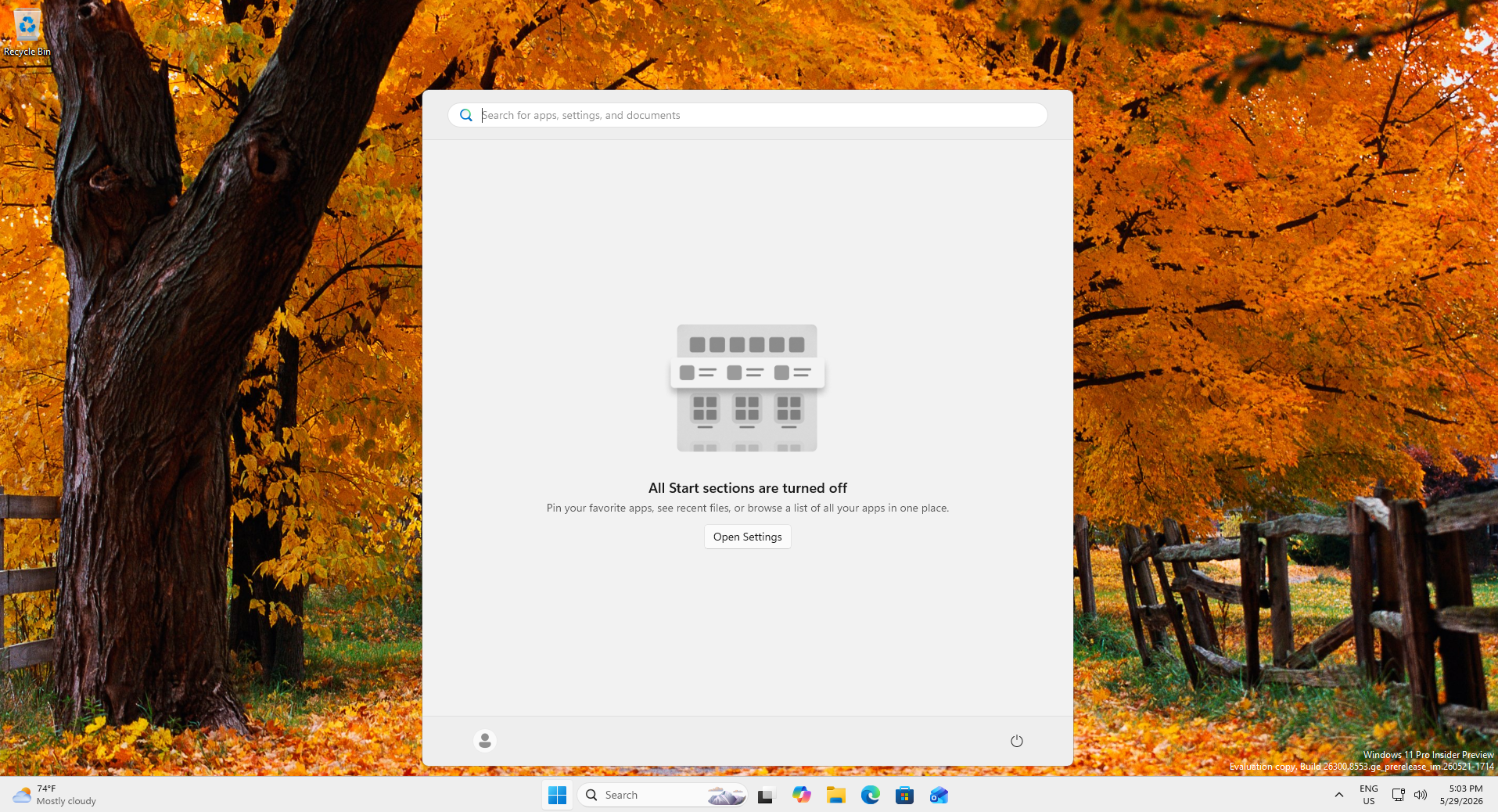
Noticed the absence of my name and profile picture? That’s because we also get a toggle to hide the name and profile picture on the Start menu:
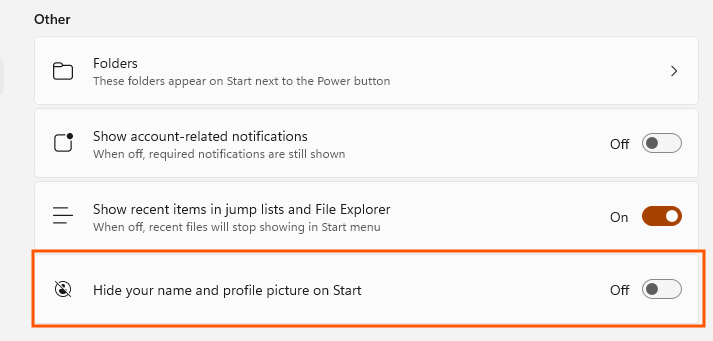
Needless to say, this is insane levels of customization, and it’s something only Microsoft can do (see what I did there).
That said, Microsoft still isn’t allowing freeform resizing. You cannot drag the edges like you could with Windows 10. Instead, you’re choosing between predefined sizes.
However, I’m delighted with all the new changes to the Start menu, and the only thing remaining is the performance side of things.
A native Start menu is still in the works
Microsoft has begun rolling out the new Low Latency Profile CPU boost through the May 2026 optional update KB5089573.
After enabling Low Latency Profile on my own machine, Start definitely feels smoother.
The menu opens faster, animations feel less choppy, and some of the micro-stutters that became normal over the last few years are reduced.
But this is still a workaround for a deeper issue. The real performance fix is a fully native Start menu.
Microsoft has already confirmed it is rebuilding more core Windows components using native WinUI 3 frameworks. We recently reported on Microsoft’s broader push toward native Windows applications, including the Start menu itself, as part of the company’s effort to make Windows feel faster and more responsive again.
We didn’t get to see any major additions to the Start menu, as Microsoft already worked on 5 different Start menu designs, but for the first time since Windows 11 launched, I opened the new Start menu and felt like Microsoft was removing restrictions instead of adding them.
There is still work left to do, especially around responsiveness and performance. But after years of complaints about wasted space and limited customization, this “redesign” finally feels like a Start menu built for desktop users again.
And I feel this is the most important Windows 11 interface update in a long time.
The post Tested: Windows 11’s new Start menu lets you fully customize it, and it works surprisingly well appeared first on Windows Latest