
It’s been more than 6 years since Bill Gates officially severed all formal corporate ties with Microsoft, but his vision from 40 years ago is still at play with an even more ambitious agenda.
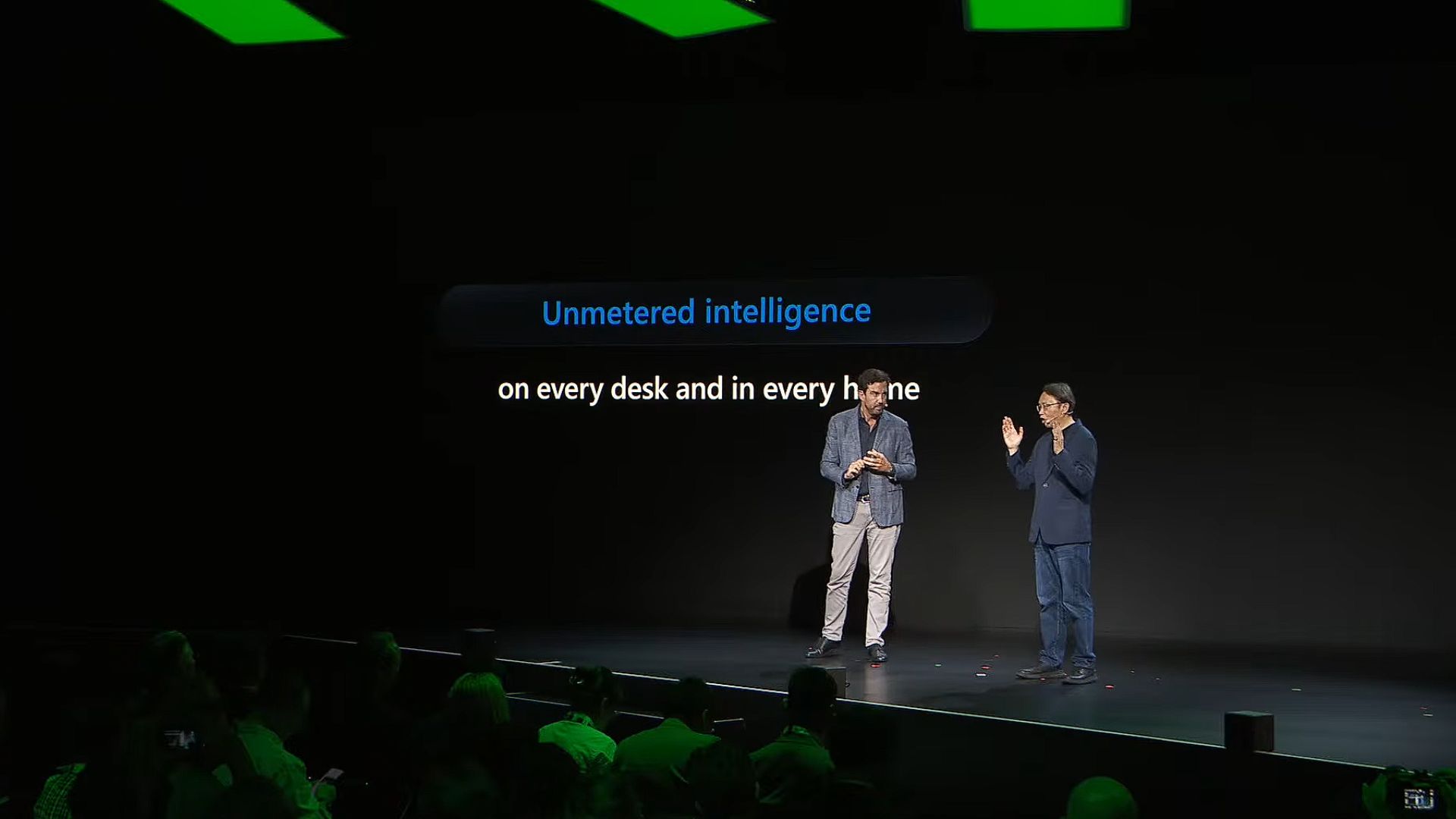
“If you remember when Bill Gates was the boss of Microsoft, it was about a PC on every desk in every home,” Mark Linton, Microsoft’s Corporate Vice President for Windows and Device Sales, told the crowd at IFA 2026. He went on to say Microsoft’s new vision for the years to come: “We talk about unmetered intelligence on every desk and in every home.”
I have mixed feelings about the word “Unmetered”, but I am looking forward to the gates and windows that it’ll open (see what I did there with the double pun!).
Anyway, Linton, here, means AI that doesn’t depend on the cost and lag of cloud inference every time you use it. A powerful enough PC can run everyday models locally, and the cloud will be available for whatever needs it most.
Interestingly, Satya Nadella on June 1 said something similar to Gates’ idea from decades ago: “Our goal is to deliver unmetered intelligence to every home and every desk with Windows.”

Gates’ vision took its sweet time, and now we have supercomputers in our palms. Microsoft’s slogan in 1977 was “a computer on every desk and in every home, running Microsoft software,”. But Satya Nadella has since said the “running Microsoft software” part bothered him, since it confused “an enduring mission with a temporal goal”. Unmetered intelligence looks like Microsoft’s attempt to give that mission a second act.
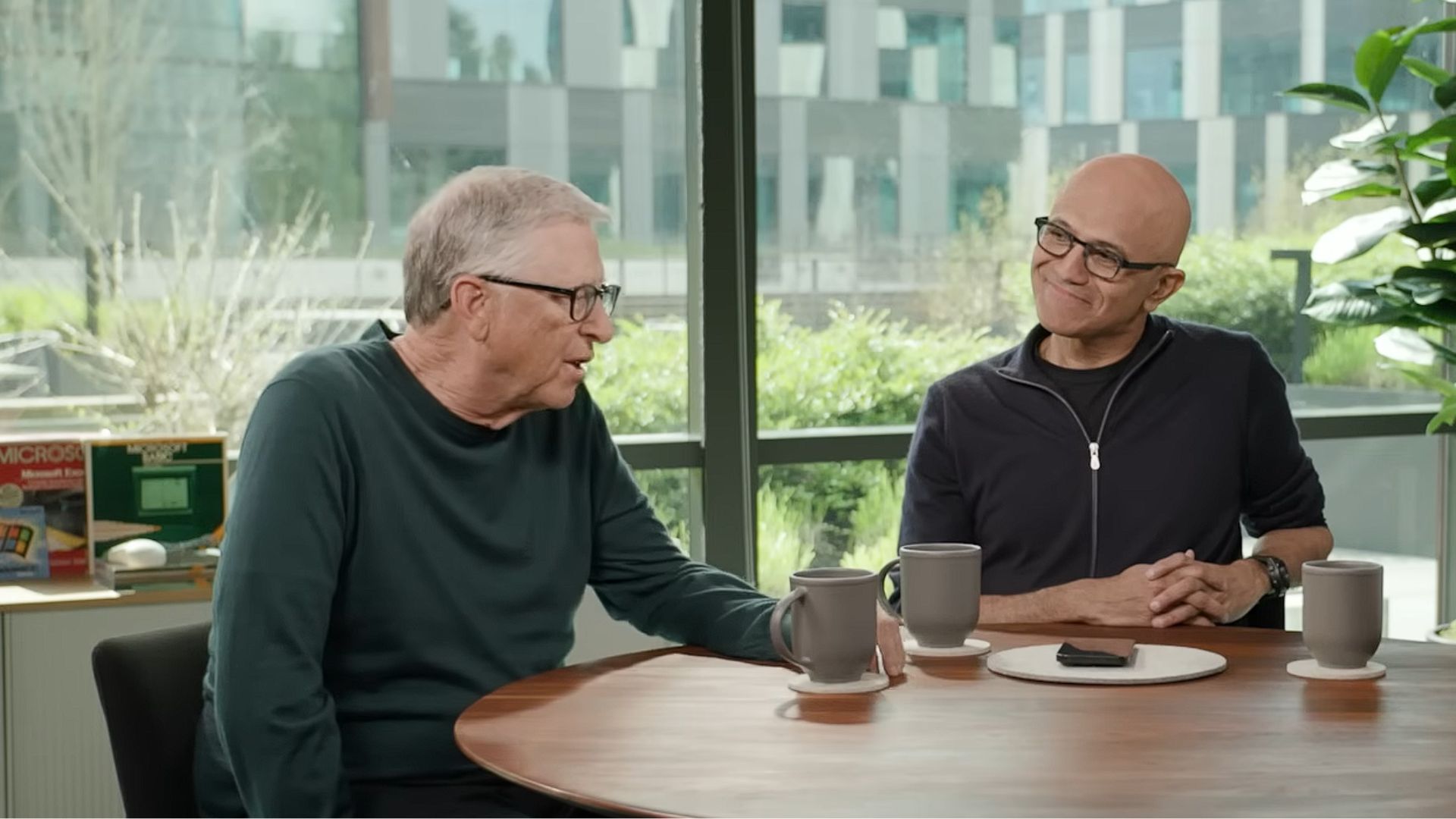
Bill Gates wanted a PC everywhere, Microsoft now wants local AI there too
Gates described the PC’s potential as open-ended, a tool for text, numbers, pictures, and eventually motion video, expanding as computing power grew. The first vision was about access to computing. The new one is about access to intelligence!
Unmetered doesn’t mean we can stop paying for our Claude subscription. Microsoft’s Build 2026 messaging was pretty clear about this. Frontier models handle frontier problems, and everything else runs on the device.
Windows ML will work to make it practical across different hardware tiers. If a small or medium model can run locally, you don’t have to send every request to a remote model and pay per token. Naturally, latency drops too. It’s also part of the “token economics” Linton said.
Microsoft and NVIDIA at Build 2026 confirmed that the RTX Spark, with its 1 petaflop of AI performance, up to 6,144 Blackwell cores, a 20-core Arm CPU, and up to 128GB of unified memory, is enough to load a couple hundred billion parameters locally, according to Jensen Huang.
Windows 11 needs new hardware and a lot of software work to make this possible
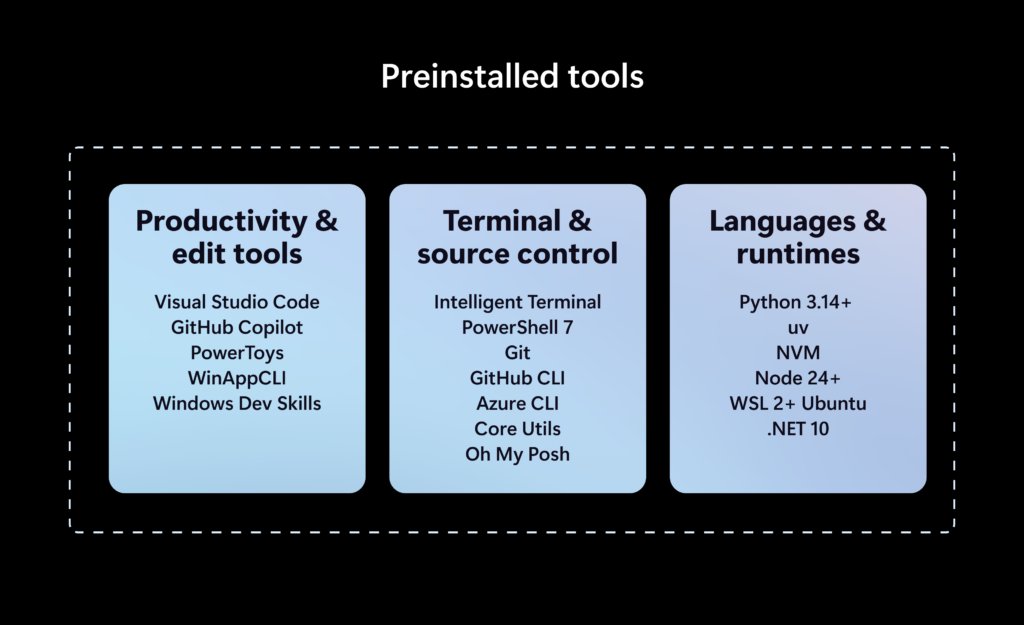
Linton outlined Microsoft’s work in three parts: the developer experience, security for autonomous agents, and the AI platform.
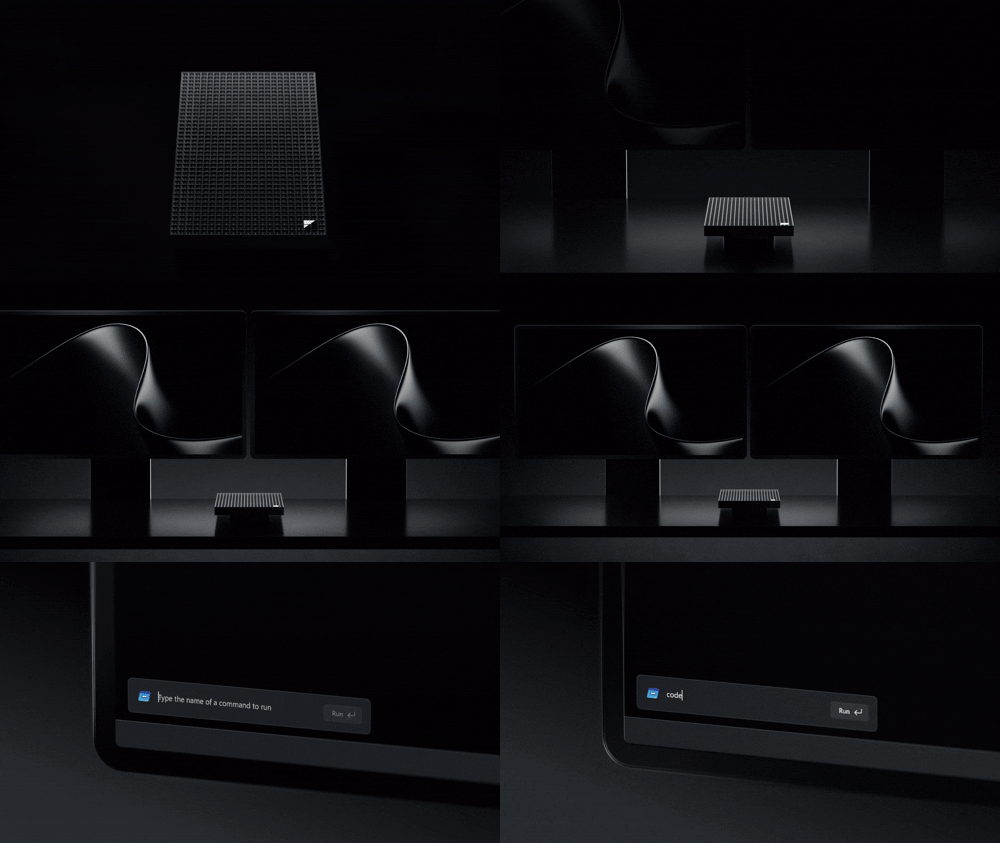
The hardware side starts with RTX Spark. Microsoft’s Surface RTX Spark Dev Box packs all of the chip’s prowess into a developer-focused desktop.
Surface Laptop Ultra is Microsoft’s flagship RTX Spark laptop, and Windows Latest exclusively revealed Lenovo’s Yoga Pro 9n and later the Yoga 9n 2-in-1, proving RTX Spark isn’t staying confined to workstations.
Microsoft has already rebuilt Windows’ scheduler and memory management specifically for this chip’s unusual CPU/GPU/unified-memory setup, with Workload Profile Scheduling spreading work across all 20 cores.
Project Zenith, announced September 4, sets the floor at 64GB of unified memory and 250GB/s of bandwidth, and Microsoft says qualifying machines run 30B-plus parameter models locally and unmetered, which is the physical version of Linton’s pitch so far.
An ordinary Windows laptop is nowhere close to this, though. A 64GB minimum is well above the mainstream, and RTX Spark-class hardware isn’t cheap.
Microsoft is trying to make Windows the operating system for local AI agents
Redmond knows that their customers don’t want autonomous agents running loose across a corporate network. The company’s answer is Microsoft Execution Containers, which isolate and containerize agents, apply policy, and log what they do, all as a Windows security construct built with NVIDIA and silicon partners. NVIDIA is bringing its OpenShell agent framework into that system, with Hermes Agent and OpenClaw integrating it directly.
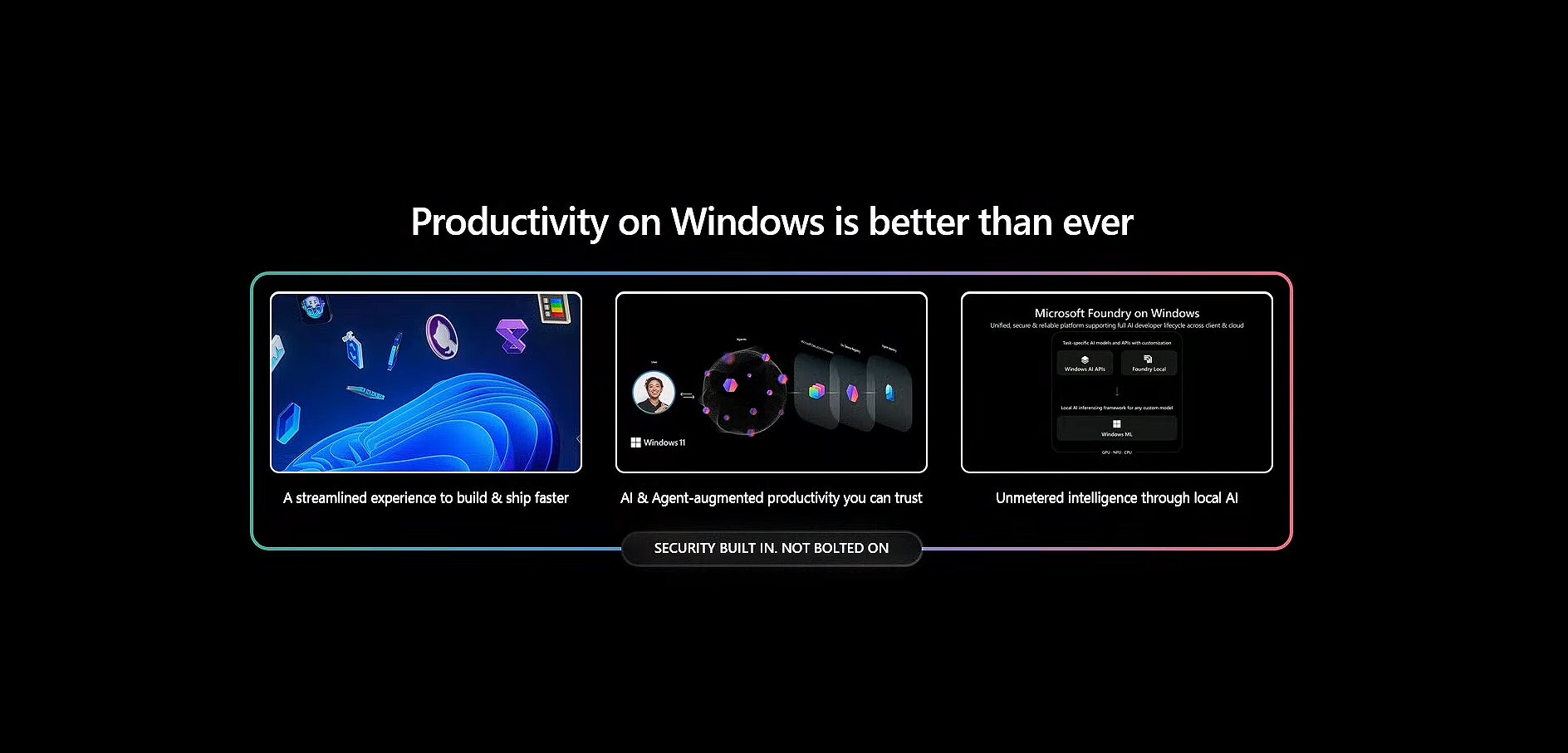
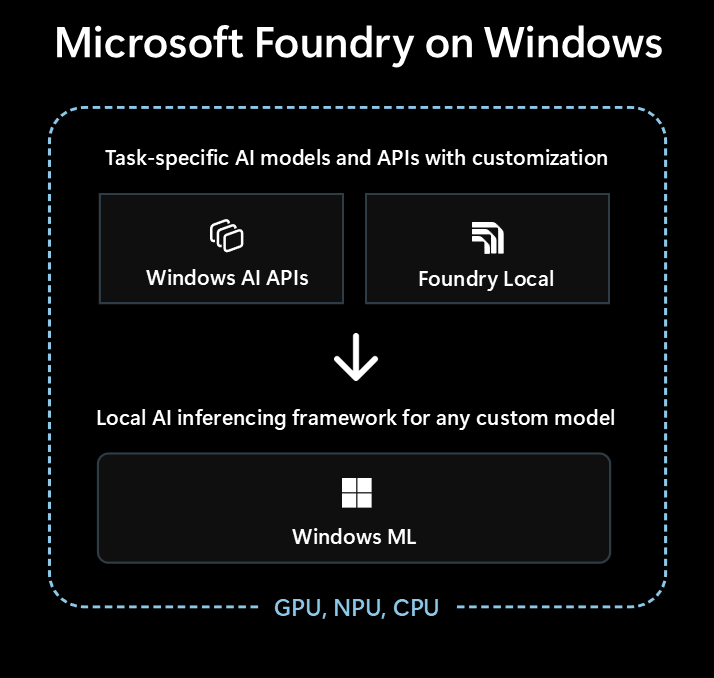
Windows Foundry lets developers pick models, Windows carries inbox models by default, and Windows AI subsystems provide the orchestration. Powerful hardware, Windows ML, local models, agents, and Windows security wrapped around it. This is the stack Linton described.
Two versions of Windows quality, pulling in opposite directions
Linton also said Microsoft is “optimizing so that 8 gig of RAM runs great on machines as well,” which sounds unrelated to 120-billion-parameter models until you realize it’s the other half of the same strategy. We mentioned this in our report about Microsoft’s latest 8GB and faster-boot claims, which came with no benchmark numbers, which says plenty about how far mass-market Windows still has to travel.
Project Zenith starts at 64GB. RTX Spark goes up to 128GB. It’s a wide distance from the 8GB machines Microsoft is simultaneously trying to keep usable, and I’m just hoping that closing it will not take as long as the original PC vision did.
Microsoft’s mission put a computer within reach of everyone, and Nadella has admitted that it outlived its own deadline. Now the company wants the PC to become AI infrastructure, running models locally, hosting agents, and reaching for the sky (cloud!) only when it has to. The biggest bottleneck might be the expensive hardware. But the direction is clear!
The post Microsoft revives Bill Gates’ “PC on every desk” promise for Windows 11, now it means AI appeared first on Windows Latest