
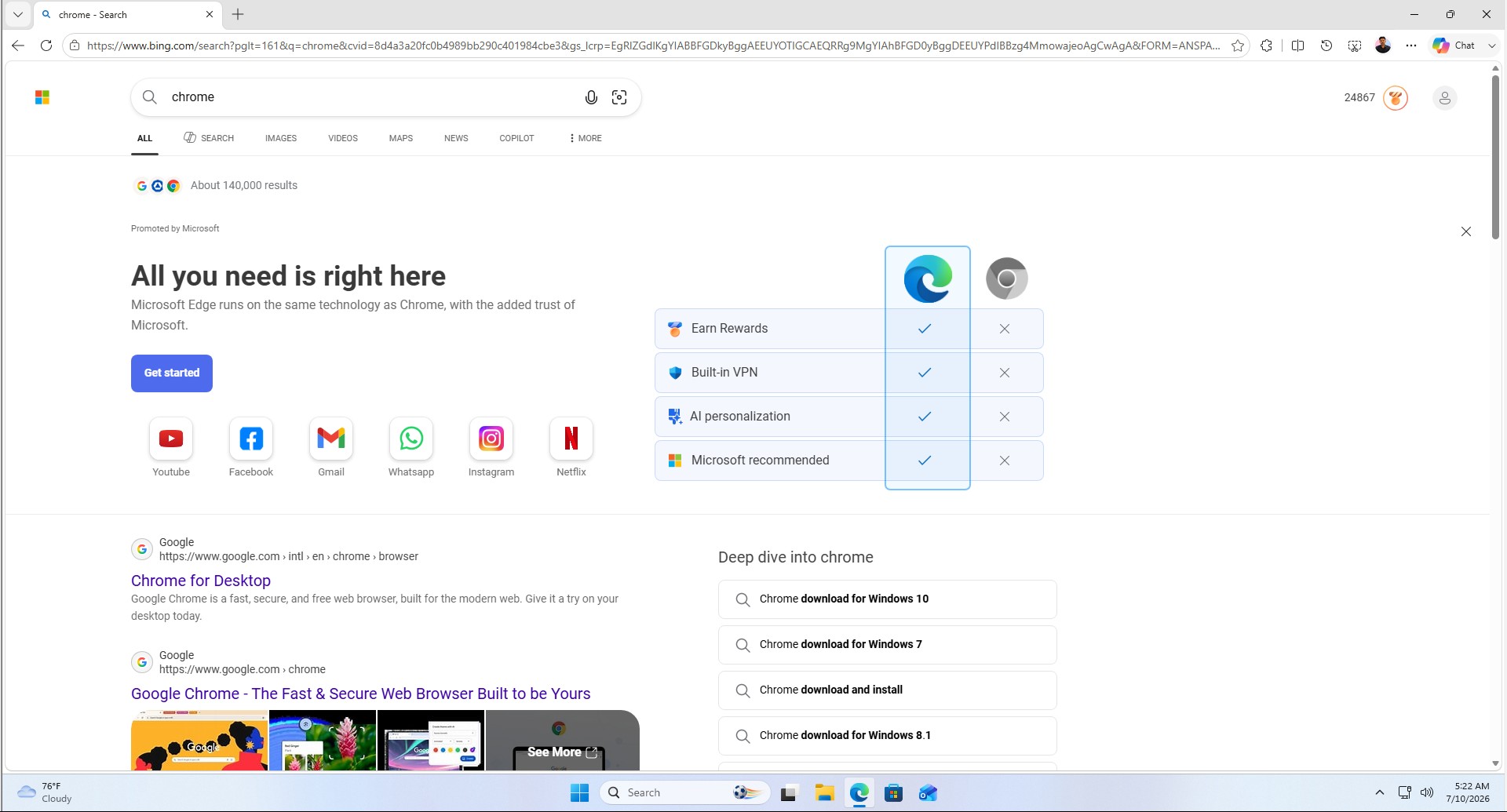
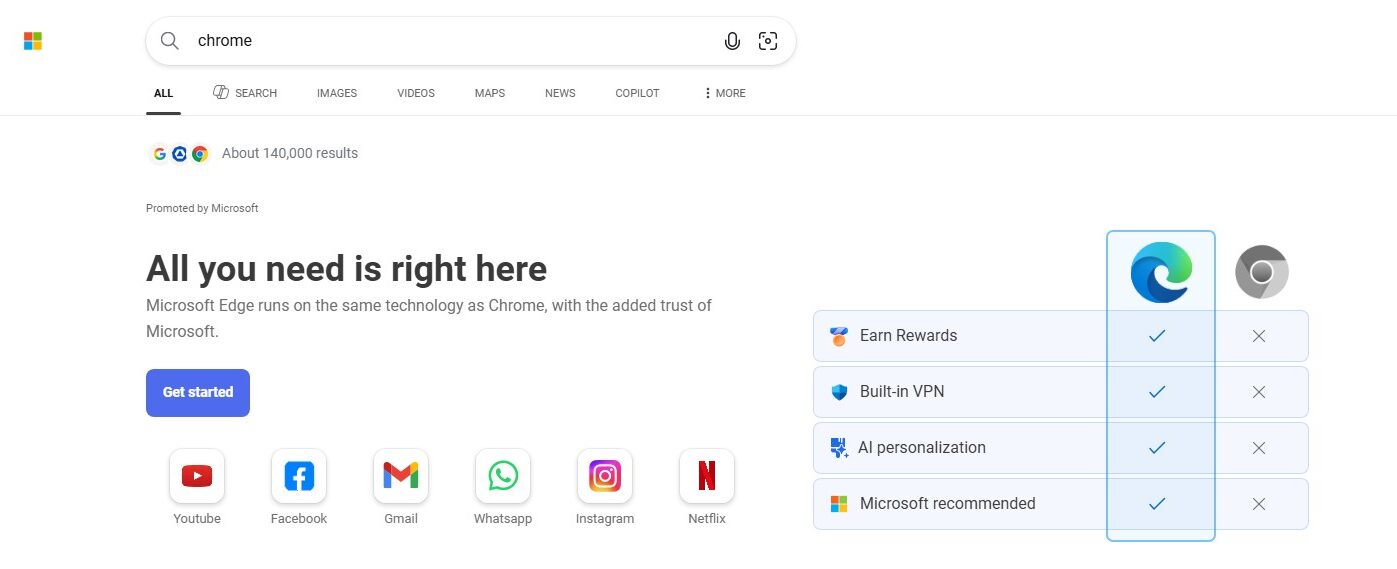
Search “chrome” on Bing, and you’ll be greeted with a panel that compares Edge against Chrome across four meaningless categories, including Earn Rewards, Built-in VPN, AI personalization, and Microsoft recommended, with Edge checked on all four and Chrome crossed out on all.
A user posted a screenshot of this panel on X with the caption: “Bro Microsoft ran out of reasons to use their own browser.” The post has over 380,000 views, and the replies are, naturally, negative. Microsoft needs to realise that people have already made up their minds, and using “made-up” reasons isn’t enough for them to switch to Edge!
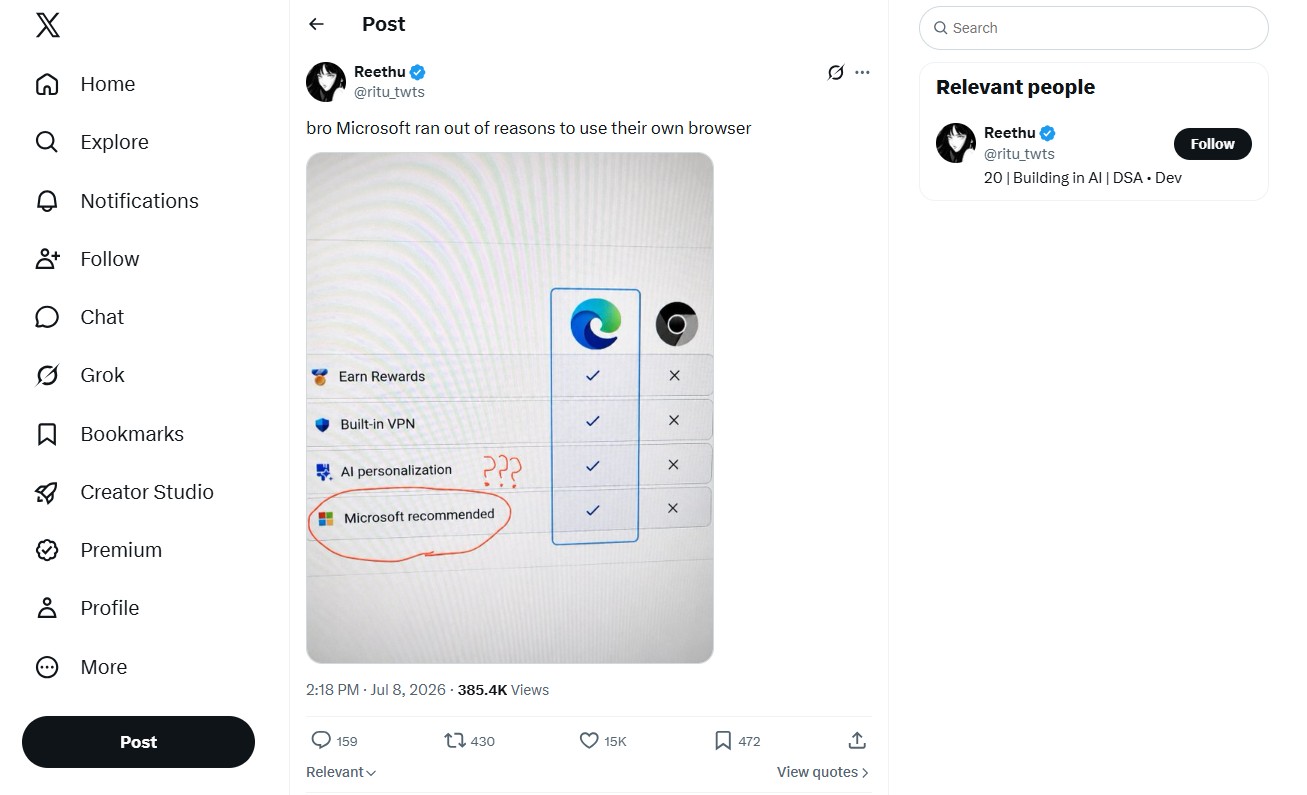
The internet hates Microsoft Edge
The most common meme-type reply is saying Edge is only good for downloading Chrome, which lost its charm and humour many years ago, but this was still the most common reply.
Some users said that those comparison features are exactly what they don’t want in a browser. One commenter argued the last good thing Microsoft shipped was VS Code.
Then there’s the occasional reply that’s almost always a complaint about the lack of trust they have in Microsoft as opposed to Google that makes a living out of selling data. A couple of those users asked where that “free VPN” was routing traffic and how it’s any better than the bad actors people associate with data harvesting.
I searched “chrome” on Bing
I got the checkmarks for Edge across all four categories. Clicking the “Get started” button under the panel shows a blank page for some reason. Microsoft built a persuasion panel, and the call to action leads nowhere.
Hilariously, just below this, Firefox shows up as a sponsored link with a real Download button. I searched for Chrome, and Microsoft showed their browser and Firefox as the main events.
With that said, let’s go through the four reasons:
#1 Microsoft Rewards isn’t an Edge exclusive
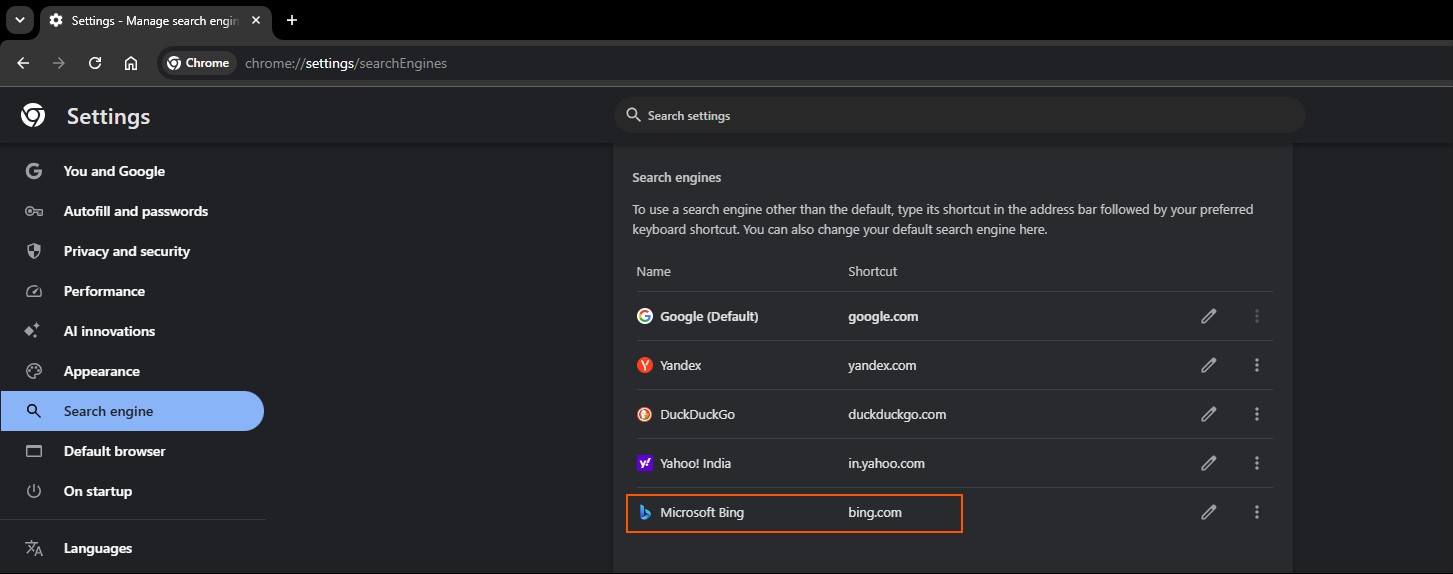
Rewards used to be one of the few real incentives that made me continue use Edge a few years back. But that justification disappeared this week. Microsoft confirmed Bing sign-in now works with a Google or Apple account, no MSA required. So all you need is to make Bing your Search engine in Chrome, and as I type this, I realise how absurd that sounds!
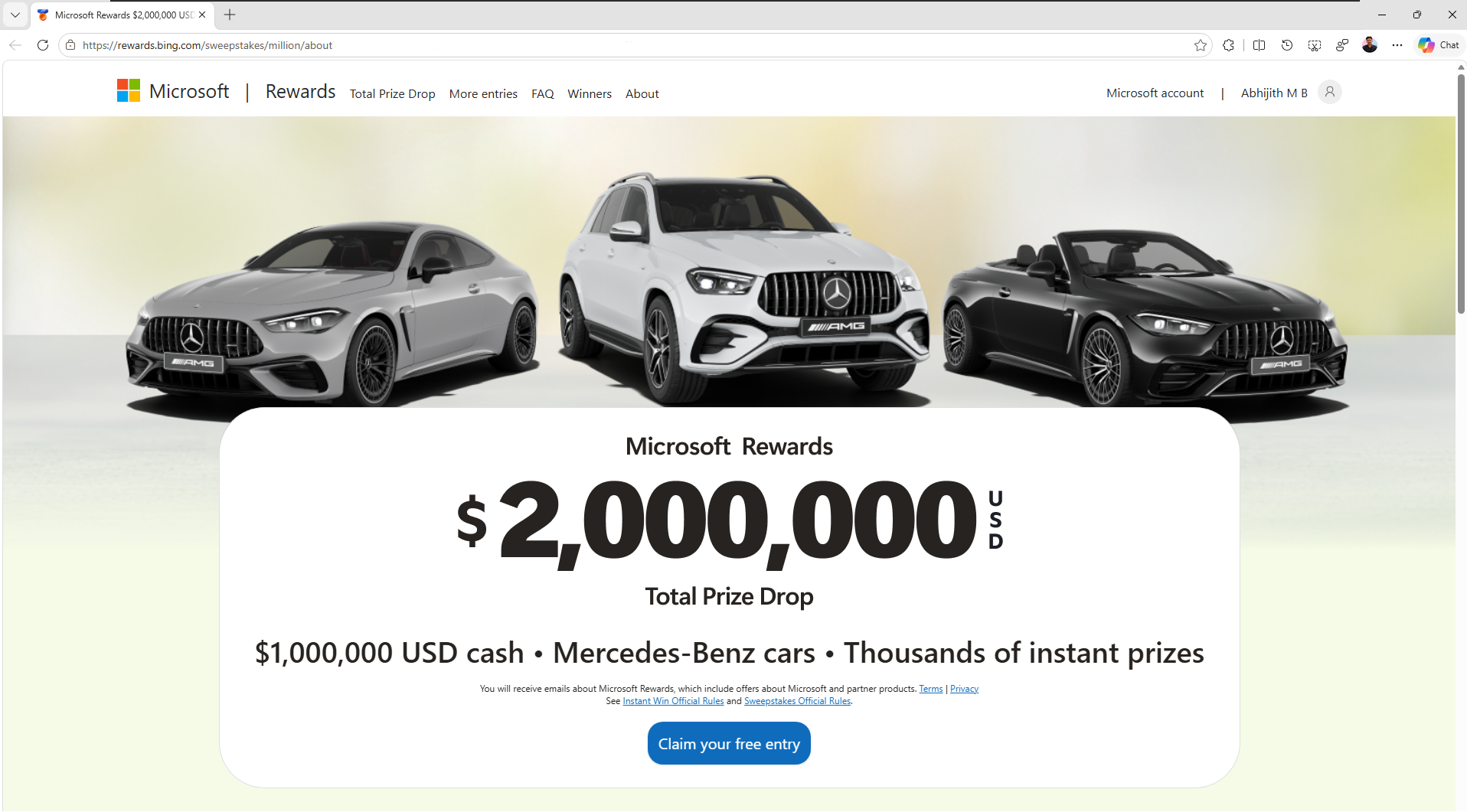
Microsoft has also thrown serious money at getting people signed up in the first place. In May, it ran a $2 million sweepstakes with a $1,000,000 cash prize and three Mercedes-Benz cars as bait, on top of daily instant-win prizes. Spending that kind of money says more about how badly the company needs the numbers.
But Rewards redemption has also gotten worse. I’ve used Rewards for years across two accounts, and coupons that used to be reliable are now almost always out of stock, at least the ones worth claiming.
#2 The “Built-in VPN” isn’t quite a VPN
Edge Secure Network is the second checkmark, and it’s the one Microsoft’s marketing has struggled hardest to defend. A privacy researcher publicly debunked the “VPN” feature earlier this year, describing it as an HTTP CONNECT proxy on Cloudflare’s infrastructure that only tunnels traffic inside Edge.
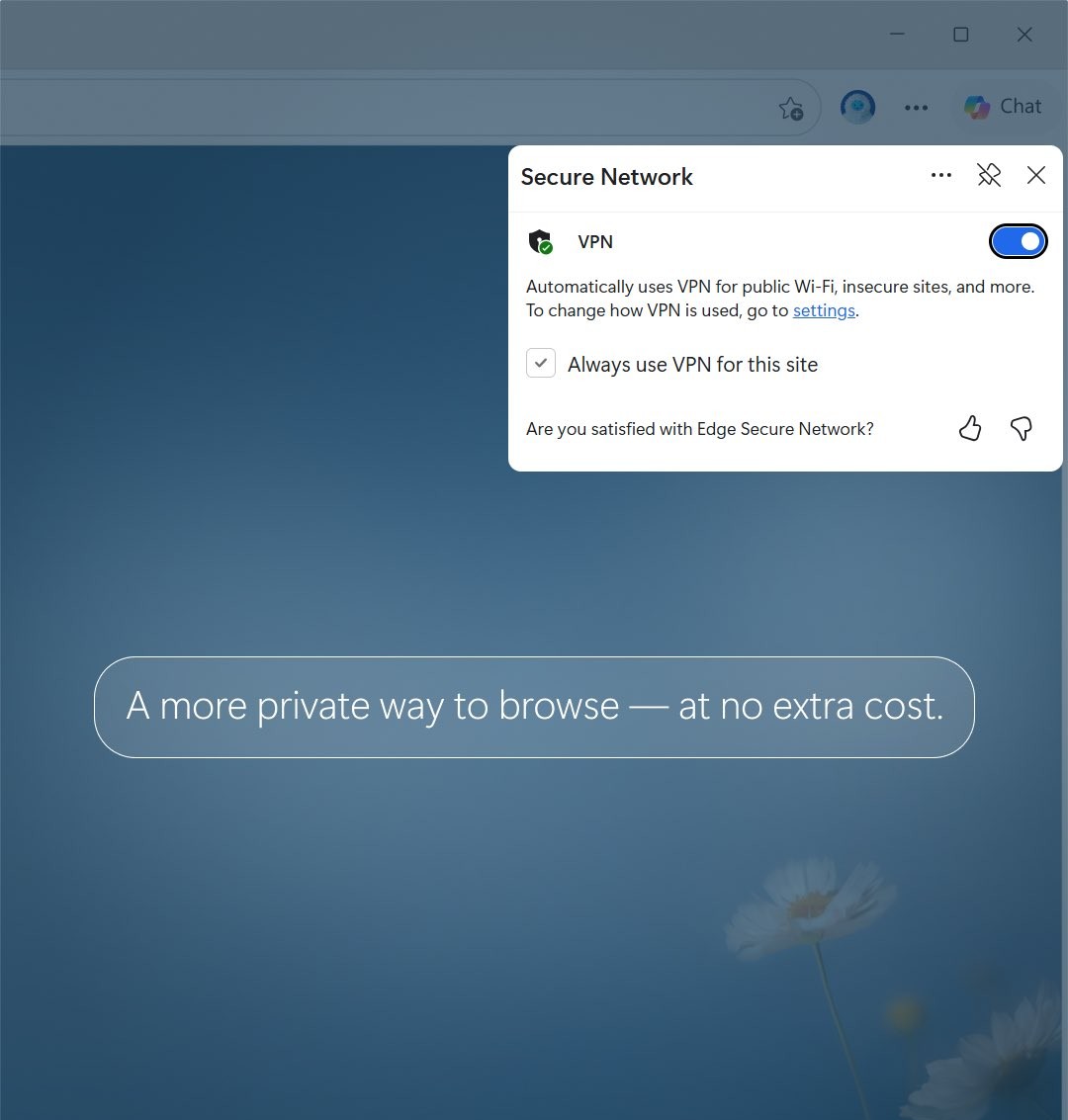
Real VPNs route the whole system and usually let you pick a country. Edge Secure Network does neither. It auto-connects to a nearby server, requires a Microsoft account, and caps you at 5GB a month before protection stops, with Netflix and Hulu excluded to conserve that allowance. When the feature launched, Microsoft tested a “Get VPN for free” button to push people toward it.
#3 AI personalization stopped being an advantage a while ago
In February 2023, Satya Nadella told The Verge that Microsoft’s early AI lead in search made Google “dance,” and 3 years ago, that confidence was warranted. But now, Gemini sets the pace, as it comes in Chrome and Android for anyone already living in a Google account, which describes most people. Personalization is trivial when the AI, browser, and identity all belong to one company already on your devices.
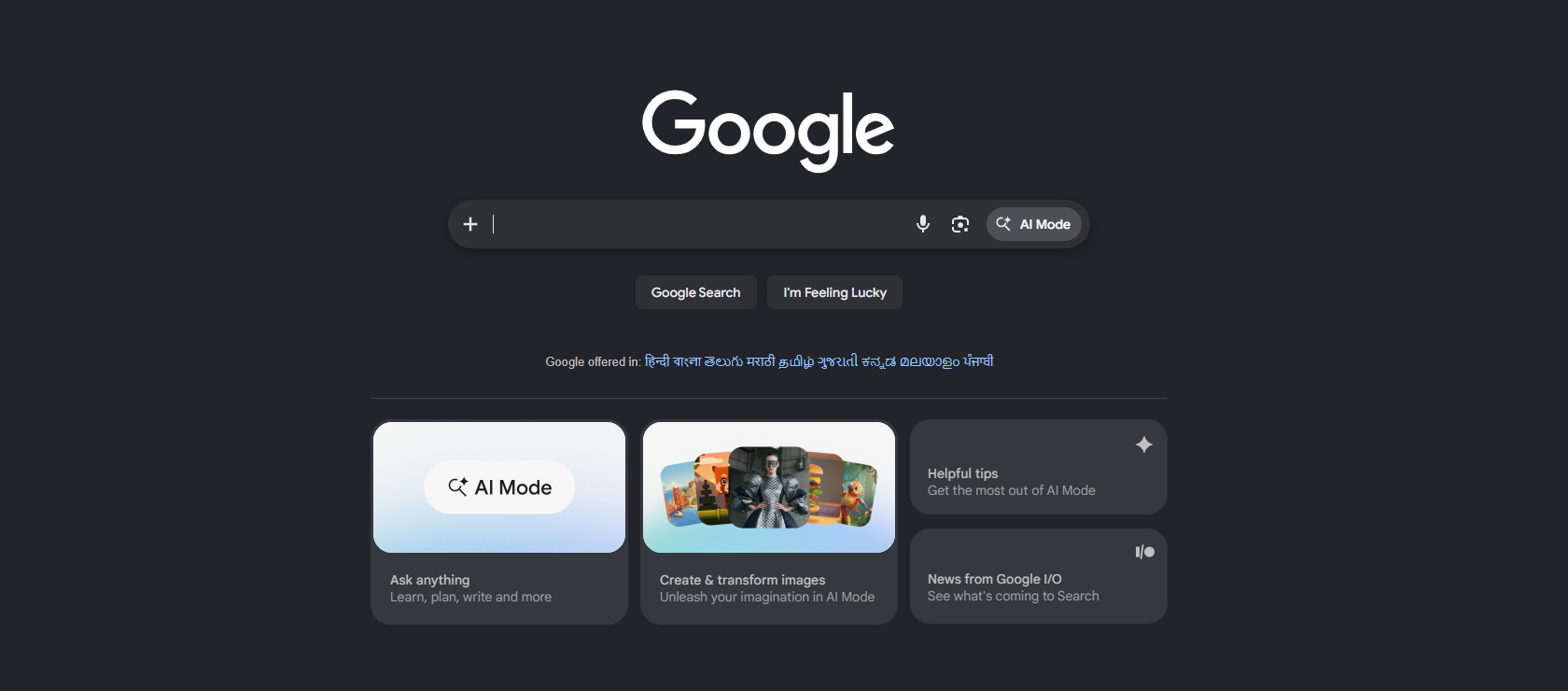
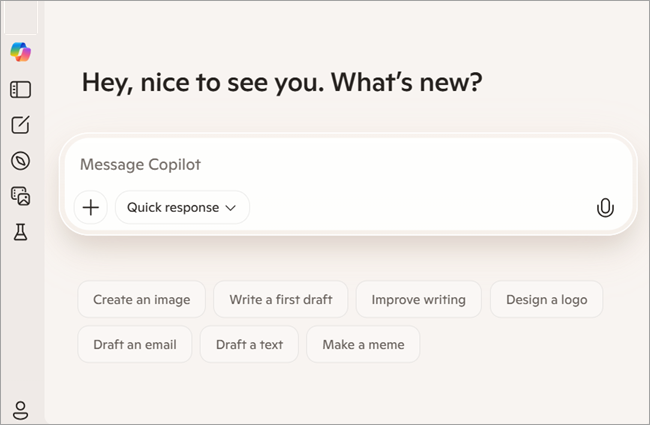
Copilot can’t get people to open it. Microsoft’s numbers show fewer than 4.5% of its 450 million commercial Microsoft 365 customers pay for Copilot, and only 20 to 30% of those open it weekly, putting weekly-active usage near 1% of the full customer base.
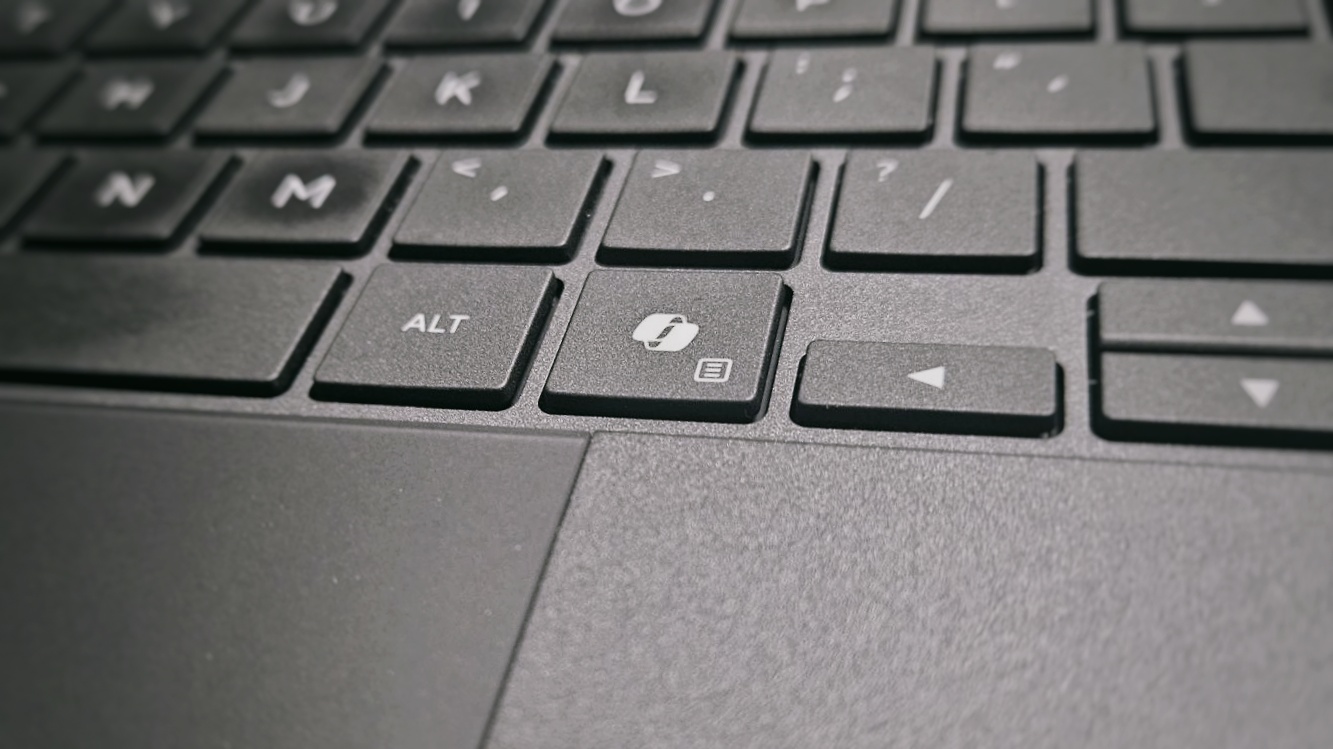
Even the dedicated Copilot key backfired. Microsoft called it a button with “main character energy” weeks after admitting in its own documentation that the key hurts productivity for people who use Right Ctrl. In such circumstances, “AI personalization” isn’t the argument Microsoft thinks it is.
#4 “Microsoft recommended” only works if people trust Microsoft
This is what the original post is really about, and it’s the hardest one to fix for the software giant. “Recommended” has that influence only when the company saying it has earned trust around privacy and restraint. Apple can say it, and people believe it. Not Microsoft.
Windows Latest just reported on GDID, a persistent device identifier that helped the FBI trace a hacker across VPNs and three countries by linking his Windows installation back to his accounts. It’s not the kind of story that makes “Microsoft recommended” reassuring.
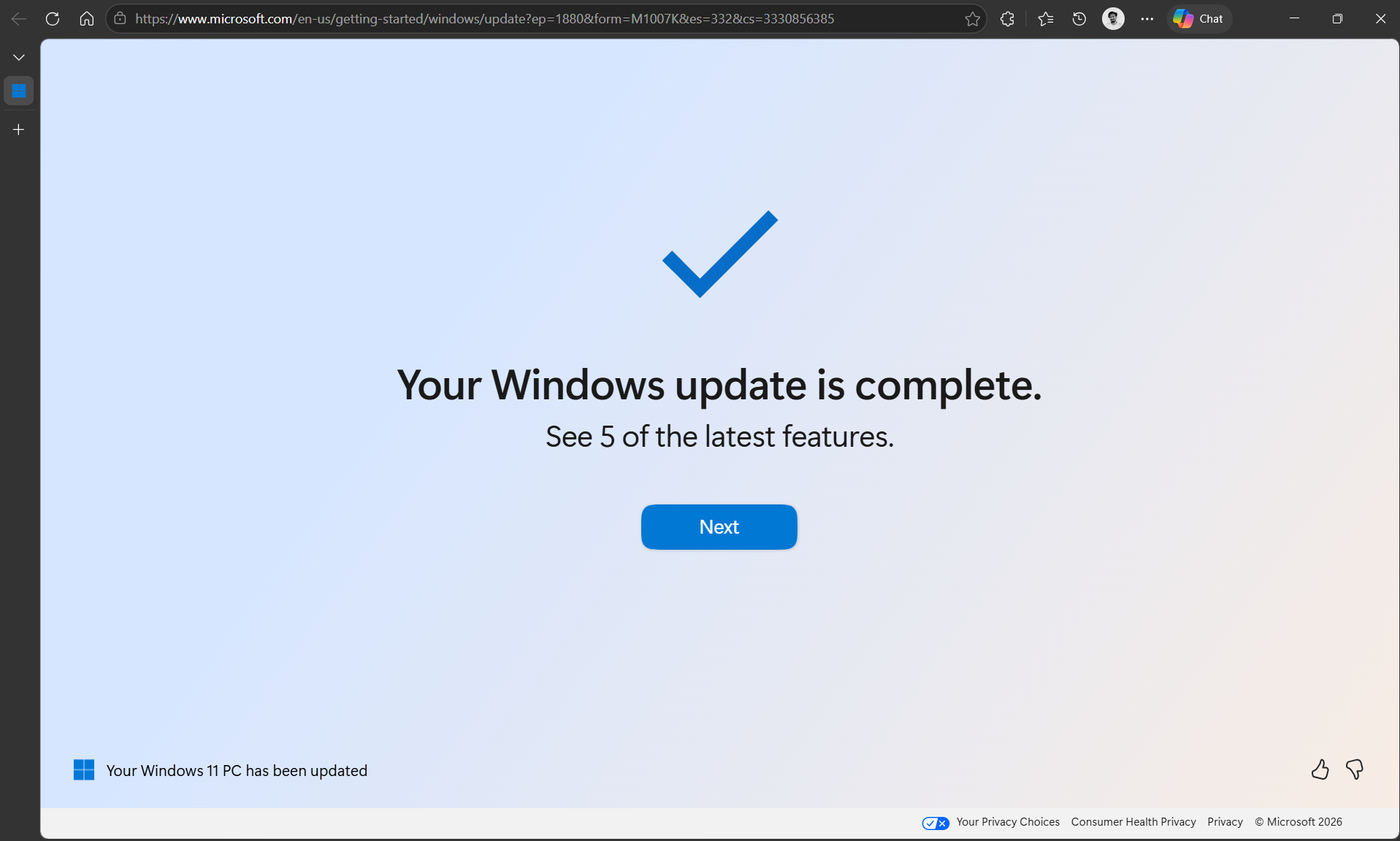
Microsoft has depended on defaults before. Windows 11’s mandatory update auto-opened Edge on some PCs after a restart, showing off some “new” Windows 11 features.
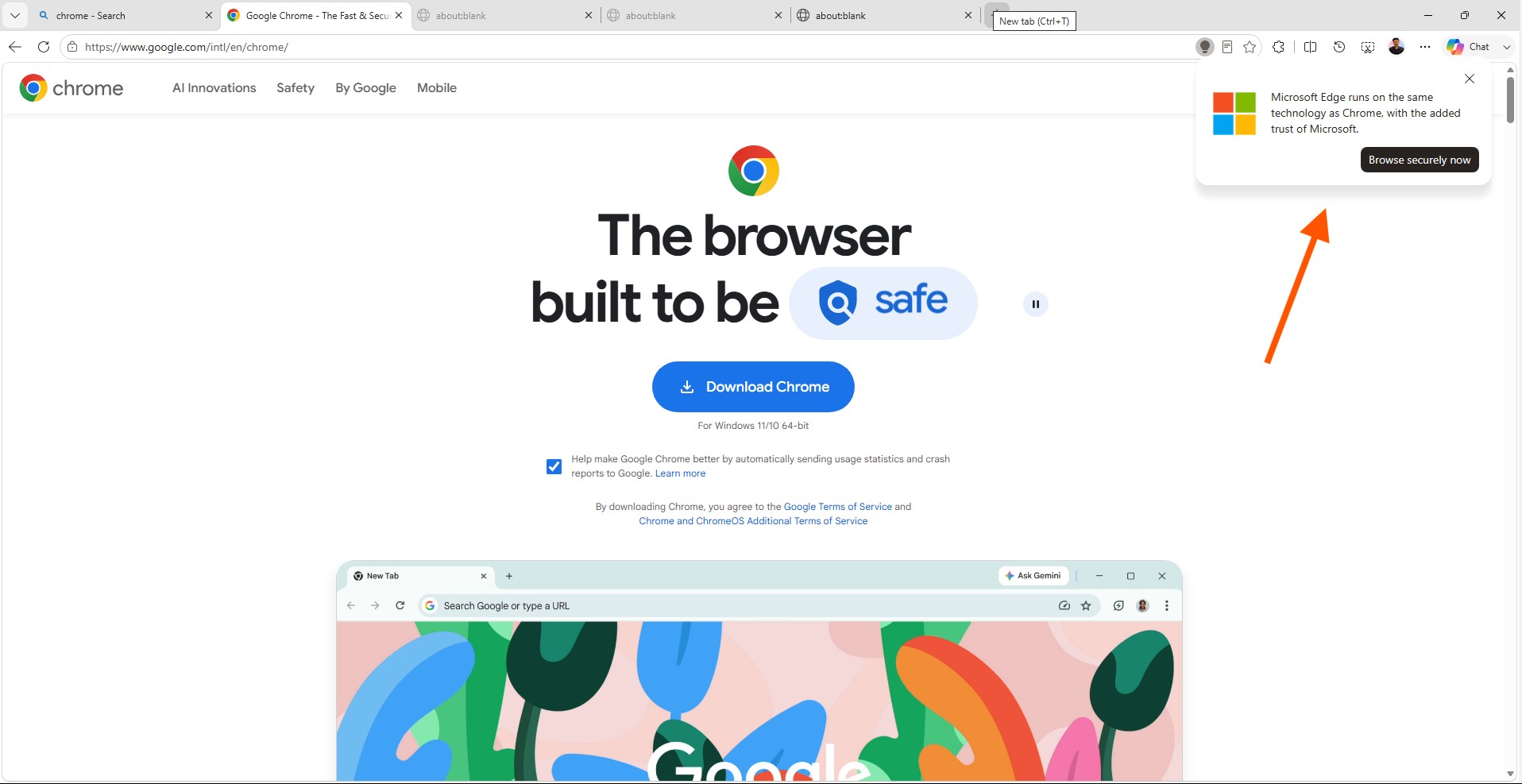
Then there’s the irony that Edge runs on Chromium, the same engine as Chrome. Microsoft ditched its own EdgeHTML engine in 2019 for technical reasons, mainly to fix compatibility gaps and update fragmentation from linking releases to Windows. But instead of pushing to make its own engine competitive again, Microsoft folded it into Chromium and became one of the project’s largest outside contributors instead.
The features Microsoft should be advertising instead
As someone who used Edge 70% of the time, with Chrome, Brave, and Firefox sharing the 30%, I know that Edge has real advantages, and Microsoft’s marketing keeps skipping past them for absurd checkmark panels like this one.
The AI Tab Organizer is one of the best AI features in any browser right now. I tested it with 40-plus tabs open across unrelated topics, and it grouped them with specific, accurate names, without any Copilot branding. It was good enough that Apple copied it for Safari at WWDC 2026 and called it Apple Intelligence, with a slicker demo but a less capable feature.
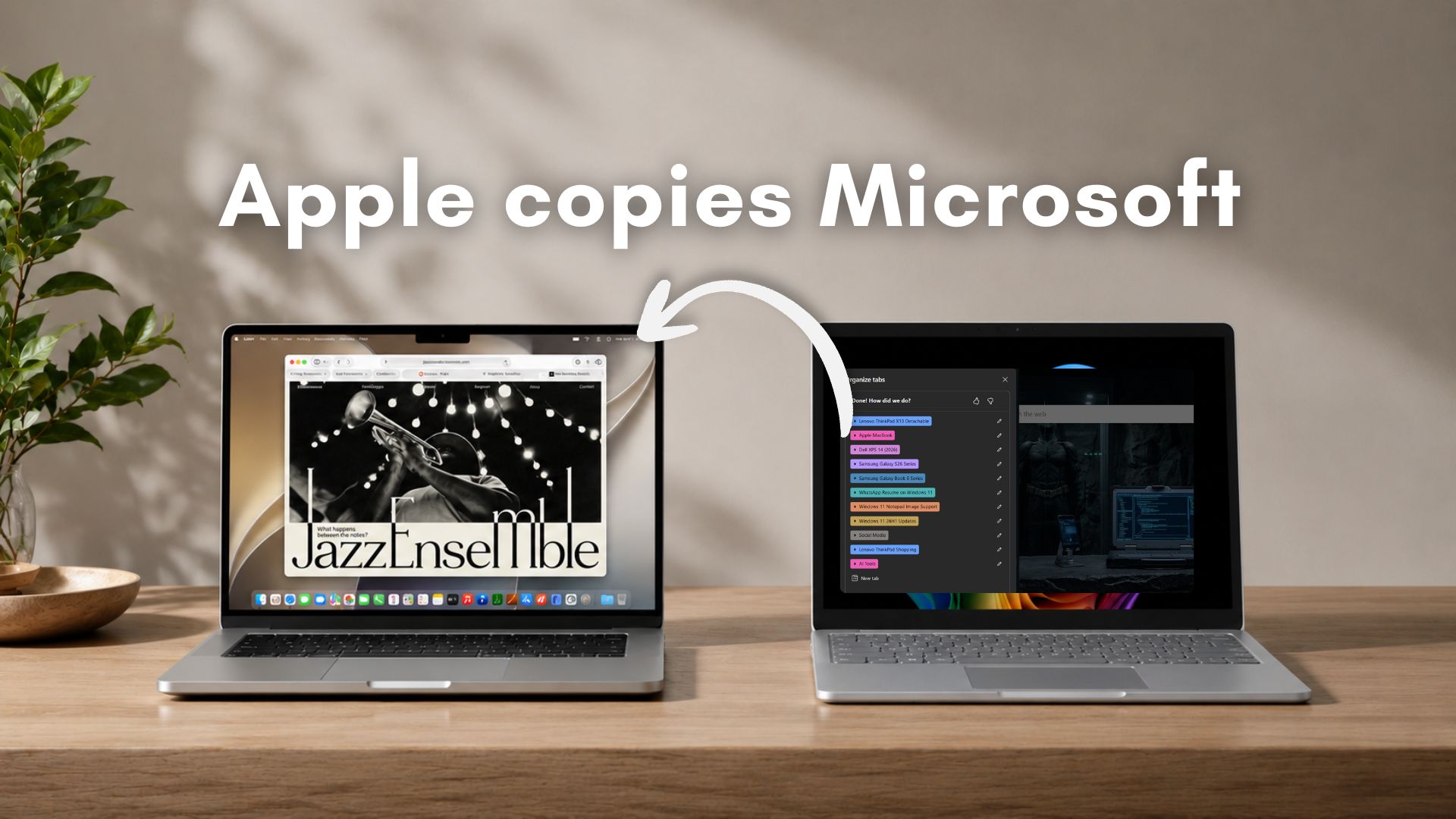
We also covered how Google copied Edge’s Immersive Reader and vertical tabs into Chrome years after Edge shipped it.
Then there is Split screen, Search tabs, a powerful screen capture, double-tap Ctrl to open an image, and a lot more that didn’t make it into the panel Bing showed for “chrome.”
Microsoft keeps cutting what made Edge worth using
Edge 149 killed Collections and Sidebar in the same update, two features Microsoft spent years promoting, to free up space for Copilot. Weeks later, Drop, the cross-device file-sharing tool, got the same treatment.
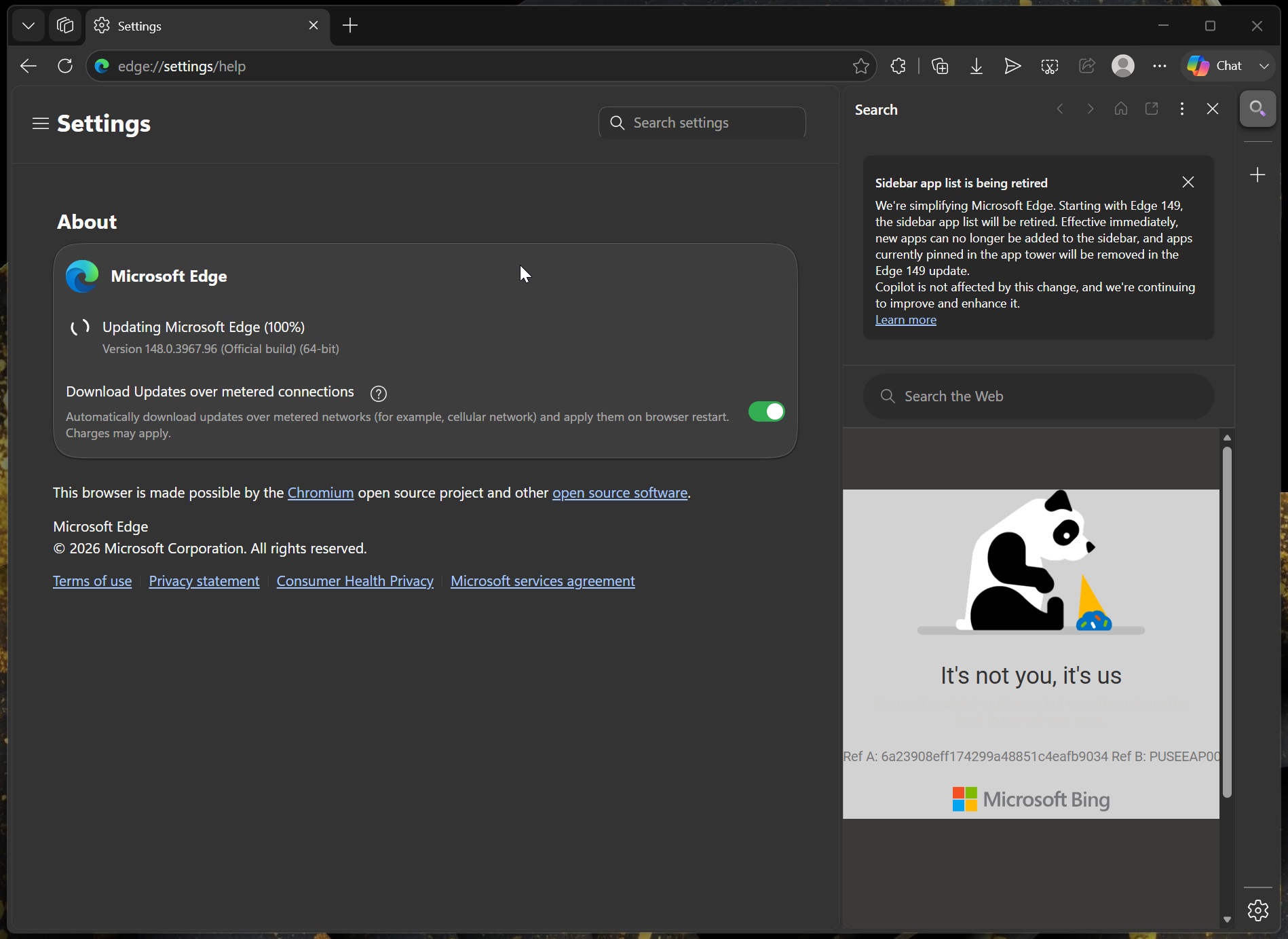
Microsoft had promised to simplify Edge to win back users around the same time these removals started, which is strange now that “simplify” meant cutting things people used daily. The company also confirmed an AI-driven redesign to visually match Copilot and Bing, trading Edge’s own identity for the look of the most hated Microsoft product.
Edge deserves better marketing than this
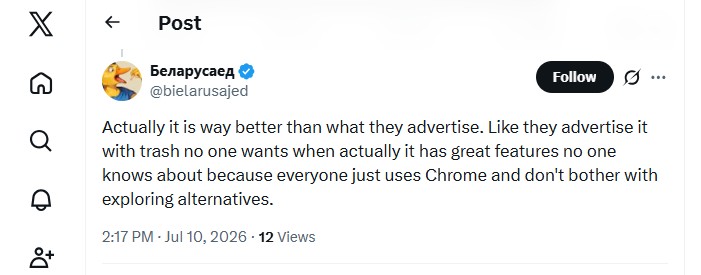
Buried under all this hatred was one comment that got it right. A user wrote that Edge is way better than what Microsoft advertises, that the company markets trash nobody wants while the useful features are ignored because everyone just uses Chrome and never explores alternatives. That’s the tragic part of this whole story.
Microsoft has a fast, capable browser with features nobody else has matched yet, and instead of leading with any of that, it built a search panel around a VPN with an asterisk, an AI edge it lost years ago, a rewards program it just made browser-agnostic, and a trust argument that privacy reports keep undermining.
If you do want to try Edge despite all this, one barrier is gone now. It doesn’t even need a Microsoft account to sign in anymore. Just don’t expect Microsoft’s own comparison panels to tell you why.
The post Microsoft has run out of reasons to push Edge over Chrome, so one of the four is just Microsoft recommended appeared first on Windows Latest