
Microsoft has finally begun replacing the decades-old File Explorer Properties dialog with a modern version, as part of the company’s efforts to modernize Windows 11. Thankfully, the new Properties dialog is built using the native WinUI framework, and we’re not seeing any traces of a WebView2-based shell.
Right now, the Properties dialog is native to the Win32 comctl32.dll (Common Controls library), which first shipped with Windows 95. Of course, it has improved visually over the past several years, but the underlying code hasn’t changed.
As Windows Latest reported, Microsoft previously confirmed it’ll replace all legacy dialogs with modern versions, including those from Windows 8 and even the Windows 95 era. It’s been unclear when a major Windows design update would begin rolling out, but we’re now seeing early signs in preview builds.
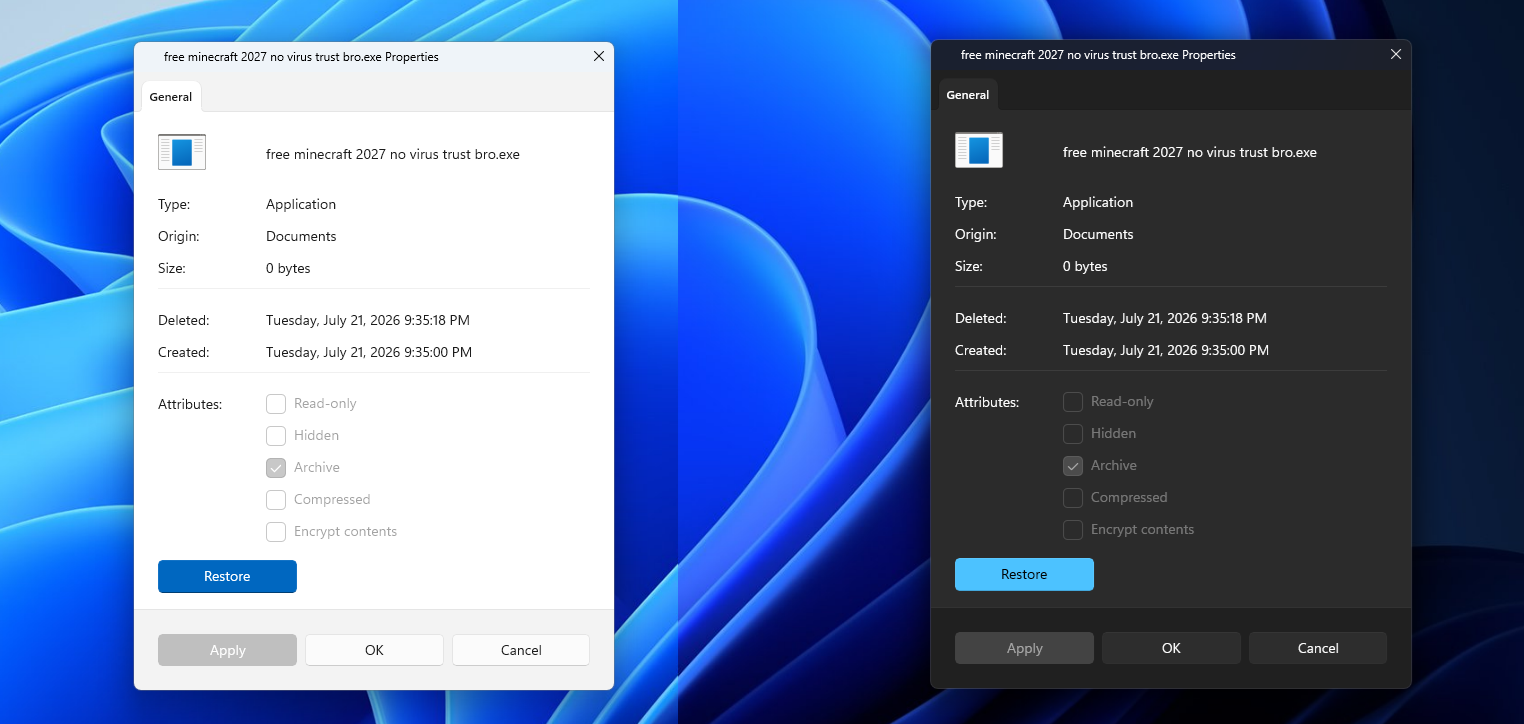
Microsoft watcher PhantomOfEarth found a new Properties dialog in preview builds, and unlike the existing implementation, the new version supports dark mode. Moreover, it’s clearly built using WinUI 3 rather than a Win32 property sheet. Also, Microsoft is not mixing the two frameworks, as I can confirm it’s entirely WinUI 3.
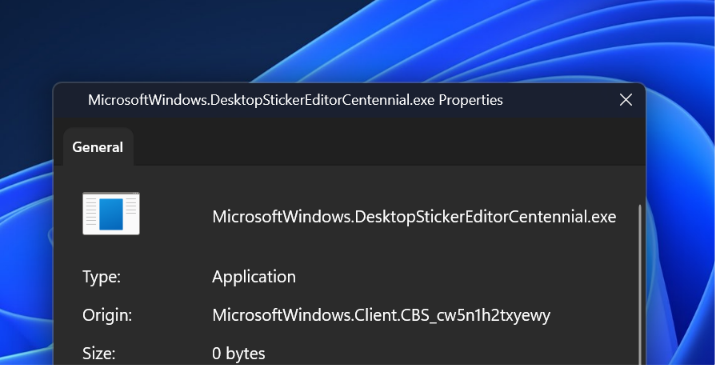
For example, if you look closely, the “General” tab uses a Pivot-style header and supports an accent indicator, which is only found in the WinUI 3 framework. You don’t have that in Win32, where the Properties dialog uses SysTabControl32, which is part of comctl32. Likewise, the Restore button uses AccentButtonStyle.
Finally, you have new checkboxes that follow WinUI 3 guidelines.
Microsoft has dropped the classic Properties dialog entirely, and it’s quite interesting because the dialog has been a part of Windows for almost three decades. The existing Properties dialog was built on the Windows 95-era property sheet API (PROPSHEETPAGE, SHOpenPropSheet out of shell32) and lacked dark mode support.
Why Microsoft can’t just randomly modernize Windows 11 components and call it a day
Windows is a legacy operating system, and it’s also part of the reason why the company tried building editions like Windows 10X in the past. Windows is difficult to modernize without breaking backward compatibility. Microsoft can’t just slap a modern design on the Win32-based Properties dialog and not expect third-party apps to break.
For those unaware, Windows has a responsibility to support decades-old software, including third-party property sheet pages. Right now, third-party apps often inject tabs into the Properties dialog using IShellPropSheetExt. This includes third-party antivirus software, 7-Zip, Dropbox, codec packs, and so on, all of which hand back an HWND-based page.
“In Win32, a window object is identified by a value known as a window handle. And the type of a window handle is an HWND (although it surfaces in C# as an IntPtr). In any case, you’ll hear the term HWND used as a shorthand for window handle,” Microsoft noted in a document.
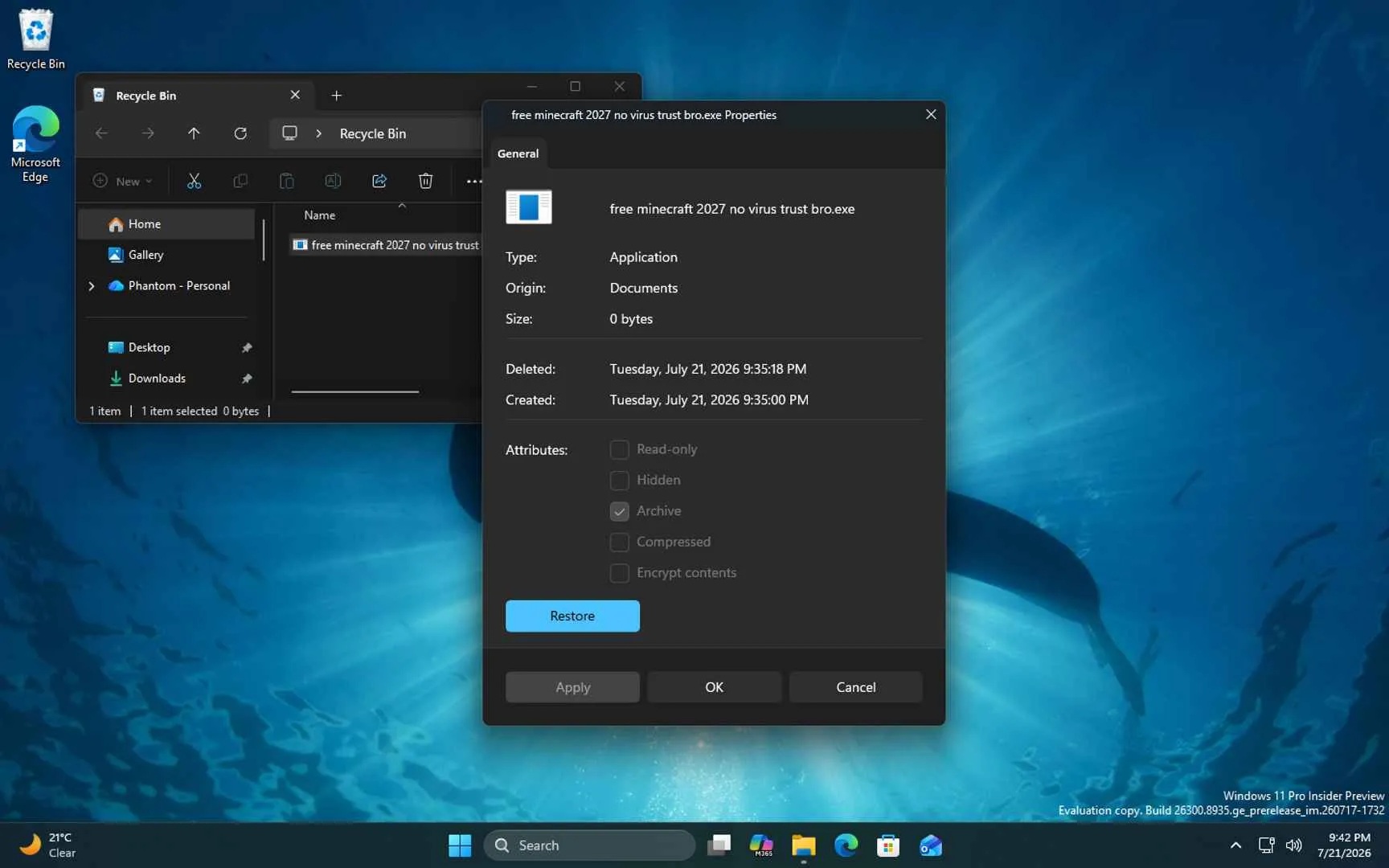
Microsoft is replacing the Win32 Properties host with WinUI, and it needs a reverse-islands path to embed those legacy HWNDs inside the new tab strip, or those extensions will break. The above screenshot shows a Recycle Bin item, which only has a General tab, but that’s not the case for other programs.
For example, if you right-click certain apps and go to their Properties, you’ll see Security, Details, Previous Versions, and even third-party tabs coexisting. It’s unclear how Microsoft is integrating those legacy third-party tabs, but I assume it has figured out how to reverse-island the path.
My other concern is that WinUI surfaces have historically paid a cold-start cost from loading the runtime. Even today, File Explorer’s XAML context menu gets criticized for exactly that. The Home tab in File Explorer is slower compared to “This PC,” which does not use WinUI.
All of that should get fixed soon, as Microsoft has plans to optimize WinUI 3, and that could explain why the revamp is taking longer than usual.
The post First look: Windows 11 is replacing Windows 95-era Properties dialog, now with dark mode and WinUI appeared first on Windows Latest