
One bad driver can crash all of Windows 11, and now Microsoft is making Intel, AMD, and Nvidia fix theirs. Intel is the first company to implement the changes, and here’s everything you need to know so far.
Intel has confirmed its GPU drivers are now fully compatible with Windows 11 26H2, and that means we might finally begin seeing Driver Quality Initiative-related improvements for Windows graphics.
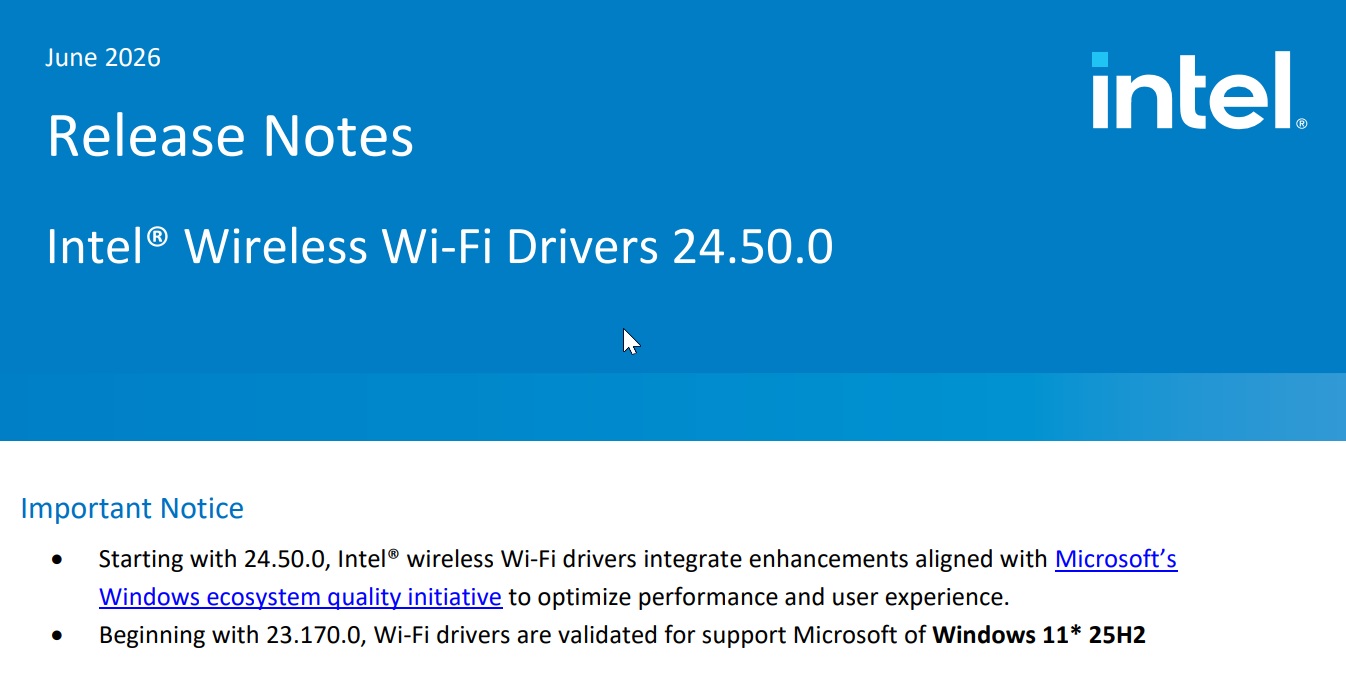
Intel’s Wi-Fi and Bluetooth drivers are already beginning to follow Microsoft’s new guidelines for a stable Windows, and we might get the same experience for GPU drivers.
I noticed that Intel has quietly added Windows 11 26H2 support to its GPU drivers with the October 2026 update, version 32.0.101.9034:
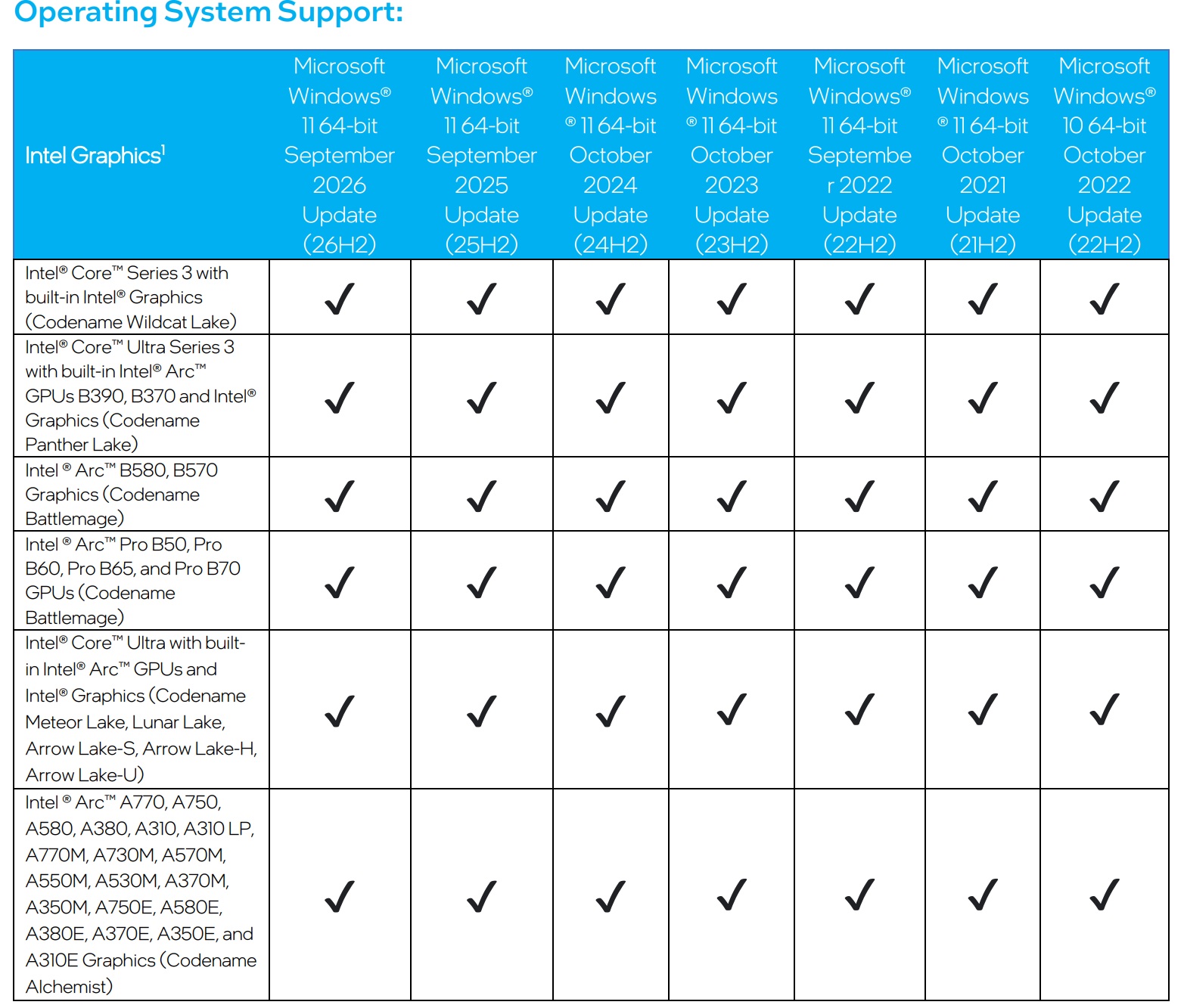
Now, the next milestone we’re watching is optimizing these GPU drivers for Microsoft’s Driver Quality Initiative (DQI), which we previously reported was in the works.
I am not sure if Intel’s legacy graphics drivers would get the same treatment, but Arc drivers are certainly on the list.
Windows Latest understands that most OEMs are already internally testing drivers following DQI, but those updates aren’t shipping to consumers yet, except from Intel, which is the first company we’ve seen put some of this work into public updates.
In our tests, we previously found that Intel’s Wi-Fi and Bluetooth drivers follow early DQI practices, but most of the changes haven’t landed yet, as this will take several months of work.
Intel’s own Wi-Fi 24.50.0 release notes previously confirmed “enhancements aligned with Microsoft’s Windows ecosystem quality initiative” to improve performance and the user experience.
Microsoft cannot make Windows stable on its own
In May 2026, Microsoft finally brought back WinHEC (Windows Hardware Engineering Conference) after a hiatus of almost a decade. The previous WinHEC was in 2018, and the event brought Microsoft’s engineers and its Windows hardware partners together again to discuss the future of Windows drivers.
Microsoft previously said that it’s working with all stakeholders in the ecosystem, as it can’t “raise the bar” on quality across Windows PCs alone.
As I’ve reported in the past, Windows problems aren’t just Microsoft’s problems, as they also hurt PC makers like Dell, Lenovo, or HP.
Apple is slowly eating Microsoft’s breakfast in the United States, and MacBook Neo has helped the company expand beyond its traditional stronghold of premium laptops. Windows being on the back burner hasn’t helped. It wasn’t until March 2026 that Microsoft announced its plans to revive Windows.
But Microsoft also admitted that a lot of Windows stability has to do with driver quality and app reliability.
“[This] requires coordinated execution across the entire ecosystem,” Microsoft noted in its May announcement, referring back to its March commitments.
At WinHEC, Microsoft confirmed it had worked with its partners to come up with DQI. I’ve written about it at length in the past, and it’s because I strongly believe DQI could be the key to making Windows PCs far more stable.
A bad driver is still a Windows problem
When you look at recent Windows update problems, it’s a fact that Windows Update broke a thing or two, but often, it’s due to a compatibility issue with one of the drivers. We’ve seen that with Intel’s driver and Windows updates on Dell PCs.
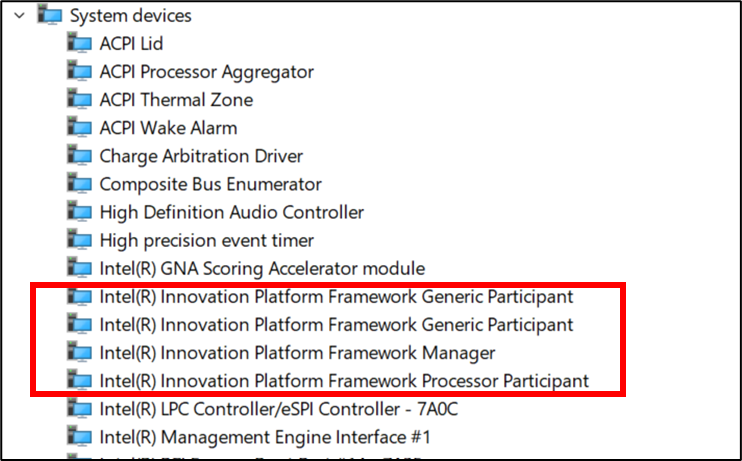
Granted, there’s a fair argument that Microsoft introduced the bug with its Windows update, so it’s entirely its responsibility, and that’s not entirely wrong. But without what Microsoft calls a “comprehensive, ecosystem-wide effort designed to fundamentally raise the bar on driver quality, reliability and security across Windows,” nothing would change.
DQI aims to achieve that, and Microsoft’s partners like Dell also agree, with Syam Poluri, Distinguished Engineer at Dell Technologies, saying:
“Great platforms aren’t built in isolation. Platform quality depends on early, honest collaboration across OEMs, ODMs, silicon partners and IHVs. WinHEC brings engineers together with Microsoft to align early, solve real problems and deliver higher-quality solutions for our shared customers”
Microsoft also reaffirmed Dell’s words and added:
“When drivers are high quality, customers experience reliable, secure, performant devices. When drivers fail, customers experience it as a device problem, regardless of where the root cause sits.”
If you haven’t been following Microsoft’s promises closely, hear me out about DQI and why it could be a game changer.
DQI does not promise to “redo” Windows 11 drivers
Microsoft is not asking OEMs to redo every Windows 11 driver and start everything from scratch, as that would barely make any sense. There are no dramatic visual changes coming either. Instead, it’s more to do with the approach than adding features.
DQI has four principles that should have been part of Windows since forever:
- Architecture
- Trust
- Lifecycle
- Quality Measures
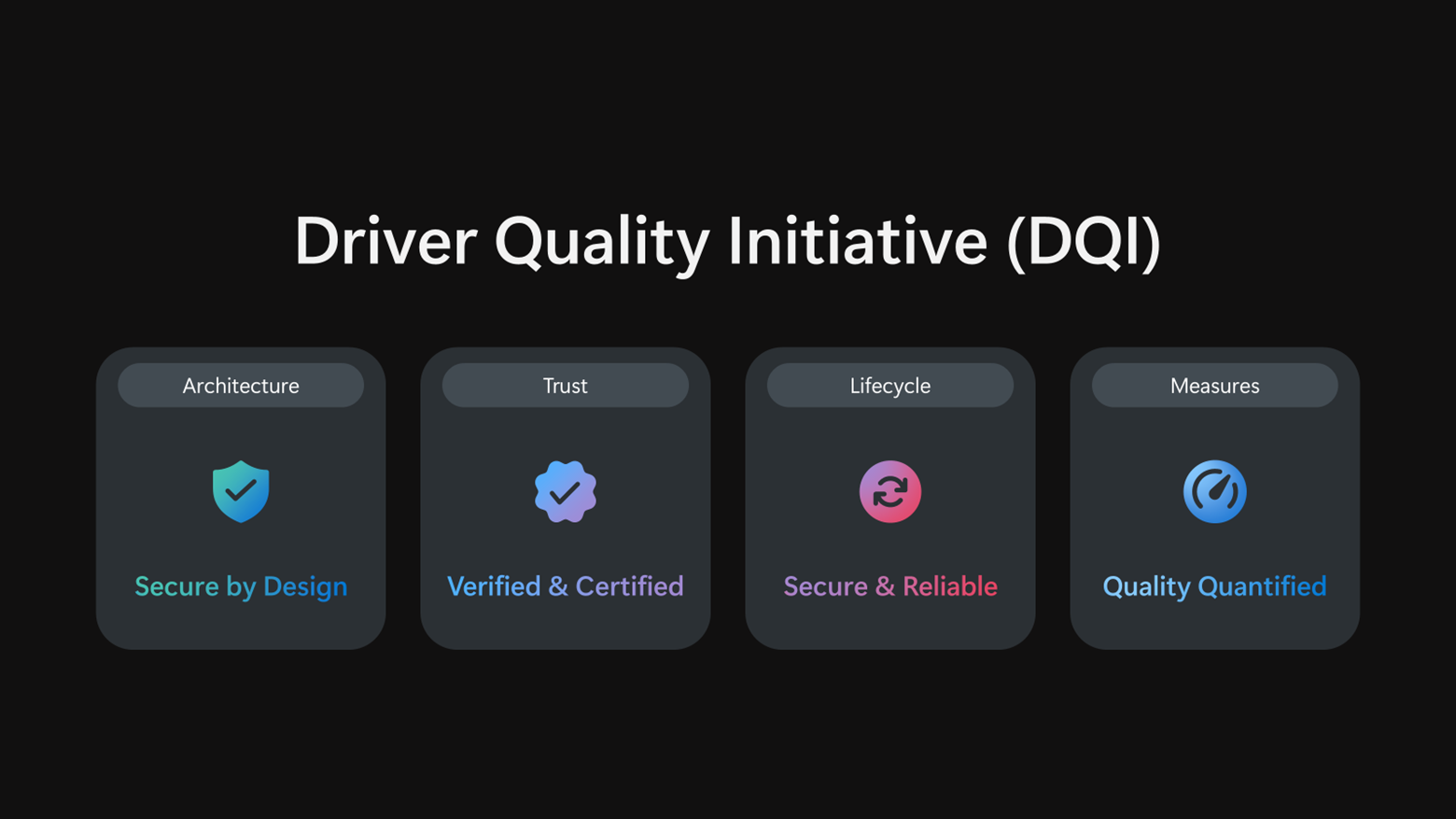
These approaches, which I am going to explain a bit below, won’t be exclusive to Intel, as Microsoft has called on all its partners, including AMD, Qualcomm, Nvidia, and PC makers, to follow this new framework.
“DQI is a partnership,” Microsoft argues. “Microsoft is building the frameworks, tools and quality signals, and we are working with partners to raise driver quality across the ecosystem so customers can rely on their Windows devices from day one through the full life of the PC.”
Microsoft has not come up with these framework principles out of a dream. They’re carefully calculated and based on the company’s learnings through its Windows Resiliency Initiative (WRI).
Windows drivers have an architecture problem
You might be surprised, but a lot of drivers, specifically anti-cheat drivers, run in the Windows kernel, and when one of these drivers fails, Windows can crash entirely. You might have observed it in your own experience with Windows, when a blue screen directly mentions an anti-cheat driver.
But it’s not just anti-cheat drivers, as I’ve observed that even less popular drivers end up interfering with the Windows kernel, and Microsoft wants to do away with that.
“If a kernel-mode driver crashes, it causes the entire operating system to crash,” Microsoft explains in its documentation on user mode and kernel mode.
Microsoft is encouraging a switch from third-party kernel-mode drivers to user-mode drivers or Microsoft-authored class drivers where possible, while also hardening kernel-mode drivers.
“This is to ensure higher driver security, reliability and resiliency,” the company previously said, and there are obvious benefits.
“UMDF drivers contribute to greater operating system stability because they have access only to the address space of the process in which they run,” Microsoft notes in its User-Mode Driver Framework documentation.
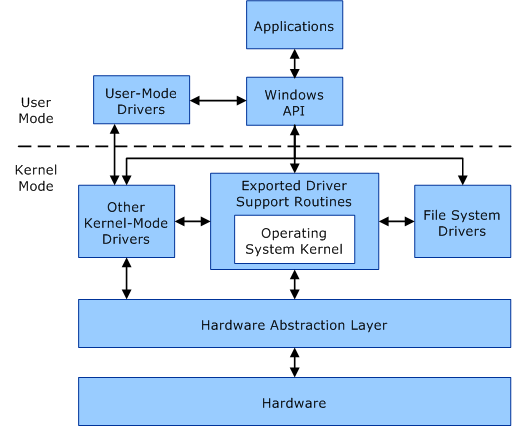
I’ve gone through Microsoft’s long support documents, and its user-mode driver investments include performance improvements for PCIe devices with DMA support. Switching to a user-mode driver is something only the driver creators can do, btw. Microsoft has also promised improvements to the Wi-Fi stack, and its class driver investments include audio support.
As for class drivers, Microsoft’s storage driver documentation explains:
“Each system-supplied storage class driver is designed to support peripheral devices of a given type and is tested against a number of vendors’ devices,” Microsoft explained.
“Class driver investments include Soundwire Device Class for Audio (SDCA), introduction of the I3C class driver, NCM USB ethernet class driver as well as continuous enhancements to existing first-party class drivers on Windows 11.
Windows has trust issues with drivers
Windows drivers aren’t widely trusted, and there are concerns over both performance and security. Microsoft is raising the bar for trusted partners and drivers to pass certification. It’s not like Windows did not certify drivers previously. It did, but now the checks will be stricter.
Old and low-quality drivers need to go
Microsoft’s third pillar is lifecycle, and one of its main objectives is to remove outdated and low-quality drivers from the Windows Update catalog.
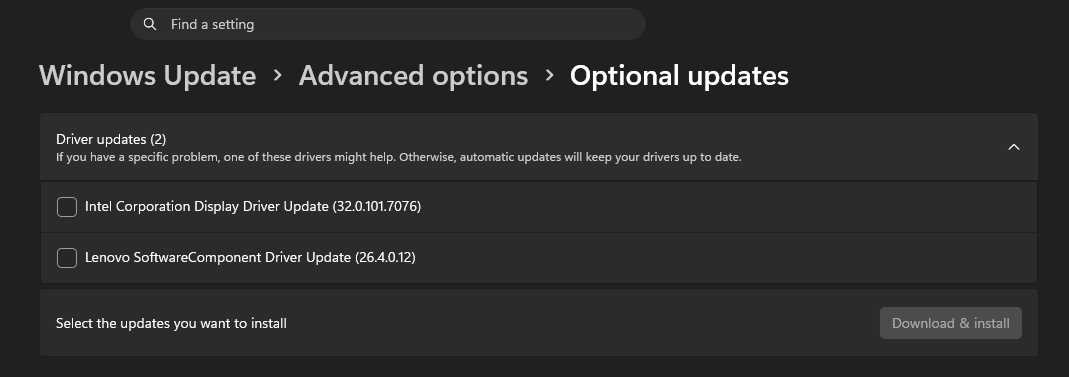
Drivers will also be judged on battery drain and heat
And last but not least, Microsoft’s fourth pillar is quality measures.
The company says it’s expanding how driver quality is measured beyond crashes to include “stability, functionality, performance, and power and thermal impact.”
The post Microsoft admits one bad driver can crash all of Windows, and Intel’s Windows 11 26H2-ready GPU drivers are next to get its fix appeared first on Windows Latest