
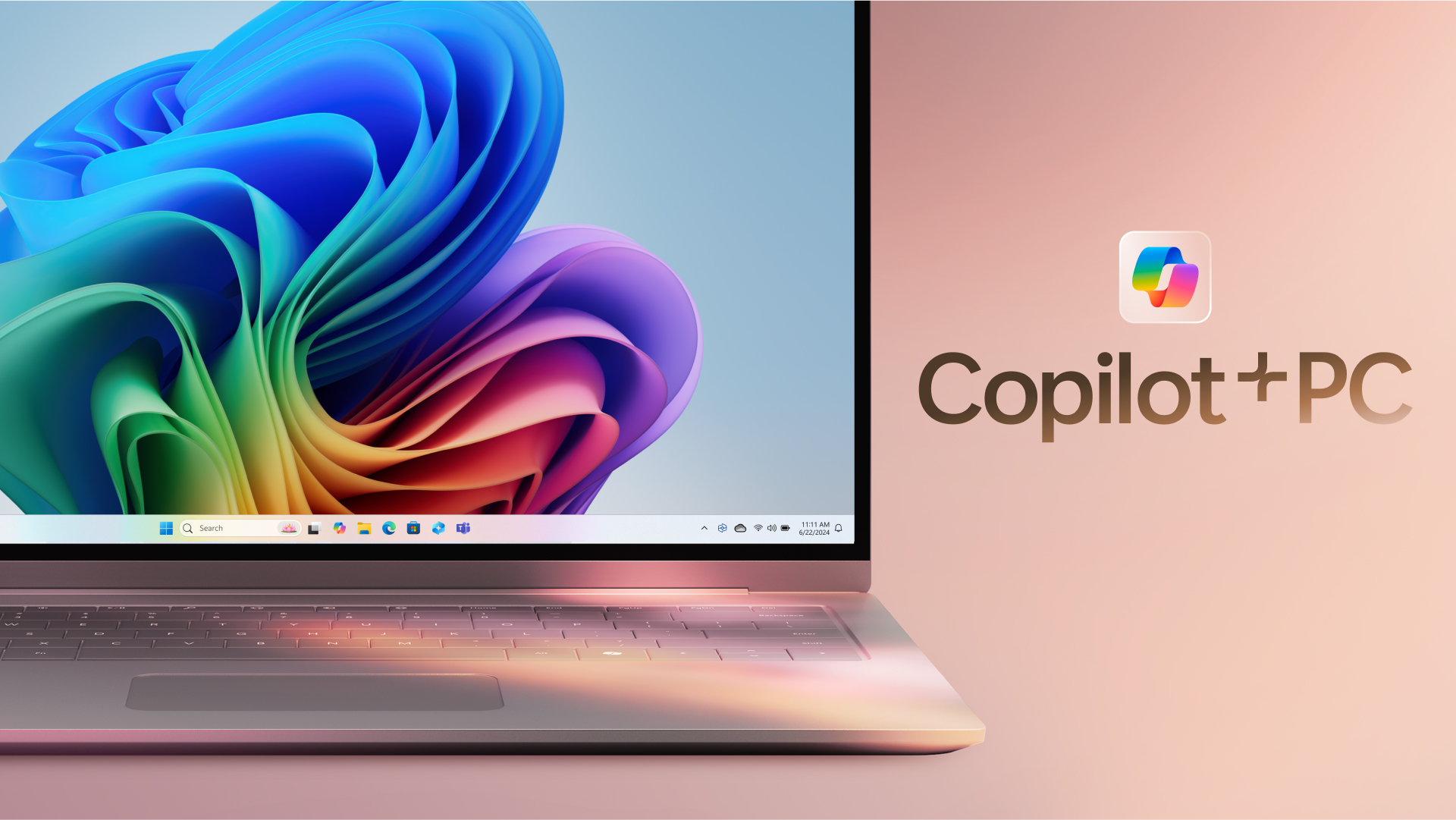
Back in May 2024, Microsoft introduced the world to Copilot+ PCs with high confidence. The company positioned the platform as the future of Windows computing, built around local AI acceleration, NPUs, and a completely new generation of AI-powered PCs. Qualcomm’s Snapdragon X Elite chips became the launch platform, and for a while, it felt like Microsoft was preparing a full-scale reset of Windows set around AI.
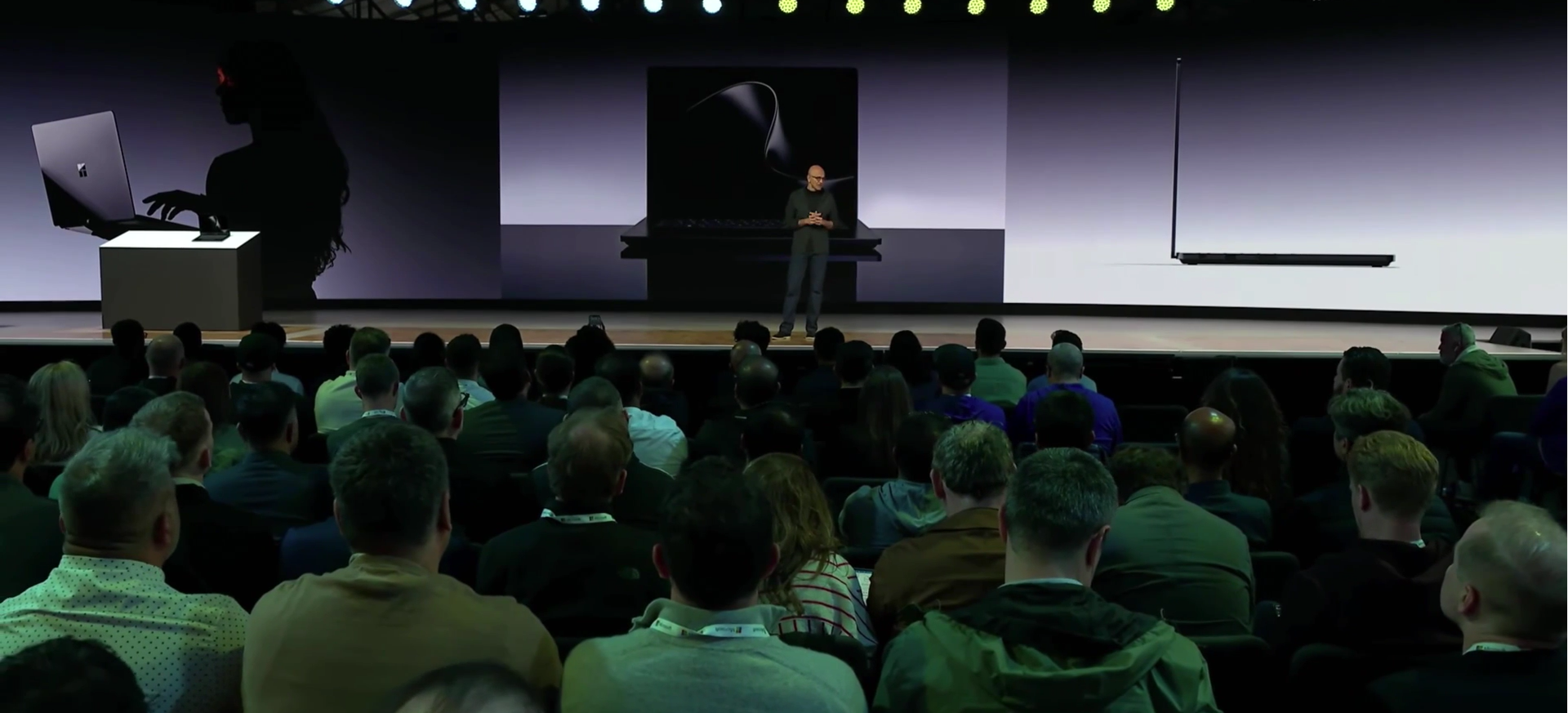
Fast forward two years, and Microsoft announced the new Surface Laptop Ultra powered by NVIDIA’s RTX Spark platform, yet during the reveal, the company never mentioned Copilot+ PC branding at all.
Surface Laptop Ultra was positioned entirely around RTX Spark, local AI compute, developer workflows, and on-device AI acceleration instead of Microsoft’s own Copilot+ identity.
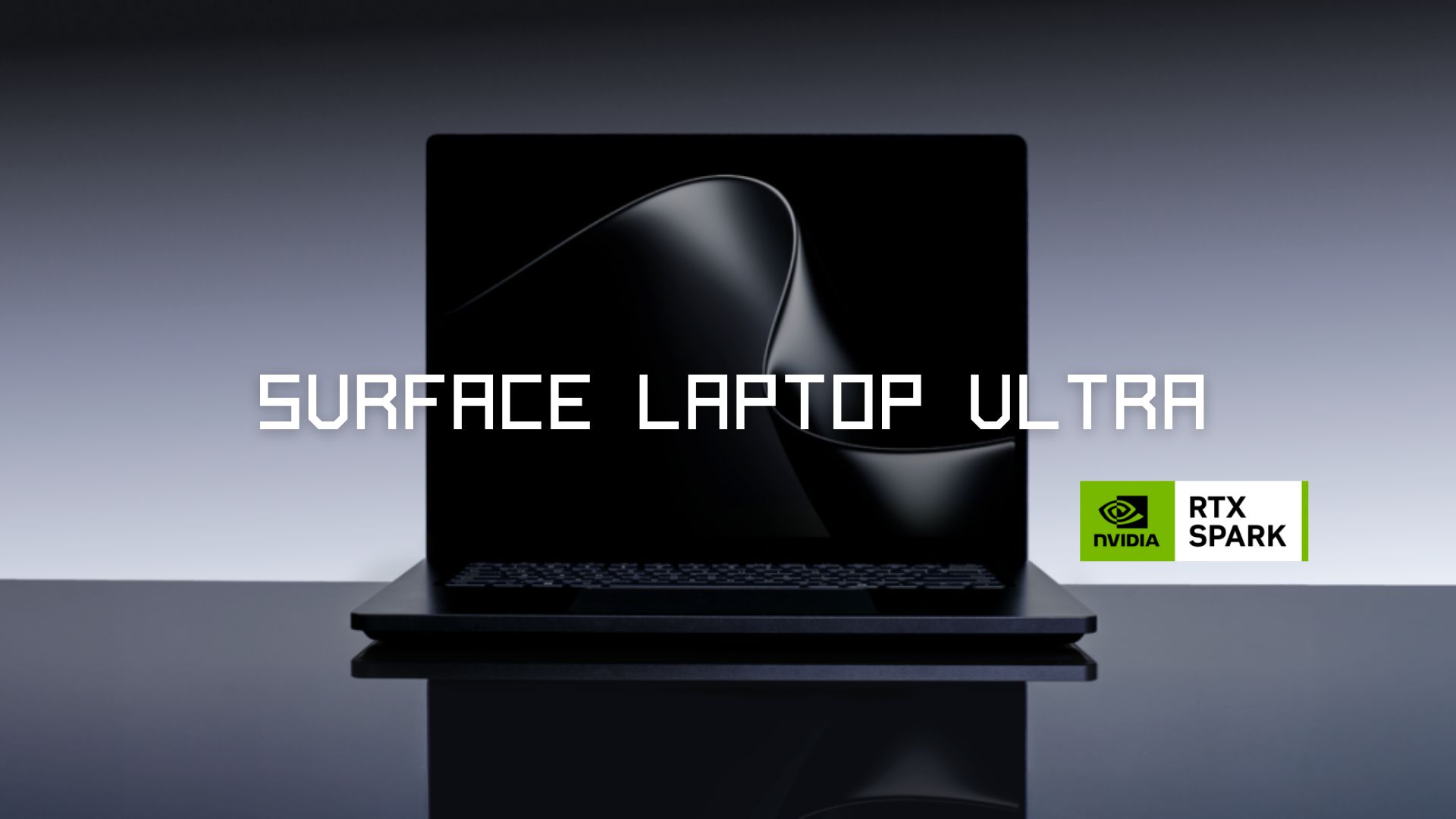
Considering Surface Laptop Ultra being the most powerful AI-focused Windows laptop Microsoft has ever built, the absence of Copilot+ branding feels extremely intentional. Needless to say, the wildly designed Surface RTX Spark Dev Box also lacks any Copilot+ PC badge.
And maybe NVIDIA wanted it that way!
Microsoft originally pushed Copilot+ PCs as the future of Windows
Microsoft described Copilot+ PCs as the “fastest, most intelligent Windows PCs ever built.” The company introduced a new hardware category requiring a dedicated NPU capable of at least 40 TOPS, 16GB of LPDDR5 RAM, and 256GB of SSD storage.
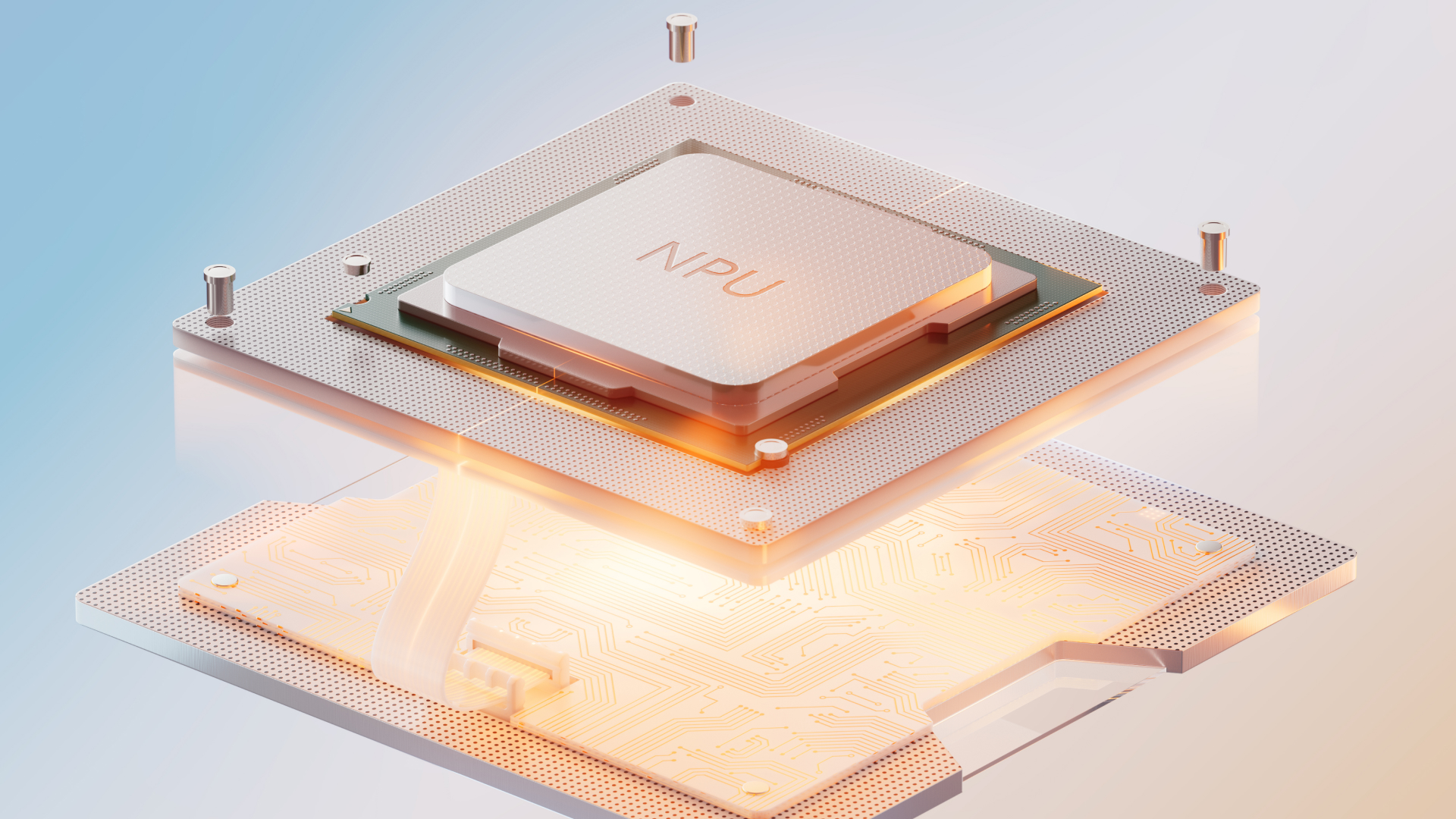
Qualcomm, whose Snapdragon X series chips were the first to meet these requirements, was the exclusive platform for this new era of AI PCs. The promise was that devices with these specs would unlock AI features that couldn’t run on any other PC, including Recall, Cocreator, and Auto Super Resolution, all processed locally on the device.
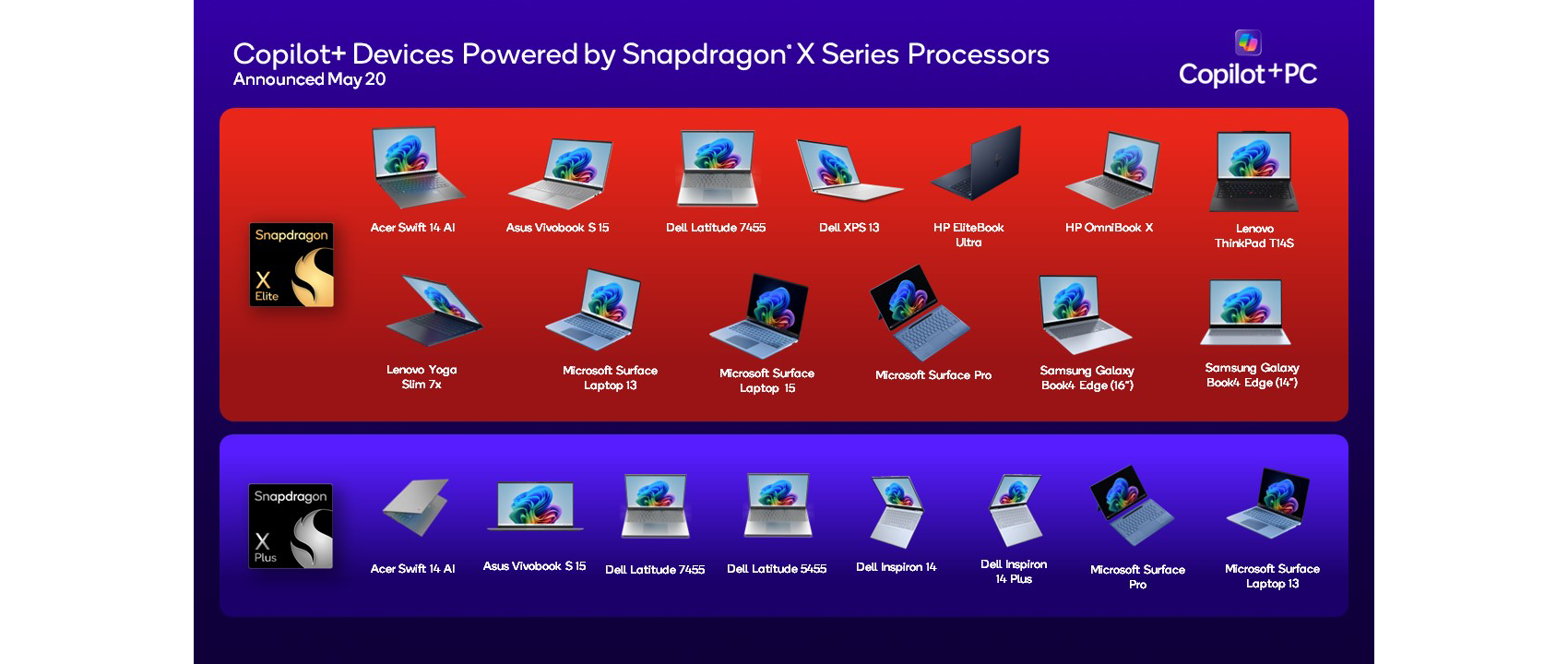
Months later, AMD and Intel joined the club with their Ryzen AI 300 series and Core Ultra 200V processors, both clearing the 40 TOPS bar. By late 2024, practically every modern premium laptop was a Copilot+ PC.
The bar Microsoft had set, once positioned as something extraordinary, had become the new normal. Almost every Windows laptop you buy today qualifies as a Copilot+ PC, which was inevitable, but also quietly deflated the meaning of the brand itself.
Recall became one of Microsoft’s biggest AI controversies
The biggest promise of Copilot+ PCs at launch was Recall. Microsoft described it as a “photographic memory” for your PC, a feature that would take continuous screenshots of your activity and make everything searchable using natural language. In theory, it sounded genuinely useful, and I still remember waiting to get my hands on it. Sadly, it became one of the biggest self-inflicted PR disasters in Microsoft’s recent history.
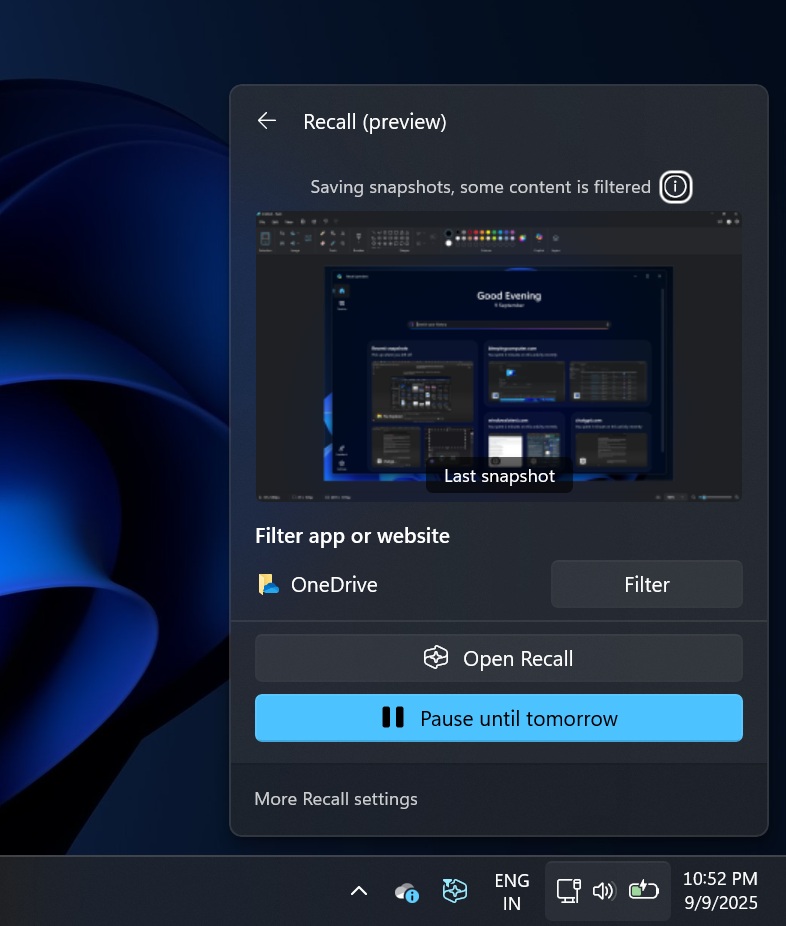
Security researchers immediately pointed out that early builds stored snapshots in unencrypted plain-text files, making users’ entire digital histories accessible to anyone with even basic access to the machine. Microsoft pulled the feature before it could ship to consumers, redesigned it as opt-in, added Windows Hello authentication, and delayed the rollout for over a year.
Recall eventually made it into Windows Insider builds and to all supported PCs, but the damage to the Copilot+ PC brand had already been done. People associated the Copilot+ PC label with a feature that wanted to spy on everything they did.
Microsoft spent 2025 forcing Copilot into everything
If Recall was the spark, 2025 was the fire. Microsoft spent the year aggressively stuffing Copilot into every corner of Windows 11, including Edge, Office, Notepad, Paint, File Explorer, and the taskbar. Not to mention the Copilot button on the keyboard!

Users pushed back harder with every update. The Windows President locked comments on his own X post after announcing that Windows was evolving into an “agentic OS.”
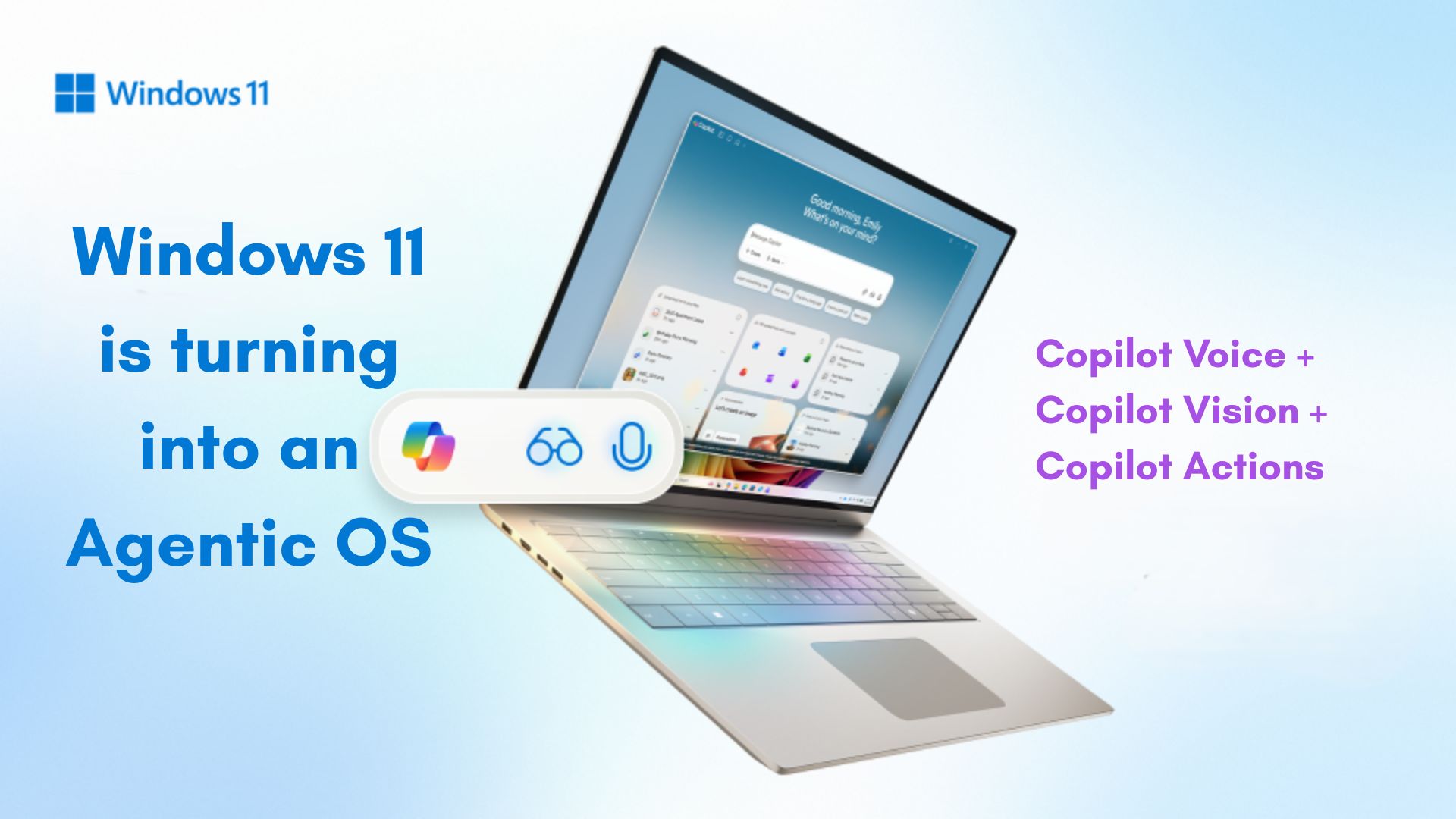
A retired Microsoft engineer publicly said the OS had turned into a sales channel for all of Microsoft’s products.
Copilot ads backfired routinely, including one that had to be deleted after the AI failed at something as basic as changing text size. The Copilot app itself was a glorified web wrapper for most of its existence. Funnily enough, it now resembles the Edge browser.
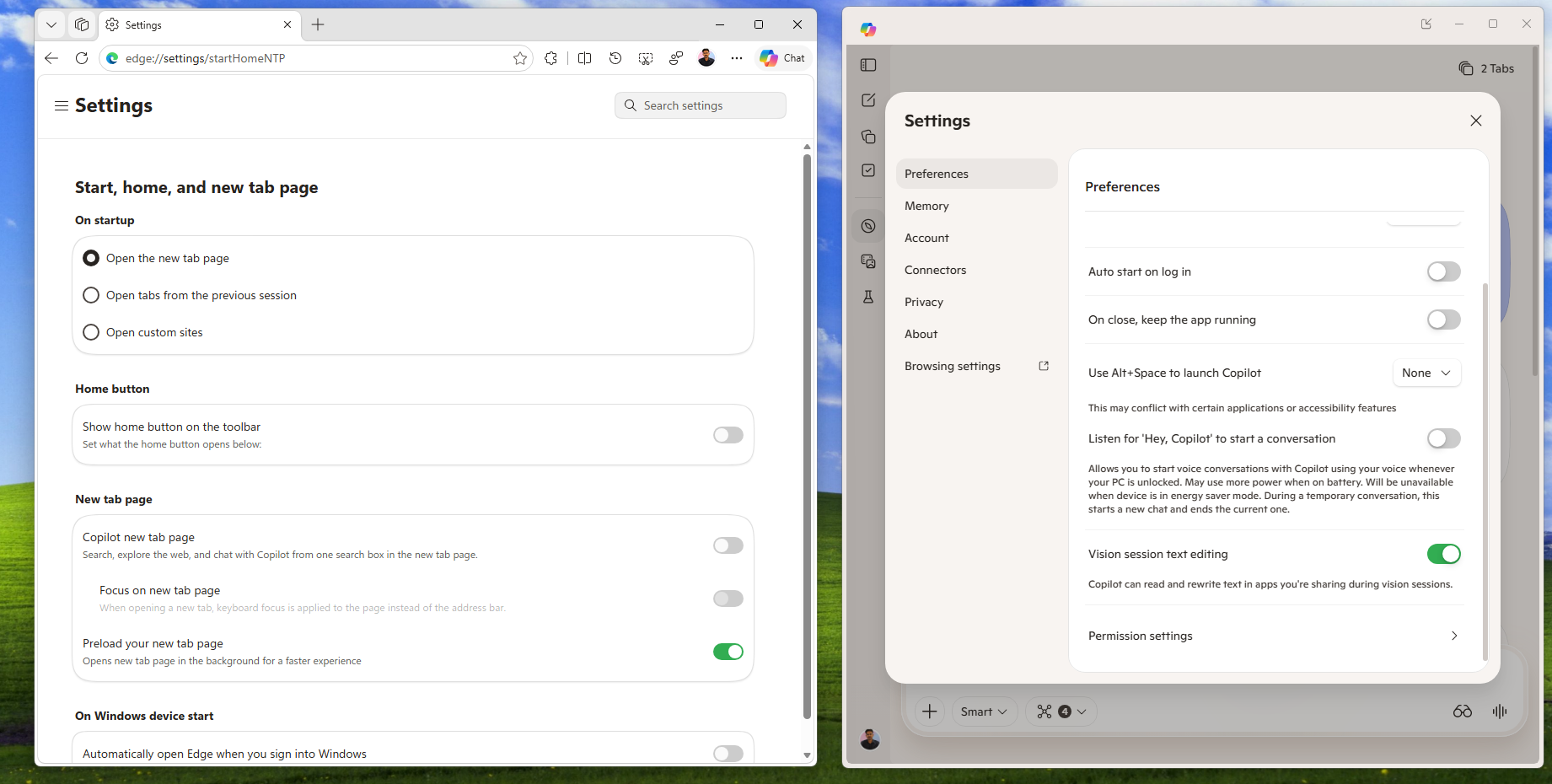
By the time Microsoft admitted early this year that it needed to fix Windows before pushing more AI, the Copilot+ PC brand carried a distinctly negative shade. For NVIDIA, walking into that association while launching its most ambitious chip yet would have been an unnecessary risk.
Surface Laptop Ultra avoids the Copilot+ PC branding entirely
The Surface Laptop Ultra packs up to 128GB of unified LPDDR5X memory, 20 ARM CPU cores, and a Blackwell GPU with 6,144 CUDA cores, delivering roughly RTX 5070-class performance in a laptop chassis.
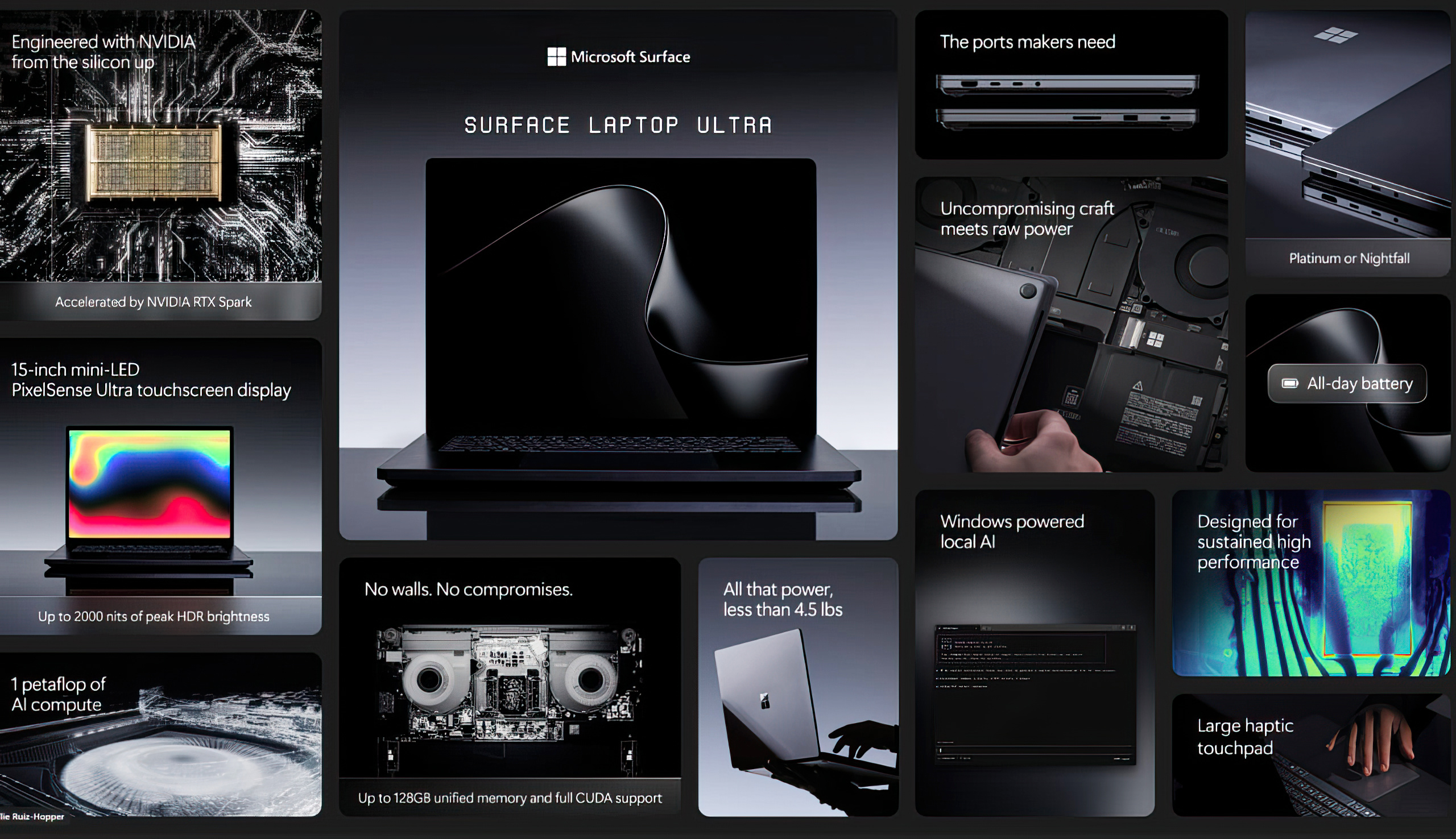
The RTX Spark chip in its highest configuration delivers 1 petaflop of AI compute. To put that in perspective, the best consumer-facing NPU in Qualcomm’s own Snapdragon X2 Extreme tops out at around 80 TOPS.
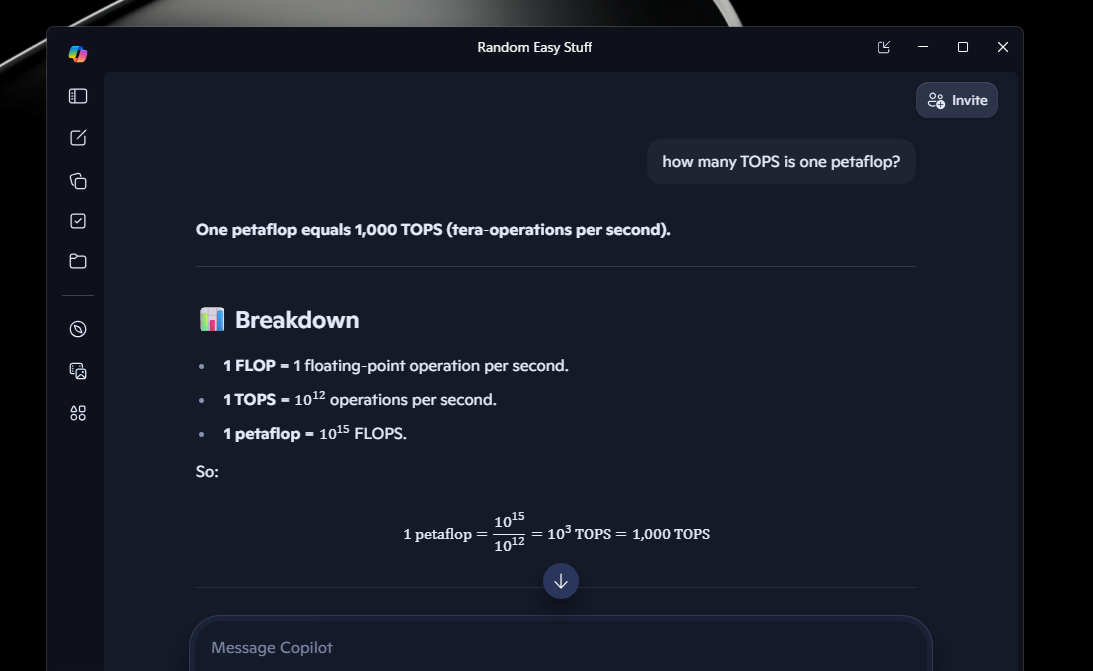
Calling a device with 1,000 TOPS a “Copilot+ PC”, alongside budget laptops that barely clear 40 TOPS, would have given a wildly misleading impression of what the Surface Laptop Ultra is capable of.
Copilot+ PC branding was practically absent during the reveal.
The omission became even more interesting after Ryan Shrout, President and GM at Signal65, revealed that Microsoft privately confirmed Surface Laptop Ultra will still be a Copilot+ PC and includes an NPU.
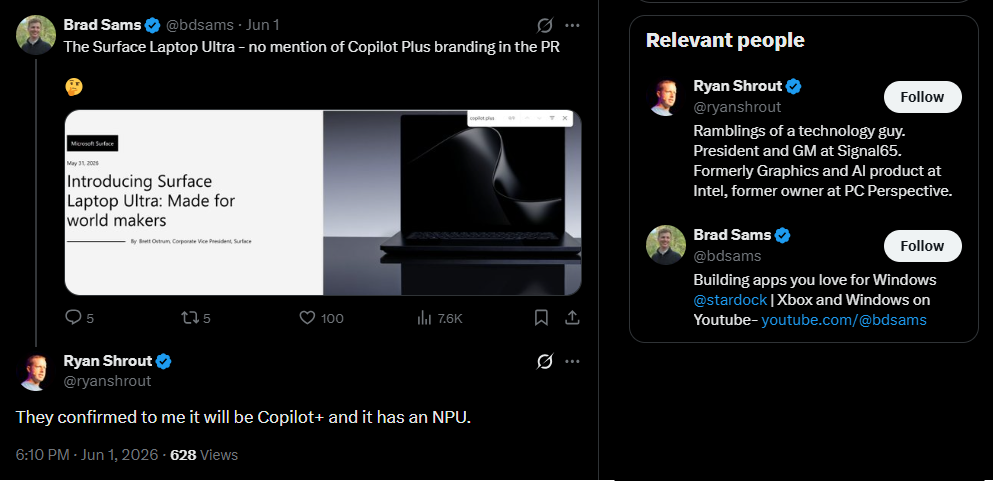
So why avoid the branding publicly?
The most likely explanation is NVIDIA.
RTX Spark is NVIDIA’s own AI platform identity, and NVIDIA clearly wants developers, creators, and enterprise customers to associate local AI acceleration with RTX branding instead of Microsoft Copilot branding.
And from NVIDIA’s perspective, attaching that hardware to a brand associated with Recall controversies, cloud Copilot integrations, and web-based AI assistants probably isn’t ideal.
Also, from the looks of it, NVIDIA has far more at stake here than Microsoft does. Although I would argue that Microsoft needed something as promising as the RTX Spark!
Copilot+ PCs became confusing anyway
Adding to the confusion is the fact that Microsoft’s own Surface Laptop for Business recently launched with just 8GB of RAM, priced at $1,299, even though 16GB was a non-negotiable Copilot+ PC requirement for years.
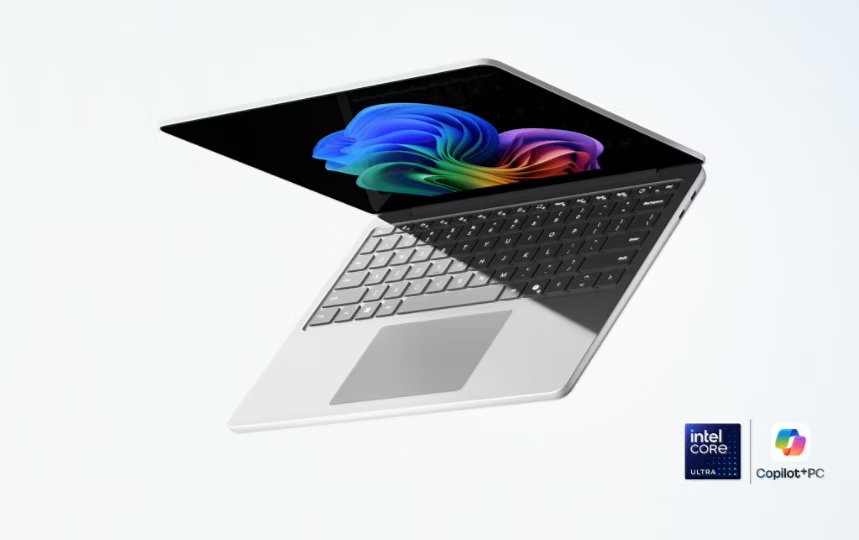
Either Microsoft quietly changed the requirements, or the device simply doesn’t carry the Copilot+ label. Either way, the standard Microsoft spent two years enforcing is now bending to commercial convenience, which makes the brand feel even less meaningful than it already did.
As more regular laptops started including NPUs, the distinction between standard Windows laptops and Copilot+ PCs also became harder to explain to consumers.
Most users still do not fully understand what makes a PC “Copilot+” beyond a sticker and a Recall feature many people disabled immediately.
RTX Spark, on the other hand, immediately communicates something more tangible: local GPU-powered AI acceleration.
Microsoft may eventually need a full Windows AI branding reset
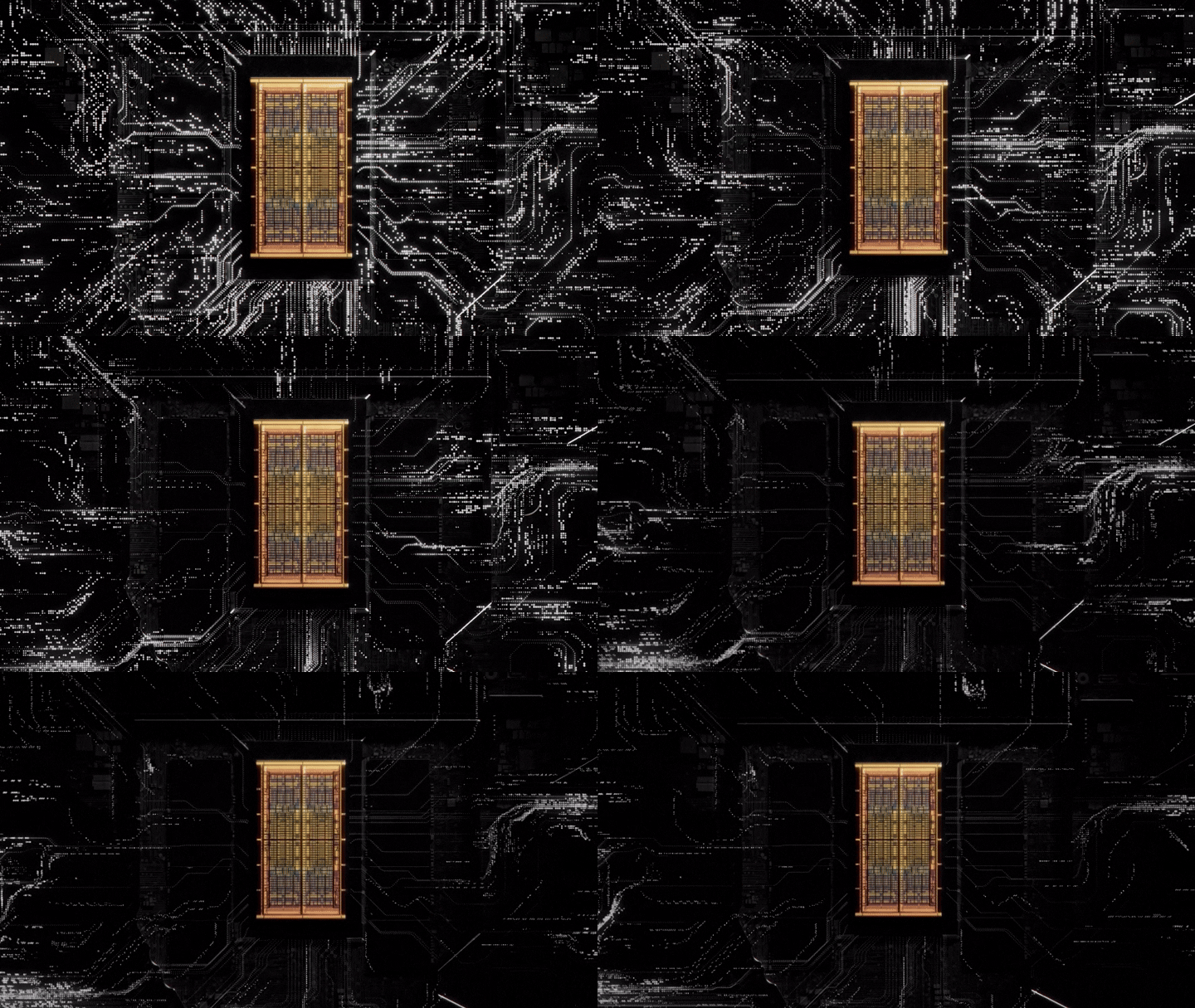
The Surface Laptop Ultra’s 1 petaflop of local compute is impressive, but the experience of using it will live or die on how well Windows 11 handles the hardware underneath it. Although Microsoft says Windows 11 now uses Workload Profile Scheduling (WPS) to scale workloads more intelligently across all 20 CPU cores of the RTX Spark.
However, Build 2026 exposed a larger identity problem for Microsoft.
The company increasingly wants Windows to become the operating system for local AI development, agent workflows, hybrid compute, and native AI acceleration. But Copilot branding is too tied to Microsoft’s earlier cloud AI phase, which even a former VP deemed a failure.
Windows itself may eventually need a branding reset around local AI.
Speculation around Windows 12 continues partly because many people feel Microsoft needs a clean slate for the next phase of Windows. Note that Windows Latest recently reported that Microsoft clarified it is not announcing Windows 12.
Still, a future Windows branding overhaul no longer feels unrealistic. Especially now that Microsoft is rewriting major parts of Windows 11 using native code, optimizing WinUI performance, and improving shell responsiveness.
Because at the end of the day, none of the AI branding matters if Windows itself still feels sluggish. Even budget Windows laptops would benefit more from a lighter, faster, more responsive operating system than from another AI badge on the box.
Getting the branding right matters far less than getting the OS right.
The post Microsoft quietly dropped Copilot+ PC branding for Windows 11’s powerful AI laptop, and it won’t tell you why appeared first on Windows Latest