
If you have ever pulled your Windows laptop out of your bag only to find it burning hot with a completely drained battery, you have been a victim of a bad driver. For years, PC users have suffered through overheating, poor battery life, and sluggish performance caused by underoptimized hardware and software. Now, Microsoft is finally taking a stand to fix the root cause.

We reported earlier that Microsoft has confirmed that Windows 11 no longer triggers battery drain due to Modern Standby. However, that document was a year old, and coincidentally, while writing this article, I was in a cafe, and when I opened my laptop, it showed me a critical low battery sign. This is just further proof that we needed deeper Driver quality updates in Windows, and, fortunately, it is happening now.
During the Windows Hardware Engineering Conference (WinHEC) 2026, Microsoft officially announced a fundamental shift in how it evaluates third-party software. Through its new Driver Quality Initiative (DQI), the tech giant confirmed it is expanding its measurement metrics to ensure drivers are penalized not just for causing system failures, but for ruining the everyday user experience.
How Windows judged hardware compatibility before
For decades, the benchmark for driver quality was shockingly low. Microsoft relied almost entirely on Windows Error Reporting (WER) telemetry and crash dump files to evaluate whether an original equipment manufacturer (OEM) had delivered a good product.
Did the driver cause the operating system to crash, hang, or trigger a fatal Blue Screen of Death (BSOD)?
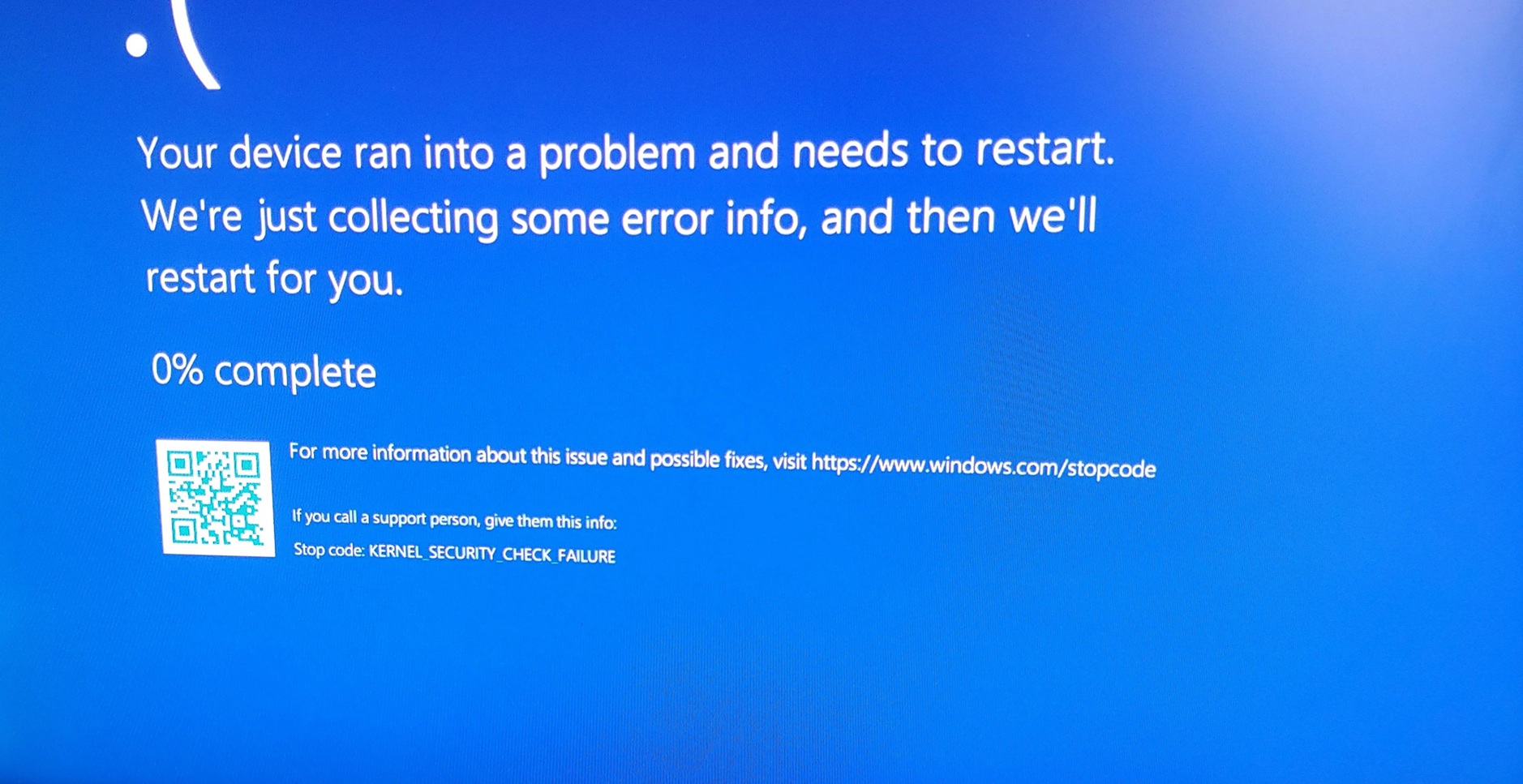
If a graphics, Bluetooth, or audio driver managed to keep Windows 11 running without triggering a catastrophic failure, it was generally considered “stable.” It would successfully pass the baseline requirements and be distributed to millions of machines globally.
This legacy approach created a massive blind spot in Windows, including older versions. A driver could be perfectly stable on paper, yet destroy the user experience. Tech-savvy users have long battled with hidden issues like high Deferred Procedure Call (DPC) latency, where poorly coded network drivers monopolize CPU cycles, resulting in random audio crackling, games skipping frames here and there, and microscopic system stutters.
Under the old certification rules, these notorious drivers were deemed completely acceptable simply because they did not explicitly crash the machine.
Microsoft is fixing the “Modern Standby” battery drain nightmare
The most devastating consequence of the old testing methodology is the unremitting “Modern Standby” crisis. Modern Windows laptops are designed to sleep like smartphones, occasionally waking up low-power components to fetch emails or update background apps. However, if a single storage controller or Wi-Fi driver is poorly optimized, it can prevent the computer’s processor from dropping into its lowest power states (known as C-states).
When a driver blocks the CPU from sleeping, your laptop quietly drains its entire battery while sitting idle on your desk or tucked away in your backpack, generating massive amounts of unnecessary heat. Because the laptop never really crashed, traditional telemetry reported that everything was fine.
Under the new “Quality Measures” pillar of the DQI, Microsoft is officially closing this loophole. The company explicitly stated that it is expanding how driver quality is measured beyond crashes to actively include “stability, functionality, performance, and power and thermal impact.”
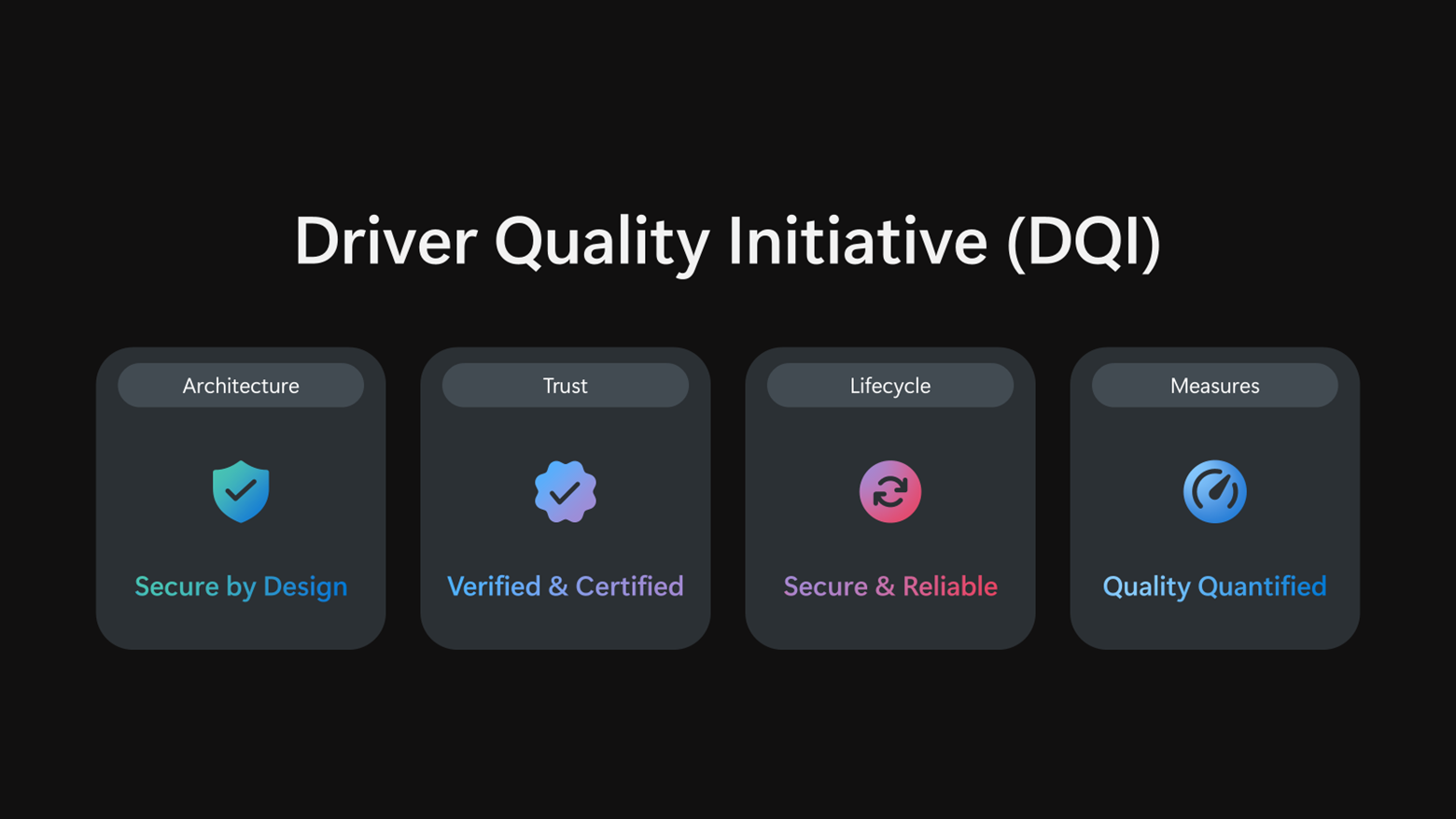
This is a monumental shift for consumer hardware. It means a driver can now be officially classified as low-quality or “bad” solely because it drains your battery too fast or causes your cooling fans to spin up when the device should be resting. Microsoft is now generating clearer, harsher signals to hold hardware partners directly accountable for the power and thermal footprint of their code.
Windows 11 users are getting better hardware and software compatibility
Microsoft’s targeted attack on poorly optimized drivers is part of a quality-control campaign originating from WinHEC 2026. As we reported, Microsoft’s Windows 11 quality reset now targets bad drivers. The company is demanding early, honest collaboration from its silicon partners to ensure that Windows laptop PCs feel premium from the day you unbox them.
To enforce these new, stricter quality metrics, Redmond is also taking direct action on the distribution side. By deprecating older drivers that fail to meet these new battery and thermal standards, Microsoft will prevent the Windows Update catalog from automatically installing unoptimized code that ruins your perfectly functioning laptop.
With the rise of highly efficient ARM processors like the Snapdragon X Elite and Intel’s Panther Lake chips, battery life is the ultimate battleground against Apple’s MacBooks. By explicitly judging drivers on their thermal and power efficiency rather than just crash data, Microsoft is finally forcing the entire PC industry to treat good battery life as mandatory, along with a cooler, faster, and far more reliable Windows 11 experience.
The post Microsoft admits Windows 11 drivers were quietly killing your battery and performance without crashing, closes the loophole appeared first on Windows Latest