
When a Distinguished Engineer, who has been working at Microsoft for 18 years, says that the era of traditional software development is totally behind us, you pay attention!
“Typing code is absolutely over,” David Fowler wrote on X.
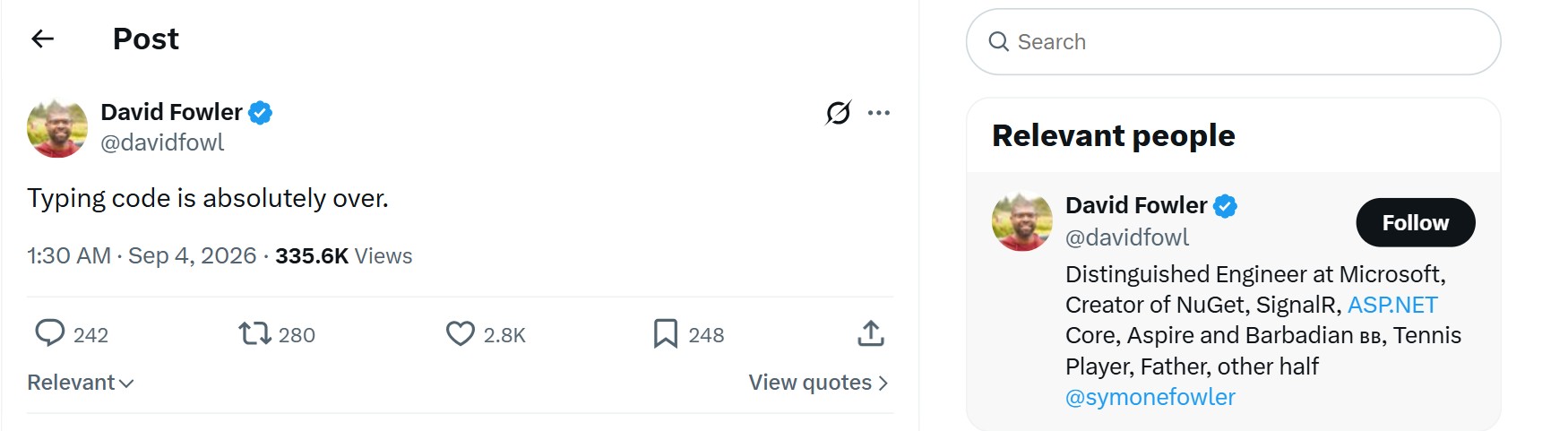
Don’t write this off as another engagement-farming hot take from the crowd. Fowler co-created SignalR, was a founding developer on NuGet and the Kudu deployment engine, and worked on the core of ASP.NET Core. He now leads work on Aspire, Microsoft’s toolchain for building distributed apps.
Of course, Microsoft is infamous when it comes to AI-powered coding. We can’t forget Satya Nadella saying that 20 to 30% of code at Microsoft is written by AI.
Fowler isn’t saying developers will stop reading code, or that software engineering is done. His point is that manually typing code line by line, in an editor, is becoming the least interesting part of the job. Aspire, the very project he works on, is already being rebuilt around AI-based app development.
Microsoft is moving from AI autocomplete to agents that build software
Back in May 2023, Microsoft Research published a study on Visual Studio IntelliCode, testing 19 different designs across seven lab studies with 61 programmers. The problem wasn’t whether AI could generate good suggestions. It was that developers kept missing them because of how they were shown on screen.
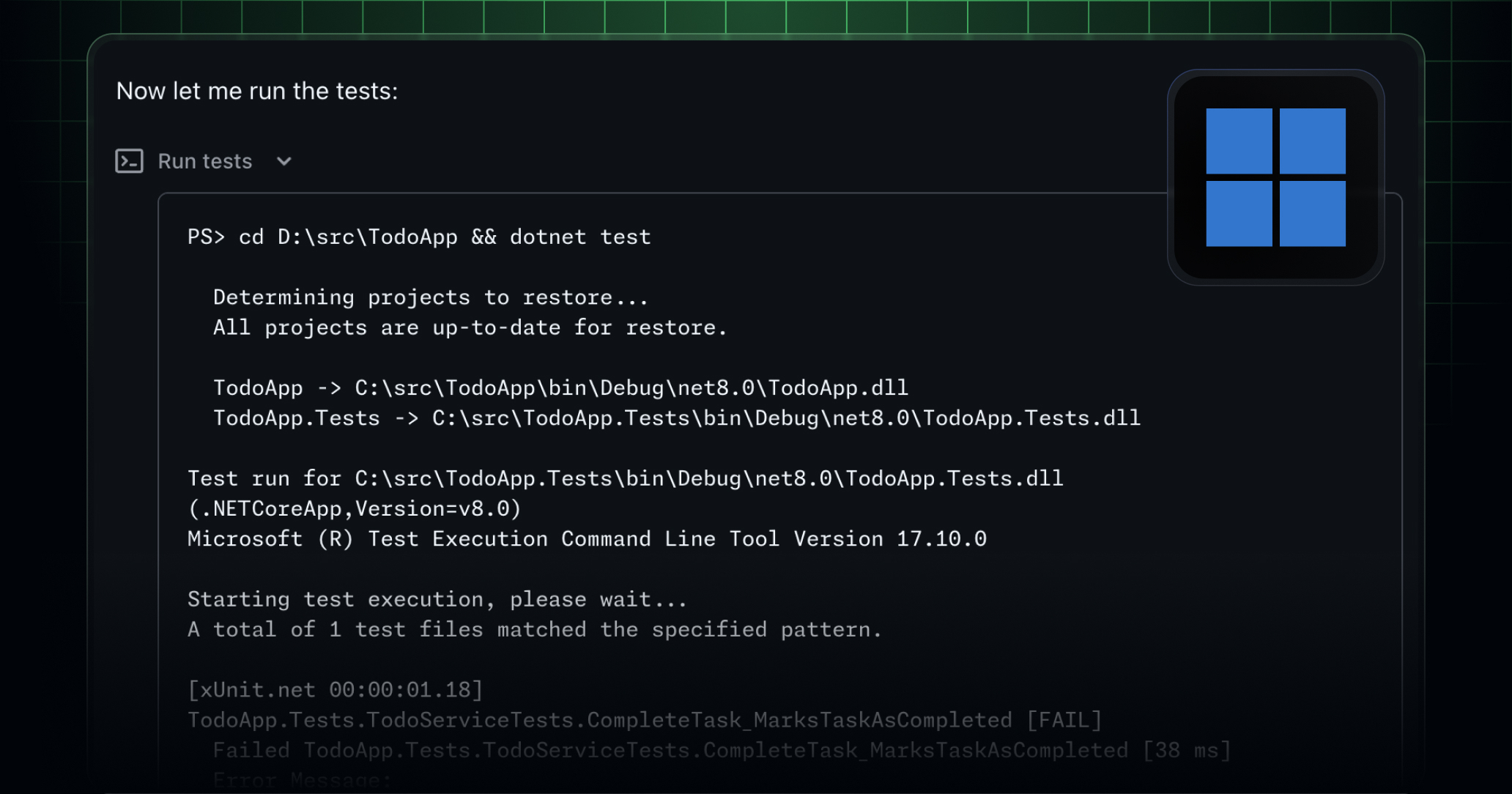
All of that was still autocomplete. GitHub Copilot has moved well past it. Copilot’s coding agent can now take a task, build its own environment, work in the background, modify a repository, and open a pull request for review. In February 2026, GitHub added Windows development environments to the coding agent, letting it build and test Windows-targeted projects, run linters, and verify builds before handing work back to a human.
Now, GitHub Copilot’s app can run agent sessions inside WSL, making Linux development in Windows easier, with AI.
If you frowned at that, remember that Linus Torvalds also supported AI-code in Linux, saying: “AI is a tool, just like other tools we use. And it’s clearly a useful one. It may not have been that ‘clearly’ even just a year ago, but it’s no longer in question today.”
David Fowler works on making app development better with Aspire. It is a code-first toolchain for building and running distributed apps, where developers define services, containers, and databases inside a single application model.
Aspire 13.1 made AI coding assistants first-class citizens in that workflow. Aspire 13.2 went further with an agent-friendly CLI and MCP support.
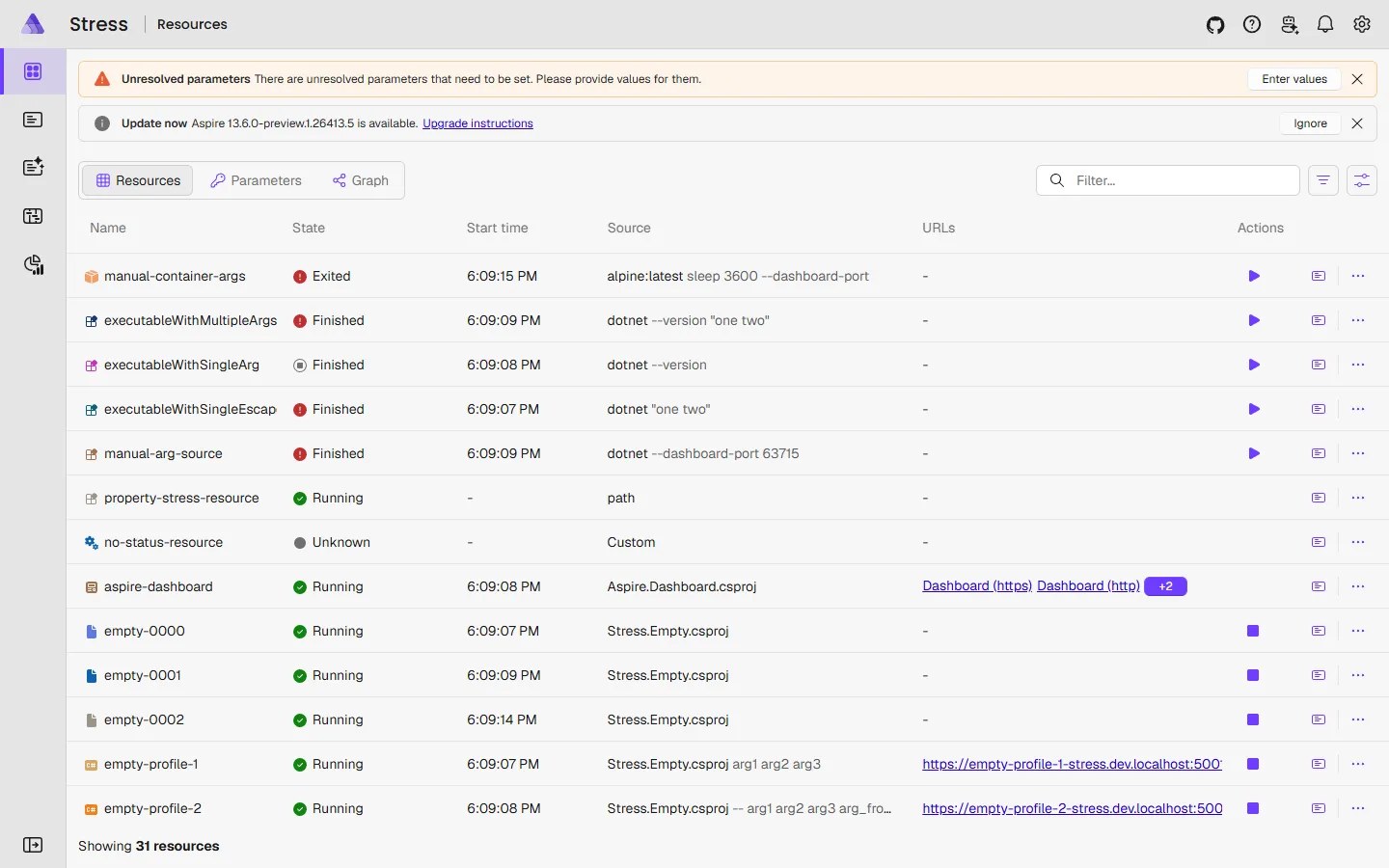
Fowler’s team wrote in April 2026 that AI agents are “really good at writing code,” but that generating code and shipping a full working app “are very different things.” Aspire’s answer is letting agents start services, read logs, inspect telemetry, restart what’s broken, and test again, without a human copy-pasting error messages back into a chat window.
The tools for software development are being redesigned so AI can operate inside the loop.
But “typing code is over” doesn’t mean software engineering is over
When code is nearly free to generate, the jam moves to architecture, performance, native APIs, testing, and dependency management, because nobody can check line-by-line anymore. Veracode’s 2026 GenAI Code Security Report found that about 44% of tested AI code-generation tasks produced code with a known vulnerability. It’s a controlled benchmark, though.
However, Microsoft’s security team is applying AI to the other side of this problem. Its codename MDASH system, an agentic vulnerability scanner, is already being used by engineering teams across Windows, Azure, and identity systems.
Microsoft’s Windows security team said MDASH “enabled our security team to perform vulnerability hunting at the scale of Windows with a much higher depth of analysis than was previously possible,” mentioning the work on the Windows kernel, Hyper-V, and the networking stack.
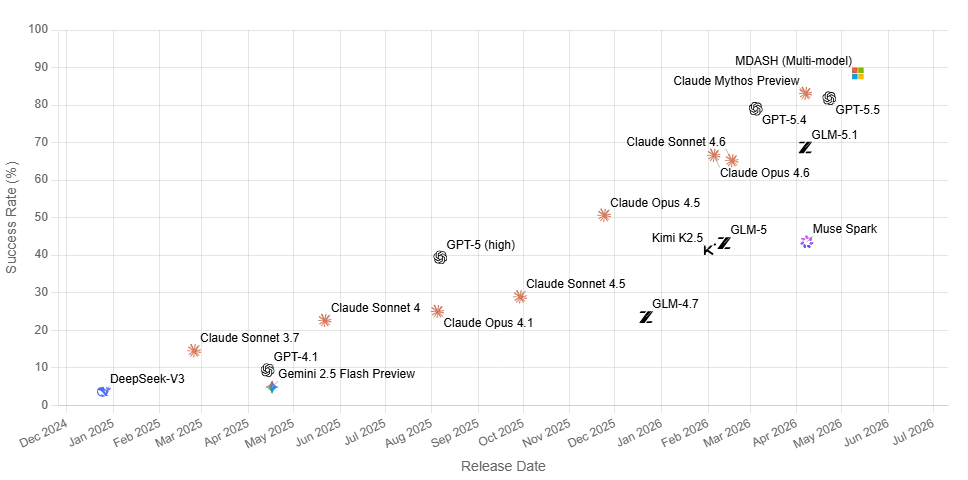
Programmers may be typing less, but Microsoft is definitely making AI dig through some of the hardest code in Windows.
AI-generated code means more for Windows 11 than we realize
This isn’t the first time we tried to decode Fowler’s one-liner. He’s the same engineer who told us native apps are back. And ever since, we’ve witnessed a massive surge in Microsoft’s renewed push toward native WinUI 3 Windows development instead of web wrappers.
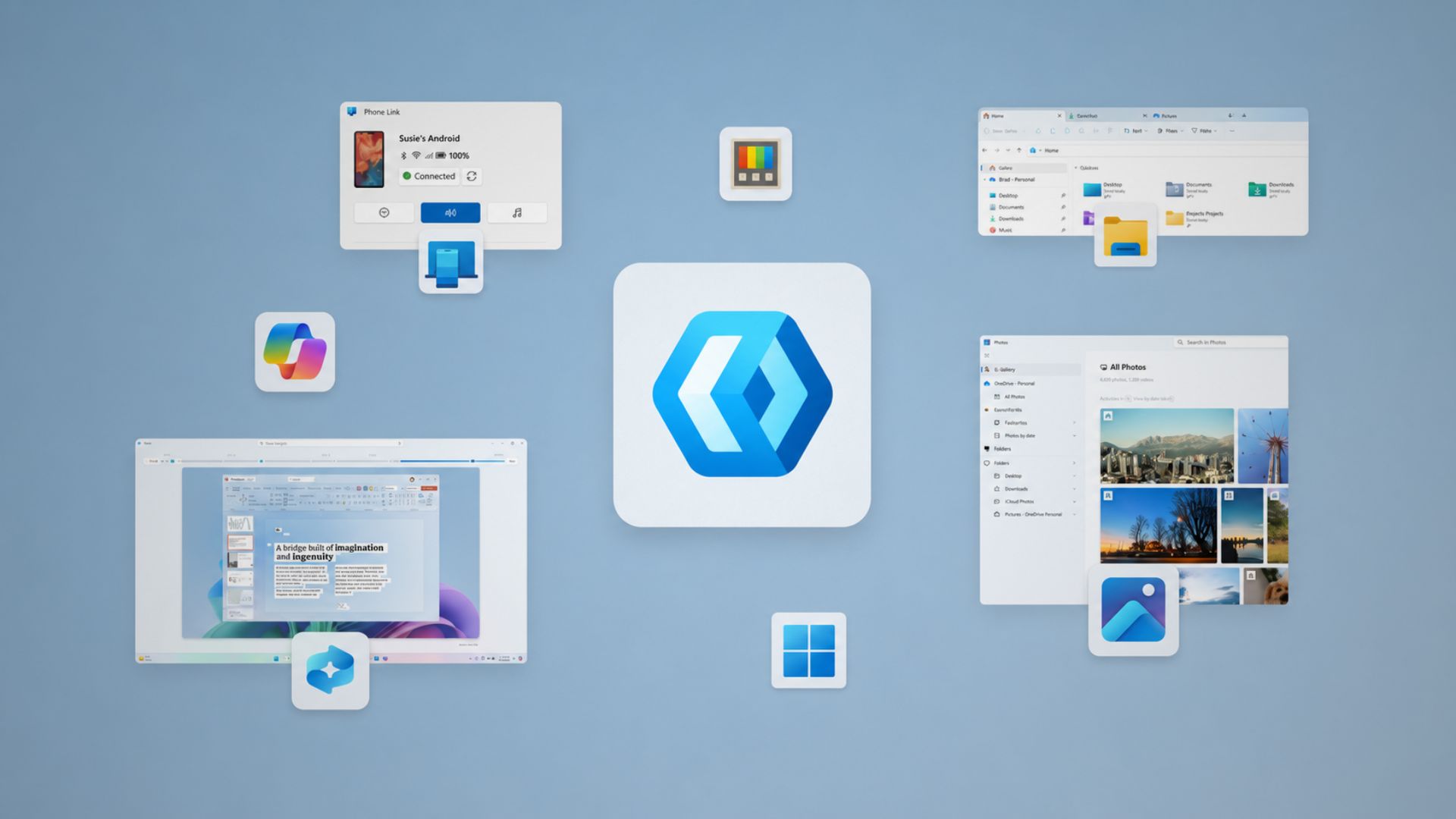
Redmond now lists WinUI 3 as its recommended native framework for new Windows apps, and in a genius move, the framework is now truly open-source. More open, better-documented native tooling gives AI agents more to work with, similar to what Aspire’s codified app model already does.
For beginners, Microsoft has a dedicated Learn guide showing how to use Copilot to build WinUI apps, including code completion, file context, and project-specific instructions.
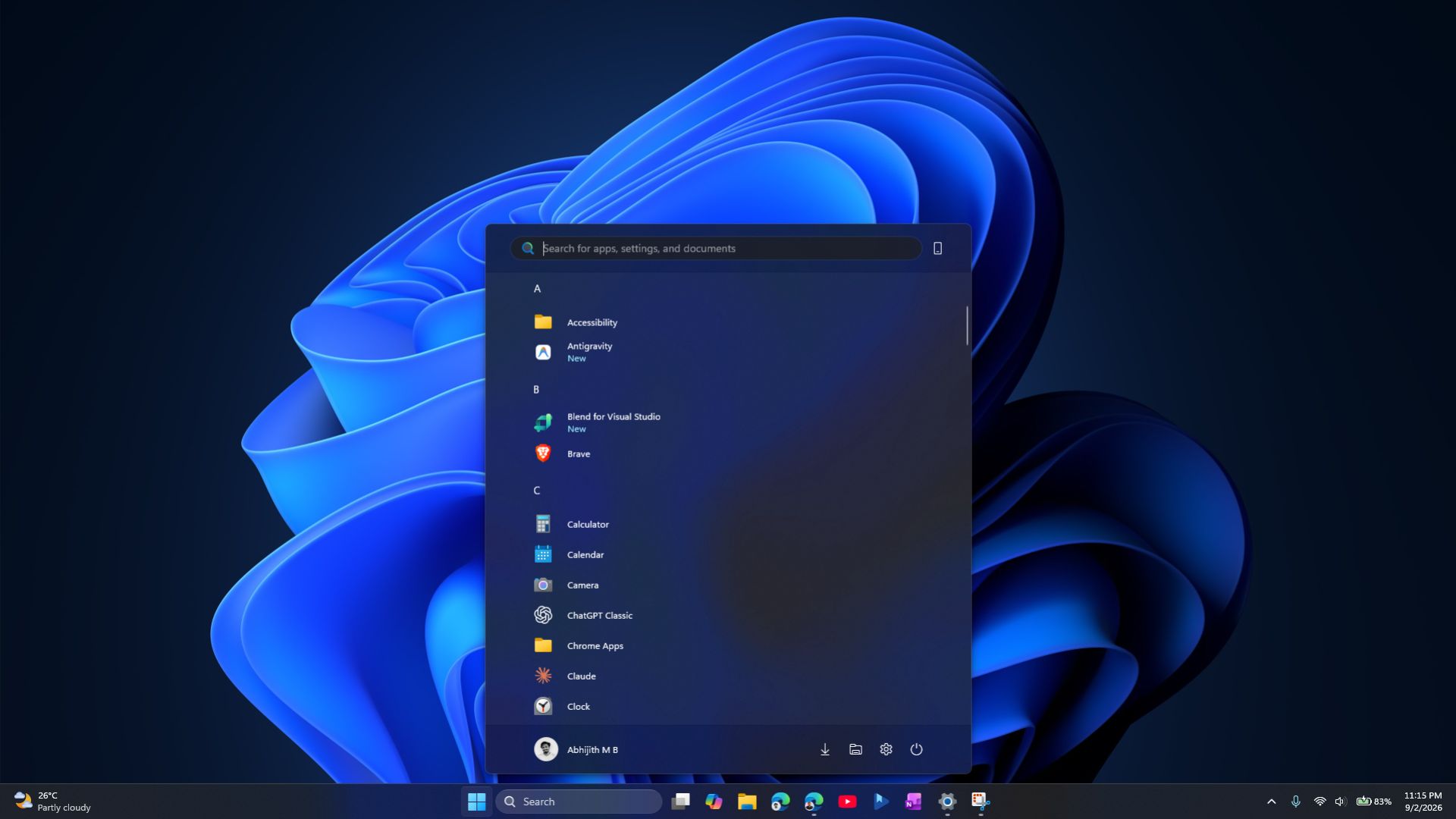
We can’t confirm if AI wrote Windows 11’s improvements this year, but bearing in mind that the list of features and fixes was huge enough to make the OS more usable, I’ll take it any day over slow traditional software development. The cherry on top is that Microsoft managed to fix a ton of bugs as well. We reported that the July update patched 570 bugs.
The software giant is also taking steps to make development more hardware-focused with Project Zenith. Announced on September 4, it braces a stripped-down, developer-tuned Windows 11 setup with beefy hardware, demanding a strict baseline of 64GB unified RAM and 250GB/s of memory bandwidth, starting with AMD’s Ryzen AI Halo chips.

So, instead of paying for every token sent to the cloud, developers get enough local horsepower to run 30B+ parameter AI models. Of course, this isn’t new, but now there’s a version of Windows better suited for local AI-powered development.
Developers may stop typing code, but they won’t stop engineering software
On an optimistic note, I don’t think his post is a prediction. And considering Fowler’s experience, we dare not judge it as a senior engineer being lazy about coding. “Typing code is absolutely over” is a single-sentence description of where developers are putting in more effort.
Code is getting cheap to generate. Value is in deciding what to build. The harder work may be checking an AI agent’s work and making sure the result is fast and secure.
Microsoft is busy at work building tools for this kind of workflow. The developer isn’t disappearing. We may have finally reached a reality where the keyboard just isn’t the center of coding anymore!
The post Microsoft engineer says “typing code is absolutely over,” and Windows 11 is already being built that way appeared first on Windows Latest