
It has been nearly a year and a half since we first reported that Microsoft Bing was engaging in a highly controversial tactic of spoofing the Google.com user interface when users try to navigate to Google search. Despite sharp criticism from Google executives and massive user backlash, Microsoft has refused to back down.
As of May 2026, the deceptive UI trick is still fully operational.
If you open Microsoft Edge (which defaults to Bing) and type “Google” into the address bar, you are not immediately taken to the Google homepage. Instead, Bing intercepts the query and presents a search results page that looks suspiciously like Google.com.
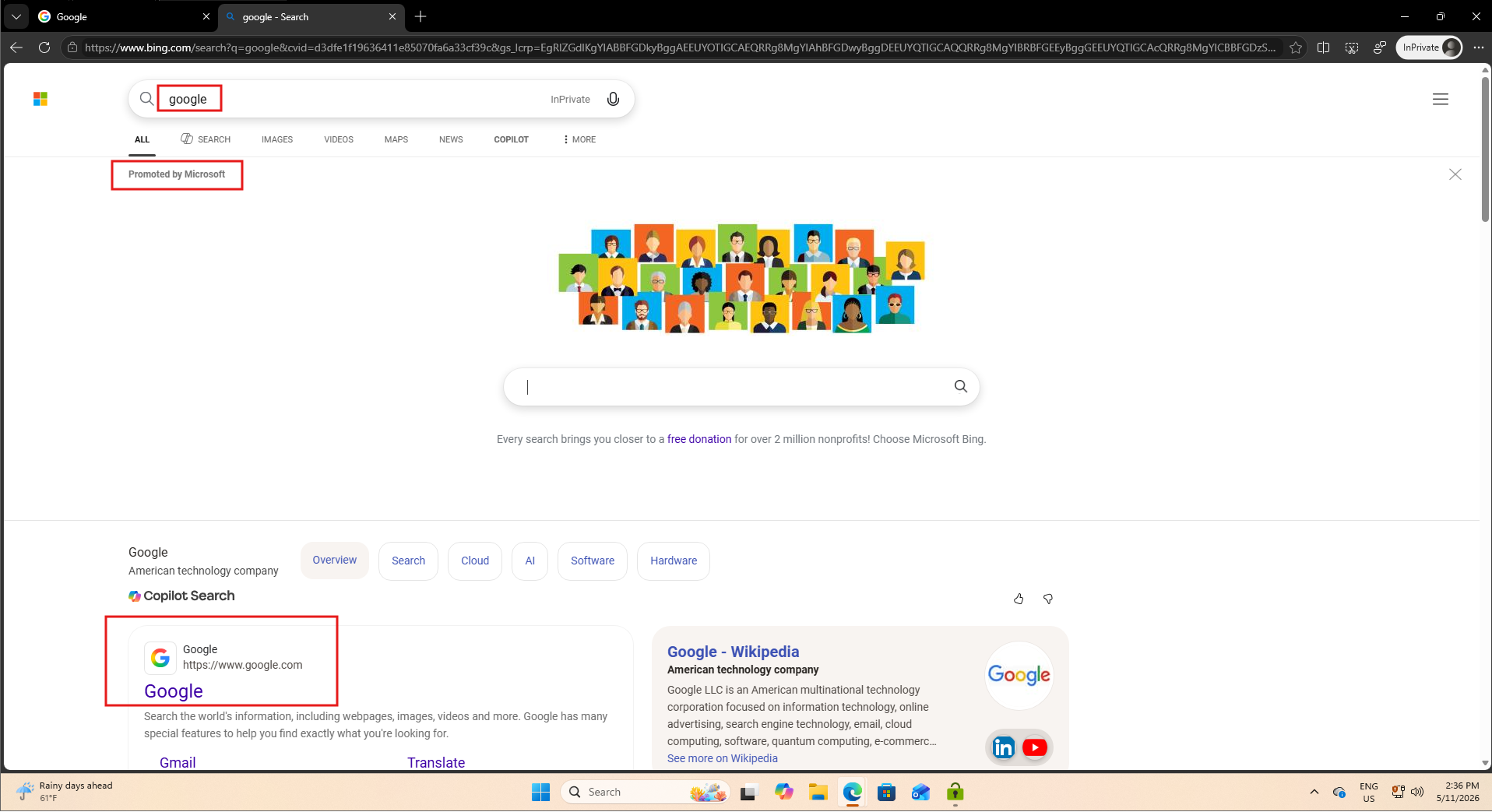
If you’re using Edge and already signed in, you may see a different tactic where Microsoft would show a secondary search bar below the one where you already typed and searched “Google”
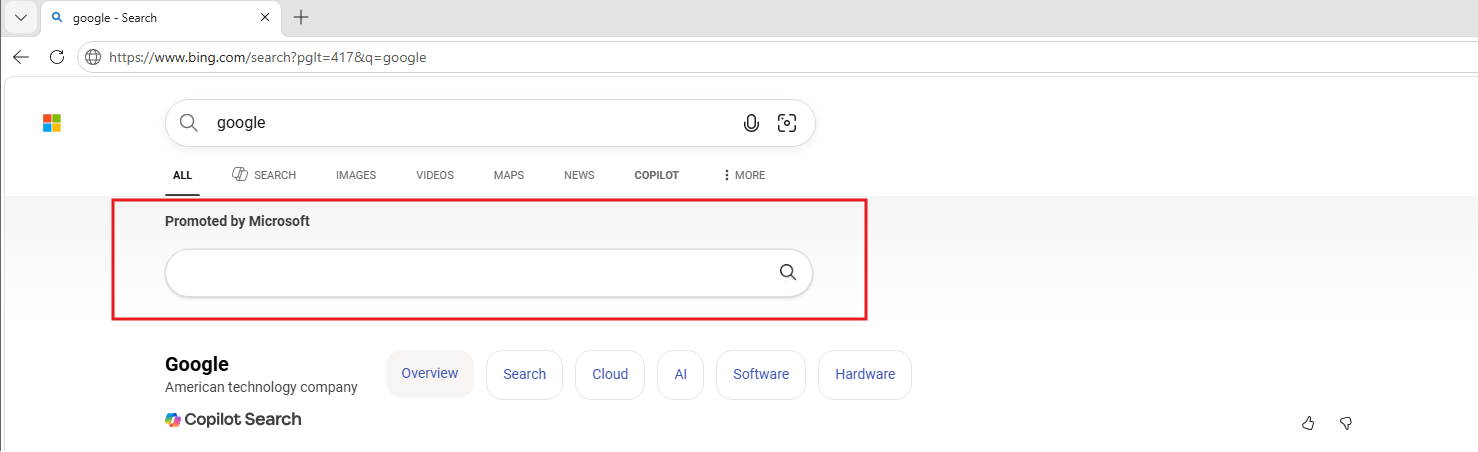
Microsoft mimics Google’s homepage in Bing
I captured the screenshots this week in the InPrivate tab (incognito), which means the spoofing happens when you haven’t already signed in.
The spoofed page by Bing features a clean, minimalist layout dominated by a large, centralized search bar positioned directly underneath a simple illustration. And this illustration got me thinking that there was someone at Microsoft who told developers to create a random illustration that looks like the ones Google makes.
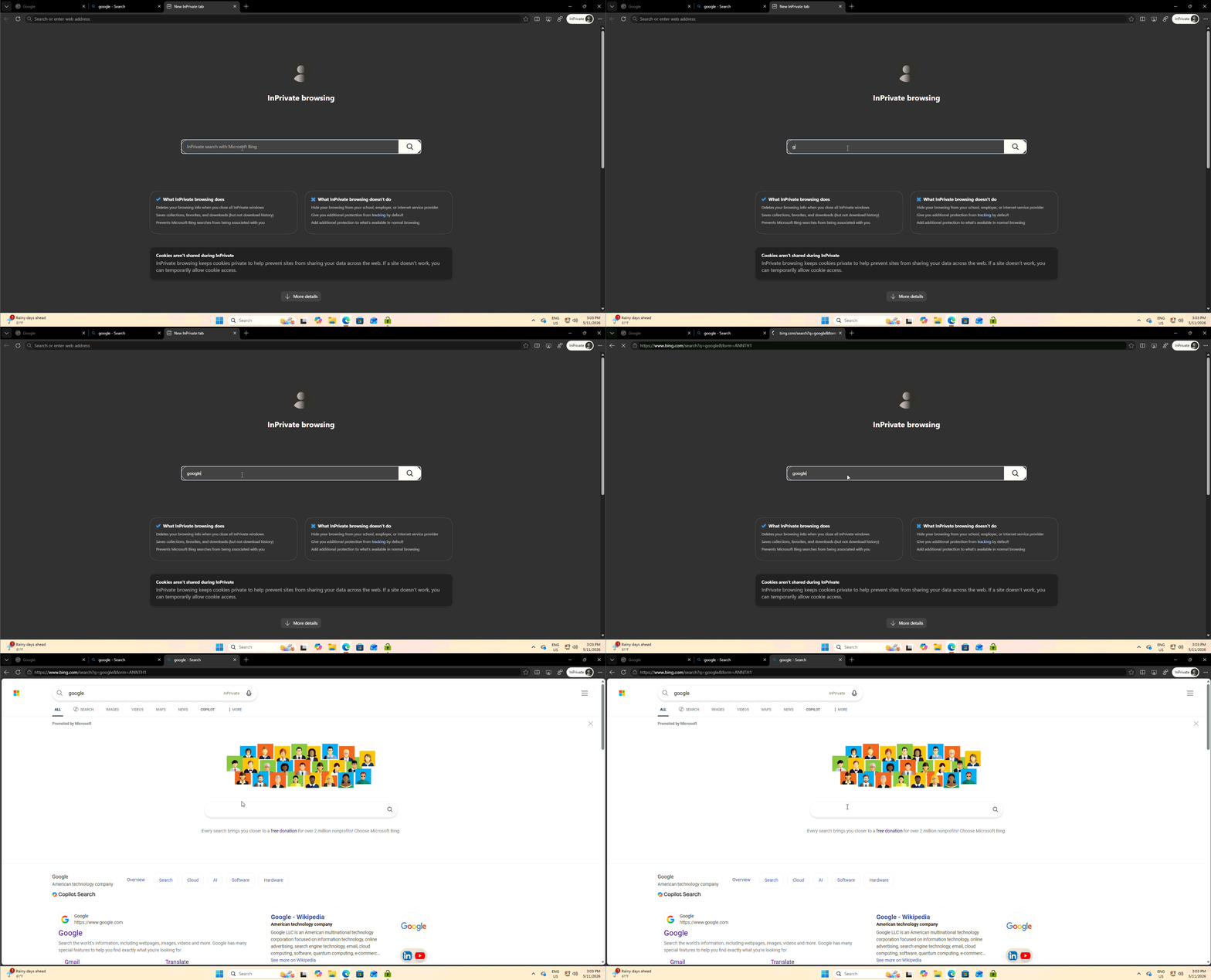
To the untrained eye, or to someone who views “Google” as a synonym for “the internet,” this looks exactly like the Google homepage. If a user types their query into that massive, central search box, they are executing another Bing search, keeping them trapped within the Microsoft ecosystem.
Microsoft tries to soften the blow with a message beneath the Google-like Bing search box, saying, “Every search brings you closer to a free donation. Choose from over 2 million nonprofits”.
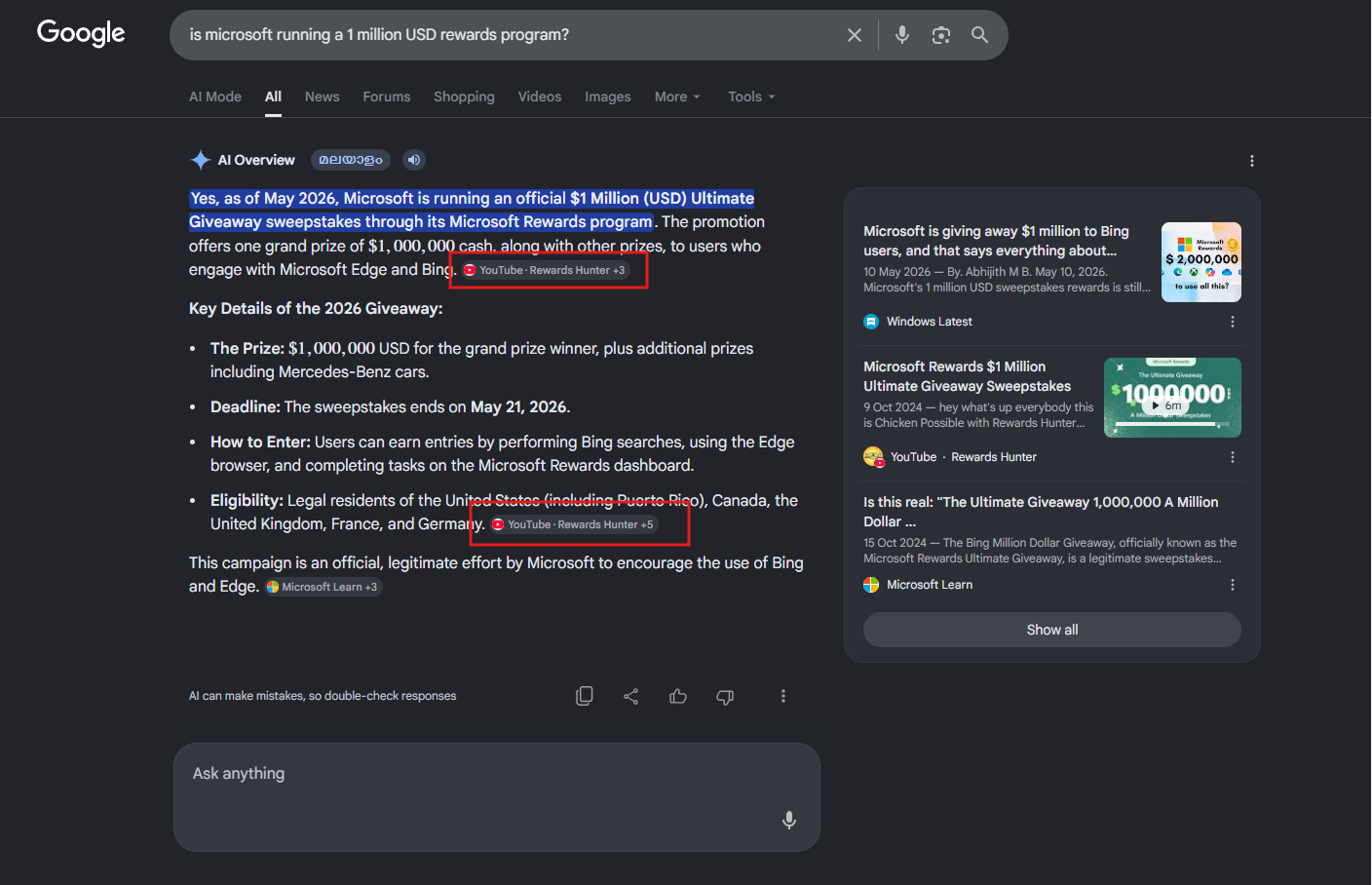
This is incredibly ironic. At the same time Microsoft is actively trying to trick users into staying on Bing, the company is simultaneously running a massive $2 million sweepstakes campaign, literally offering a $1 million cash prize just to convince people to use Bing and Edge.
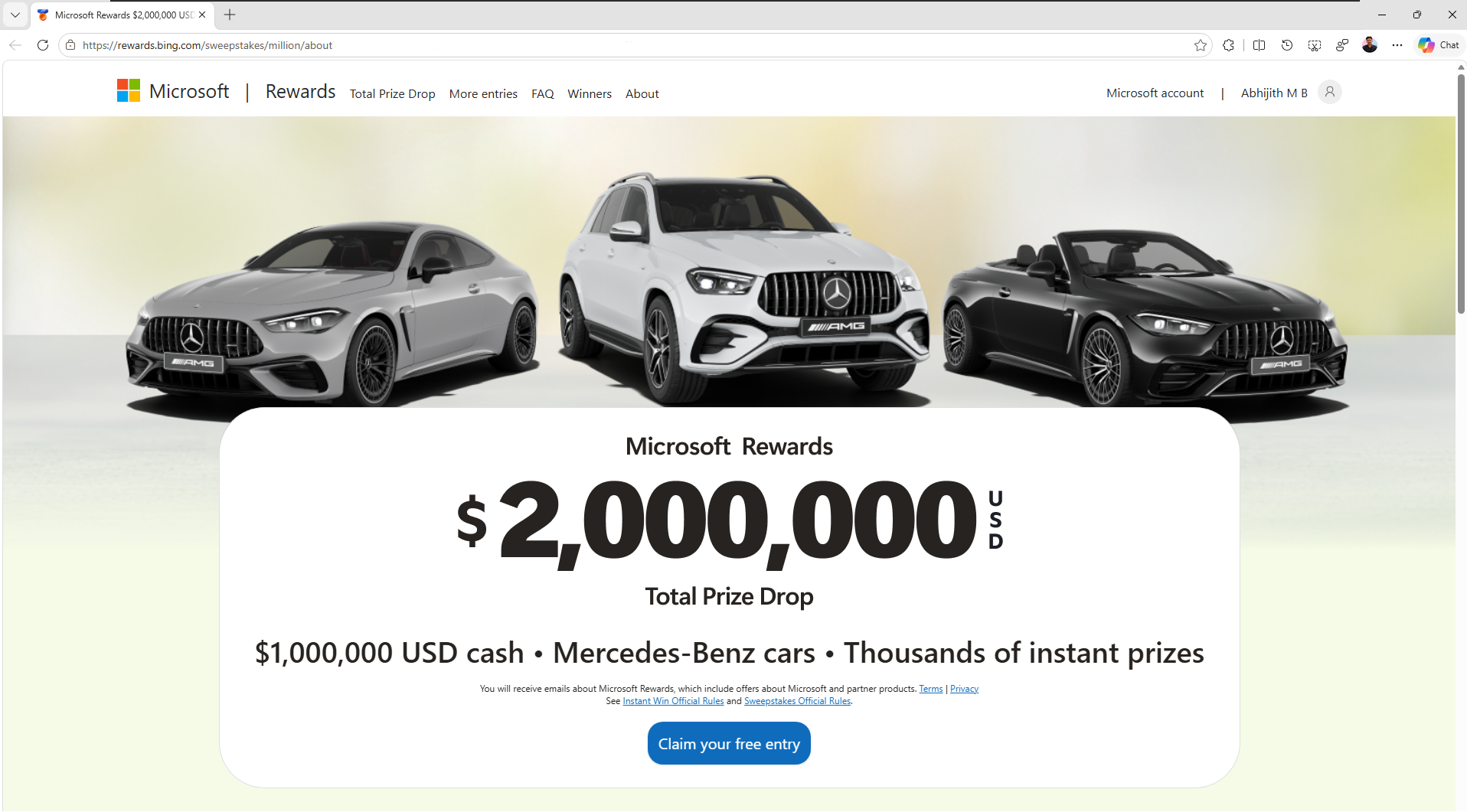
So, here is what really ticks me off. Microsoft is attempting to buy user loyalty with million-dollar checks on one hand, while also actively deceiving them with spoofed interfaces on the other. It is a scattershot approach to user acquisition that reeks of desperation.
And the tragic part is that we’re talking about Microsoft, a company as large as Google (Alphabet), with several advantages Google doesn’t have, such as the world’s most popular desktop operating system!
It’s not like they don’t have the capabilities or resources to make products that people actually want to use.
Microsoft is missing a golden opportunity with Bing
The truth is, Microsoft doesn’t need to resort to cheap tricks anymore. The company is currently sitting on a golden opportunity to legitimately win market share from Google.
As we recently reported, Bing has officially crossed the 1 billion user milestone.
The search engine has matured significantly, and the underlying technology is genuinely good. I know it because I have fully transitioned from Google Search to Bing. But more importantly, even Google is alienating its own user base.
Google is currently facing intense scrutiny over the declining quality of its search results. The company has aggressively pushed its “AI Overviews” feature to the top of the page, forcing users to scroll past generative summaries just to find traditional blue links. Furthermore, the Google Discover feed and standard search results have become increasingly saturated with YouTube Shorts and sponsored video content, prioritizing corporate synergy and ad revenue over efficient information retrieval.
People are getting frustrated with Google. They are looking for an alternative search engine that respects their time and delivers clean, accurate results.
Well, it looks like trying to look like Google isn’t something Bing should be doing right now…
In fact, this is the exact moment Microsoft should be stepping up. Because, honestly, there isn’t another company that can match Google Search. Bing should be positioning itself as the clean, reliable, user-friendly alternative. They have the technology to do it, and they have the Copilot integration to match Google’s Gemini.
Instead, Microsoft is relying on deceptive UI spoofing and sweepstakes bribes to artificially inflate its numbers. Parisa Tabriz, head of Google Chrome, wasn’t in the wrong when she called this spoofing tactic “another tactic in its long history of tricks to confuse users & limit choice.”
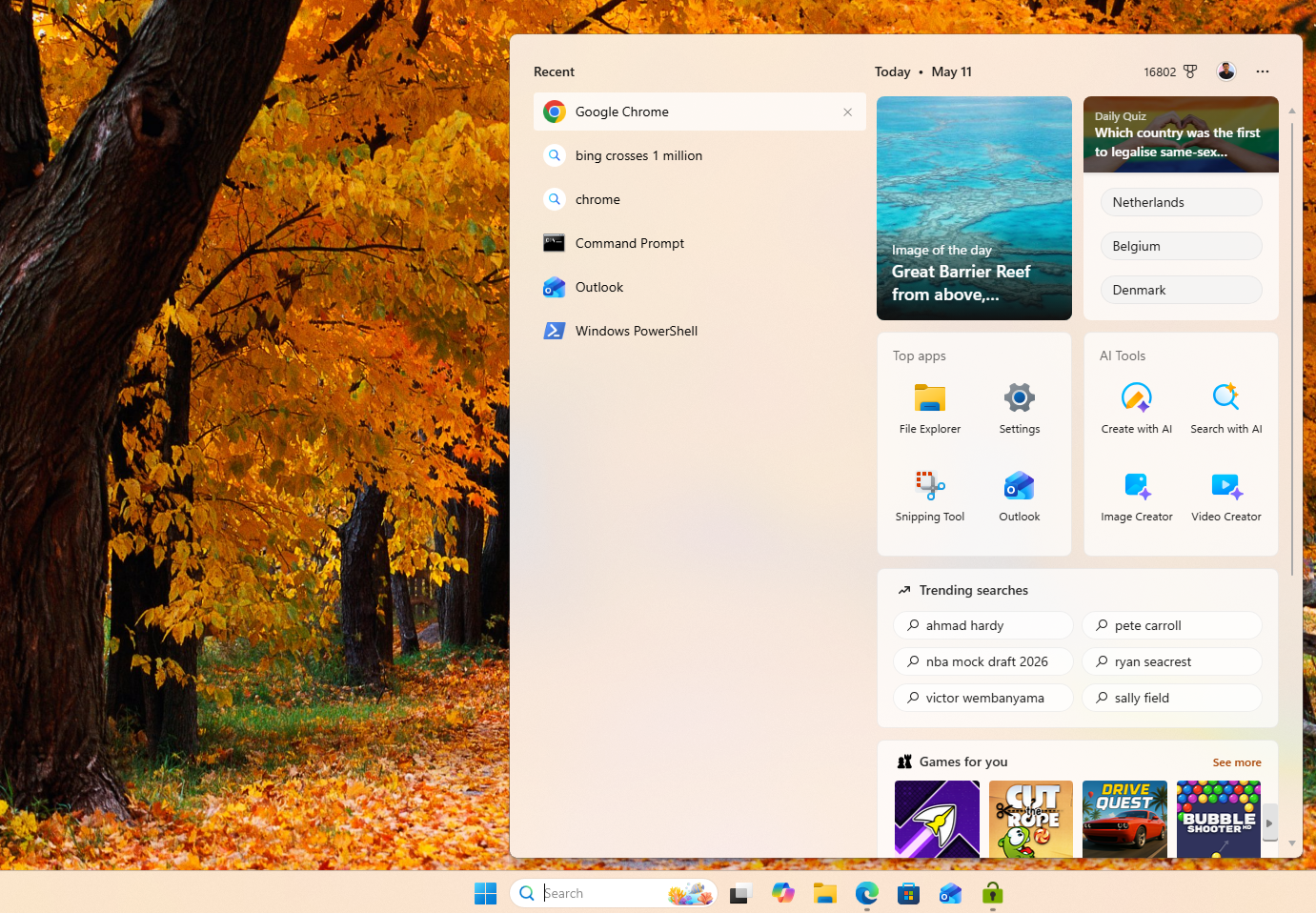
Also, if you open the Bing homepage, this is what you’re treated with:
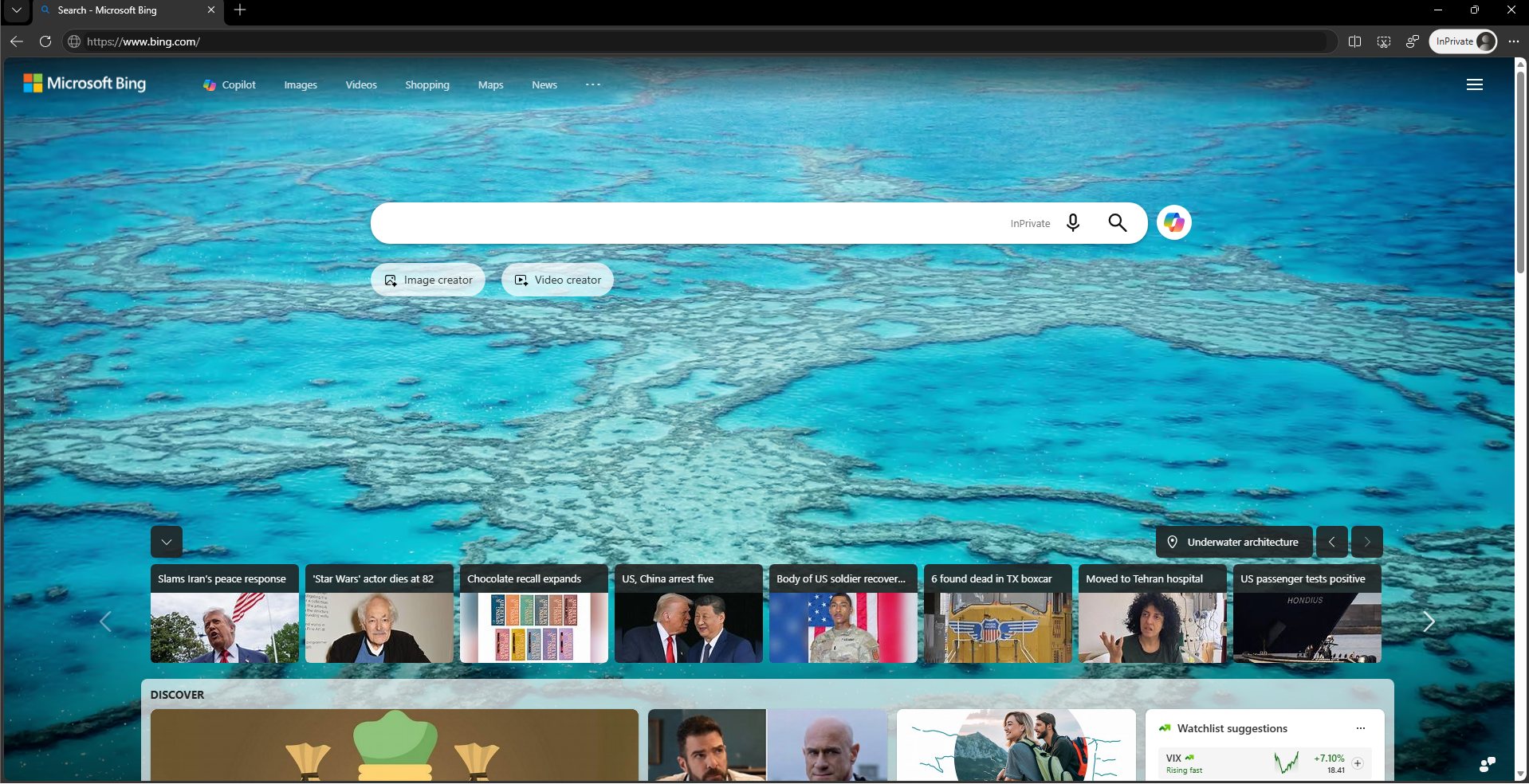
It’s cluttered and filled with clickbait content that doesn’t give any reason for a user to come back again.
If Microsoft truly wants Bing to be viewed as a premium, viable alternative to Google, it needs to stop treating its users like metrics to be tricked or bought. A billion users is a massive achievement, but keeping them requires trust, and you don’t build trust by faking your competitor’s homepage.
The post Microsoft is still faking Google’s homepage on Bing 1.5 years after backlash, even as it pays $1 million for users appeared first on Windows Latest